Our day started at the bright and early hour of 7:30 AM with a private bus to the local station. We pulled up by 8:30 AM, only to discover our crack-of-dawn departure was just a strategic maneuver to beat Beijing’s legendary morning traffic. Our train didn’t actually leave until 10:30 AM, so we piled our bags up at the gate and took up residence in the departure lounge, chatting and watching the room slowly fill to the brim.
By 10:15 AM, everyone began forming multiple single-file lines. The moment the gate swung open, it became a full-blown competitive sport to board. I was relieved we were near the front, though even there it was a total mad crush of humanity. We all had assigned seats, but overhead luggage space is a finite resource. Thankfully, we managed to claim the racks above our heads and avoided spending the next four hours with heavy backpacks wedged onto our laps.
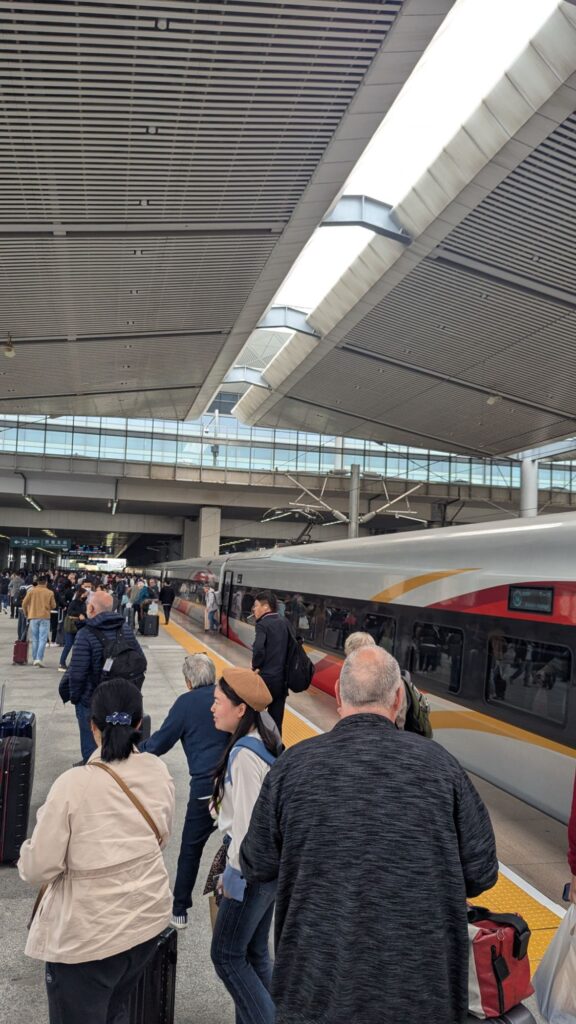
The bullet train was ridiculously fast, covering 1,100 kilometers in four hours. We spent much of the ride chatting with our guide, Michael, who gave us a fascinating look into his daily life in China, which in many ways feels surprisingly similar to our own. Michael was remarkably open about communism, explaining that people today know a lot about the outside world and view daily life as fairly comparable. He jokingly described China’s current system as capitalism under a single party.
He also spoke fondly about his 16 year old daughter, who is clearly his absolute pride and joy. Due to the legacy of the former one-child policy, Michael, his wife, their parents, and his daughter are all only children. His family places immense faith in her, and their entire lives revolve around giving her every possible advantage.
To keep up with her education, the family moves house every time she transitions to a new school. Her schedule is nothing short of intense. Her day starts at 7:00 AM, followed by morning classes until midday. She comes home for lunch and a quick nap before returning for afternoon lessons from 1:30 PM to 6:00 PM. After eating dinner at school, she attends evening classes until 10:00 PM, comes home to work on homework until midnight, and finally goes to sleep. She repeats this routine six days a week, with private tutoring taking over her Sundays.
When we asked if that felt like a bit much, Michael explained that this is standard for every child. University spots are so insanely competitive that you have to keep pace with everyone else. With only one child, families feel they have just one shot at success, and failing to perform brings shame on parents and grandparents alike. He added that his wife regularly reminds their daughter, “You have no friends in school, only competition.”
It sounds absolutely brutal. Yet just a few minutes later, Michael casually mentioned that despite all this effort, there are surprisingly few jobs for university graduates because of the sheer volume of applicants, leaving many to end up working as delivery drivers.
When we weren’t chatting with Michael, we spent our time watching the landscape whiz past the window. Even though you know the statistics on paper, seeing the country fly by really hammers home just how massive China’s population actually is. Outside, I saw what I can only describe as endless forests of high-rise apartment blocks, easily two to three times taller than anything you would find in London or other European cities. They weren’t just concentrated in urban centers either, they were everywhere, even dotting the rural countryside, with countless more under construction.
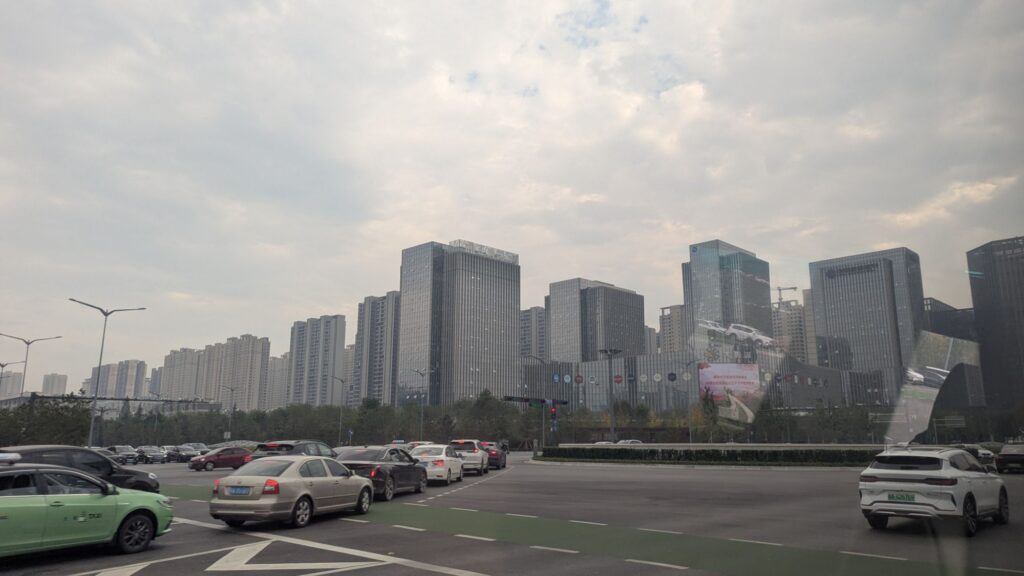
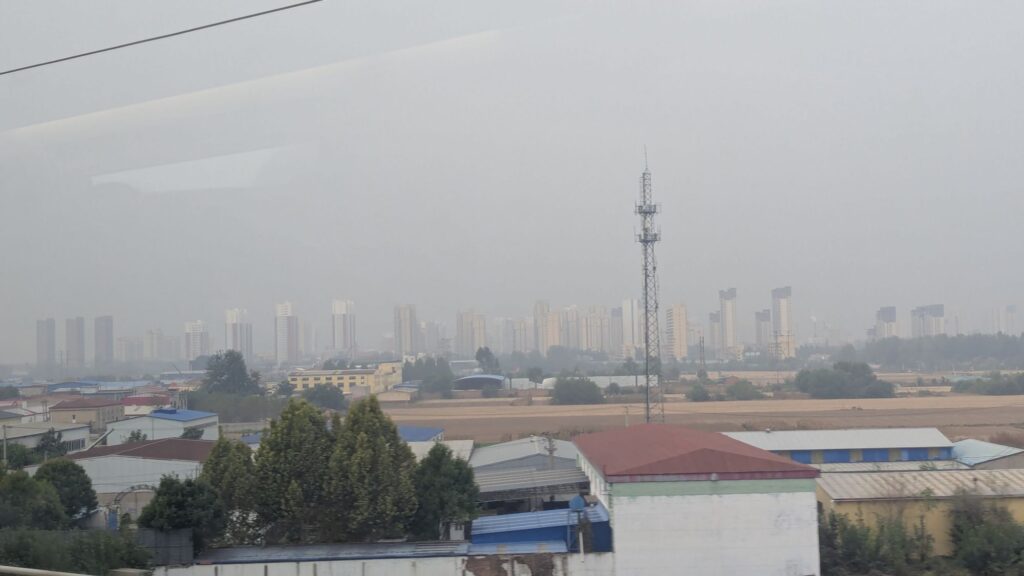
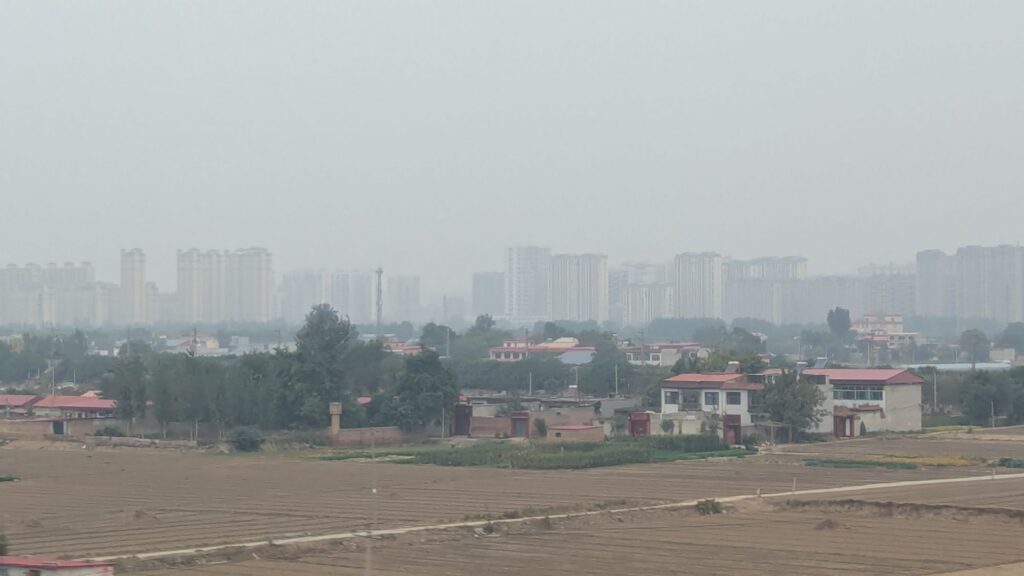
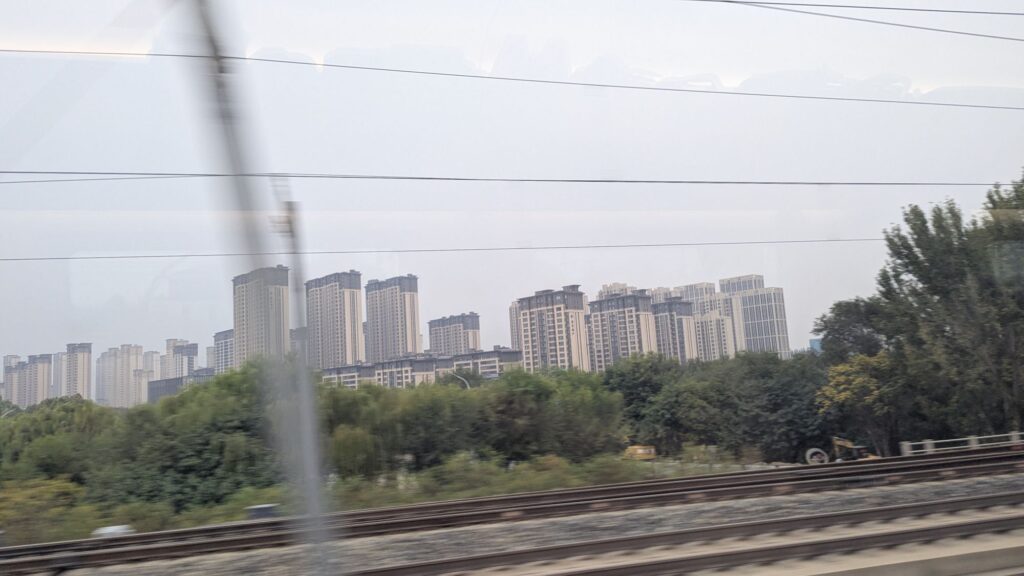
It is actually impressive that you do not feel the true weight of this population on a daily basis. The train stations, museums, and public parks are built on such a grand scale and planned so efficiently that huge crowds rarely cause a disruption, aside from the occasional mad dash for train seats.
Our destination is Xi’an, one of China’s four ancient capitals (specifically the Western Capital) and the seat of imperial power for over a thousand years. It is famous for being the starting point of the Silk Road and was supposedly one of the first cities in the world to reach a population of one million back in 700 AD. Today, it is humorously considered a modest, small-town Chinese city, boasting a tiny population of just 12 million people.
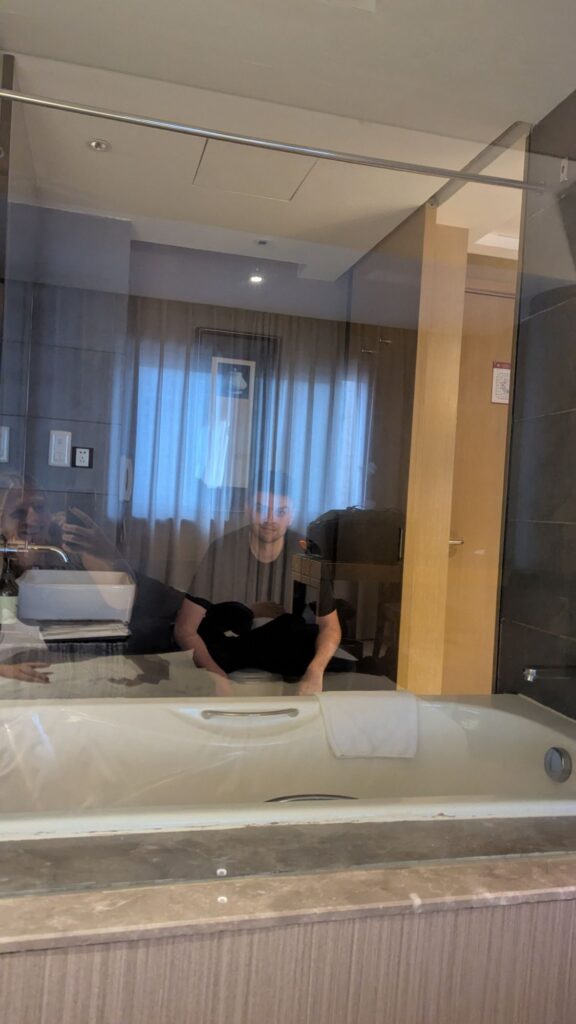
When we arrived, we dropped our bags off at the hotel, which was a huge upgrade from the last one. Although, this room came with a bathroom featuring full glass walls, which made for an… interesting setup.
Our plan for the afternoon was to explore the Muslim Quarter, a 1,000-year-old neighborhood right in the center of Xi’an. Its roots go all the way back to the Tang Dynasty, when Arab, Persian, and Central Asian merchants traveled to ancient Chang’an to trade silk and goods, eventually settling down for good.
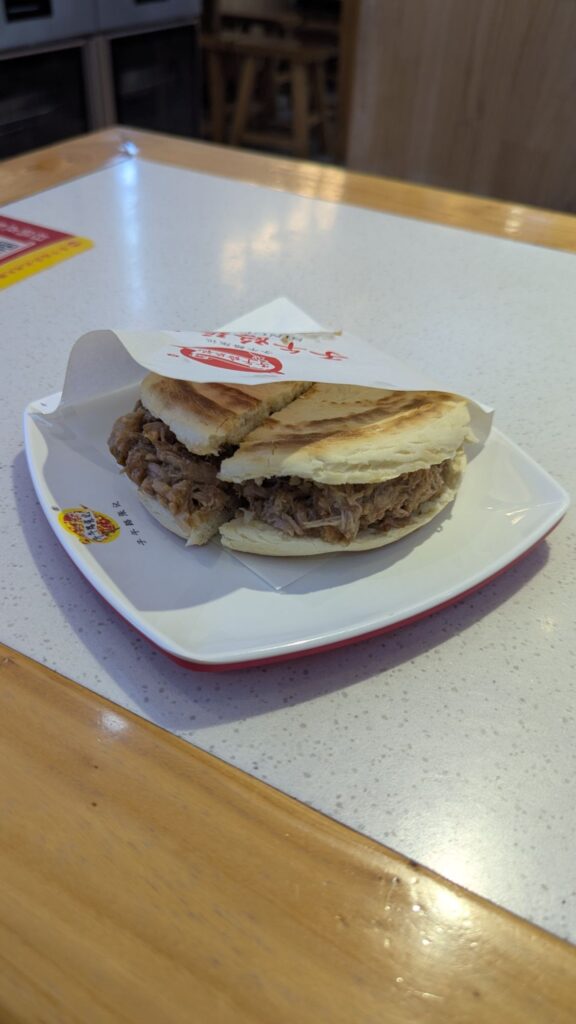
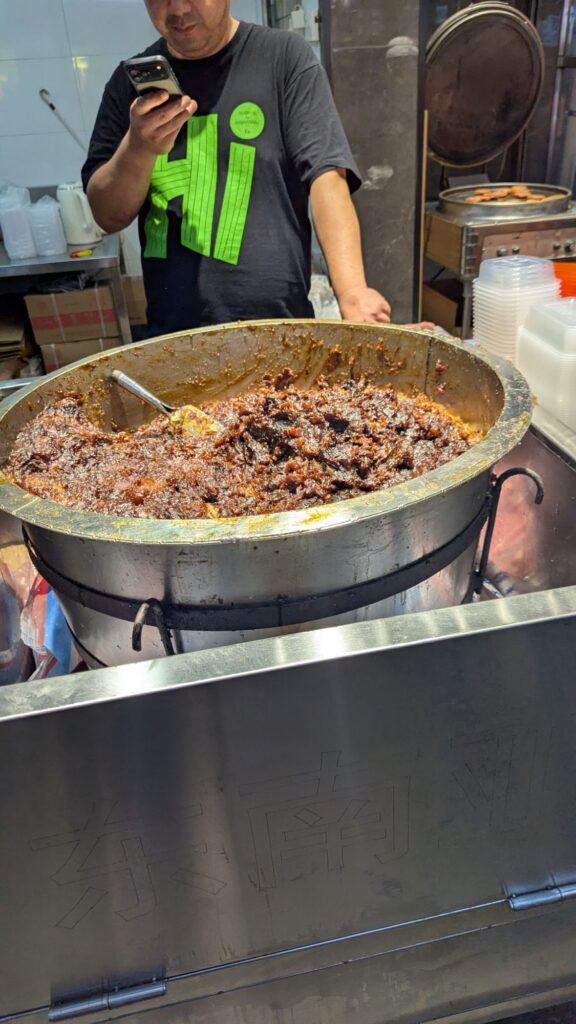
On our way over, we spotted an ad for Roujiamo, a local specialty of the Shaanxi Province. We stopped to split one, and while it is often called a Chinese burger, it is actually a lot more like Chinese pulled pork stuffed inside a flatbread bun. It was easily the tastiest thing we have had in China so far. Then again, I seem to find a new favorite dish every single day at the moment, so we will see how long this one holds the crown.
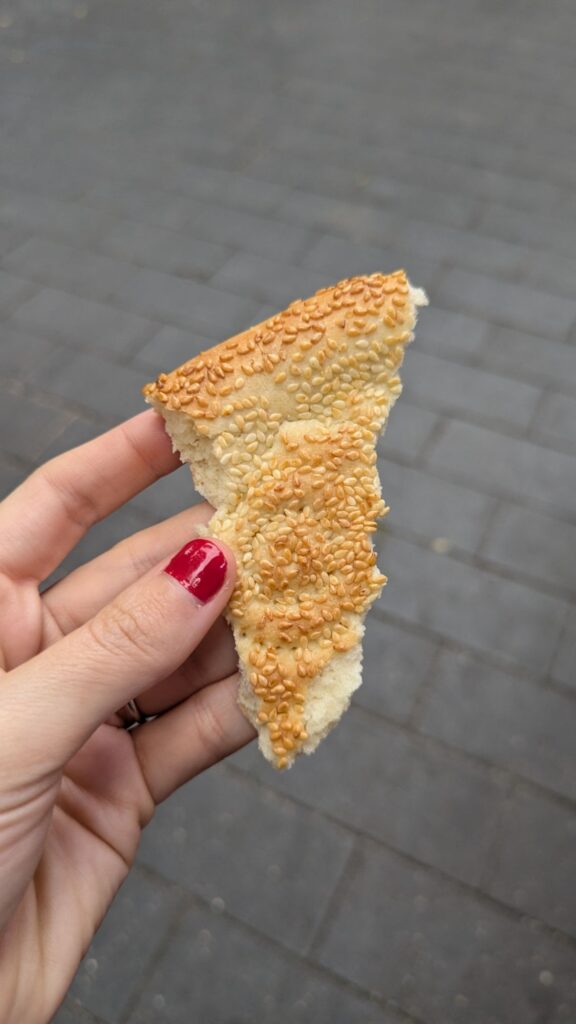
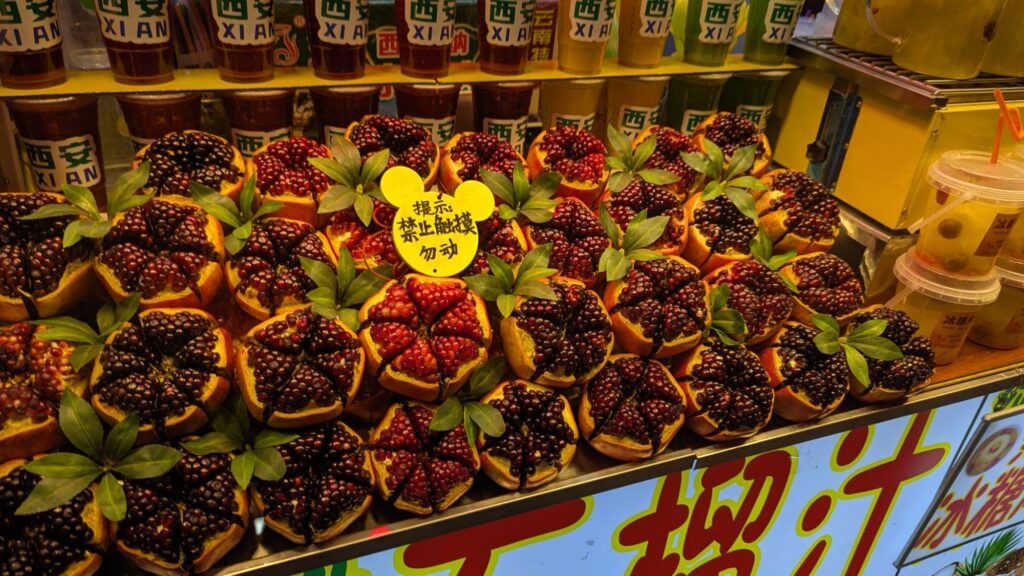
The Muslim Quarter was packed with incredible food options. Everywhere we looked, there were fresh fruits, cooked dates and rice, dried breads, hotpots, hand-pulled noodles, savory pies, roasted chestnuts, seafood, and a massive supply of my personal favorite: meat on a stick.
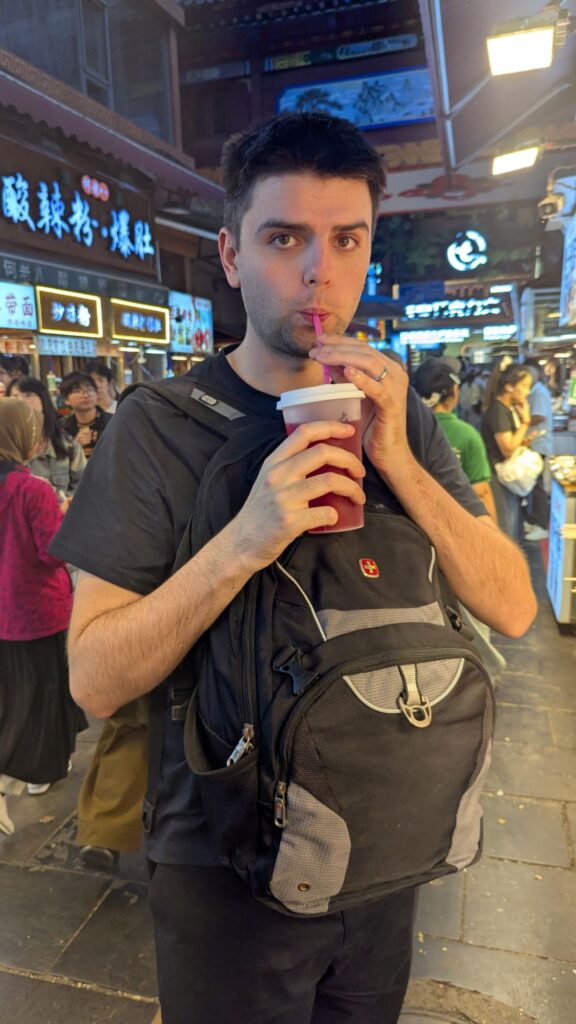
Naturally, we sampled as much as humanly possible. We teamed up with Daniel, a guy from our tour group, so we could split dishes and avoid filling up immediately. Together, we tackled pomegranate juice, mango juice, lamb, beef, squid skewers, biang biang noodles, specialty milk drinks, dates, sticky rice treats, and a persimmon doughnut.
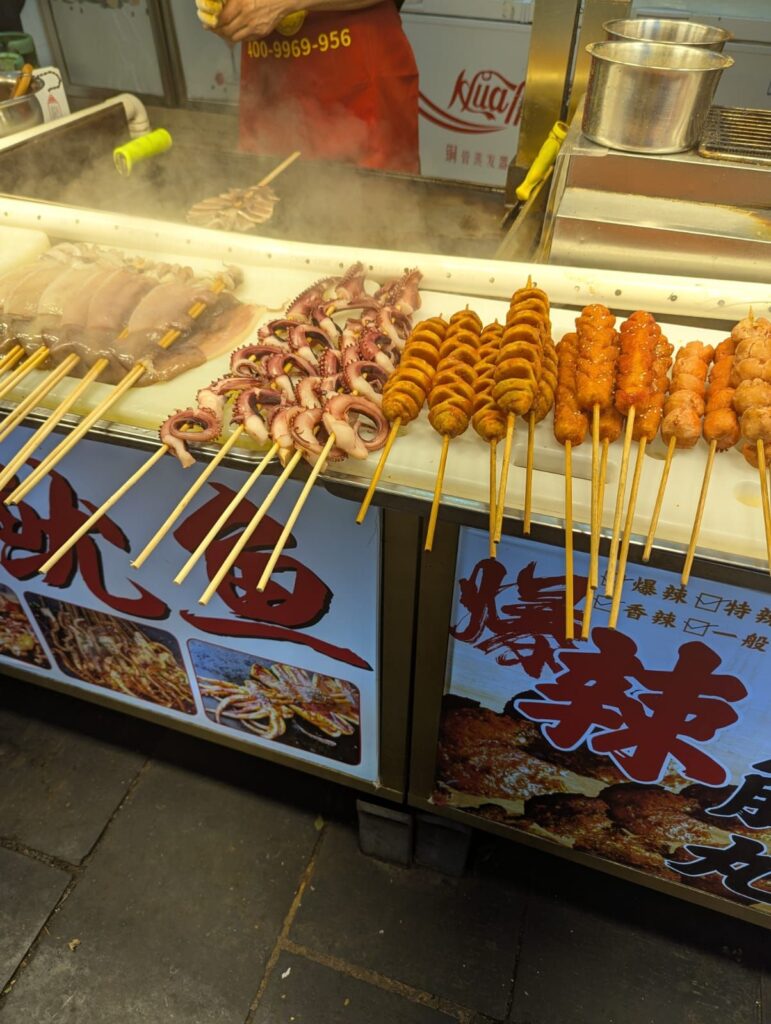
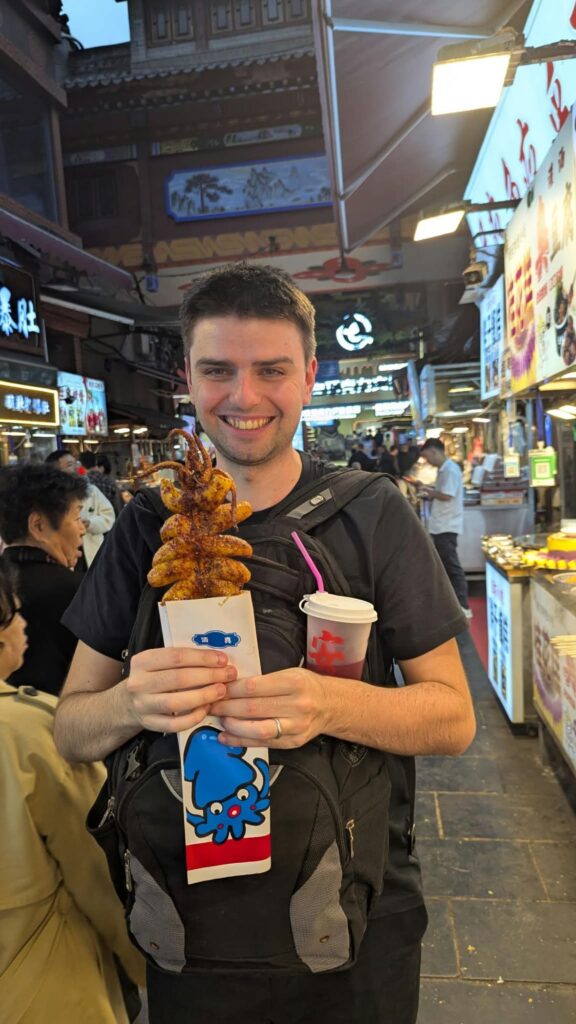
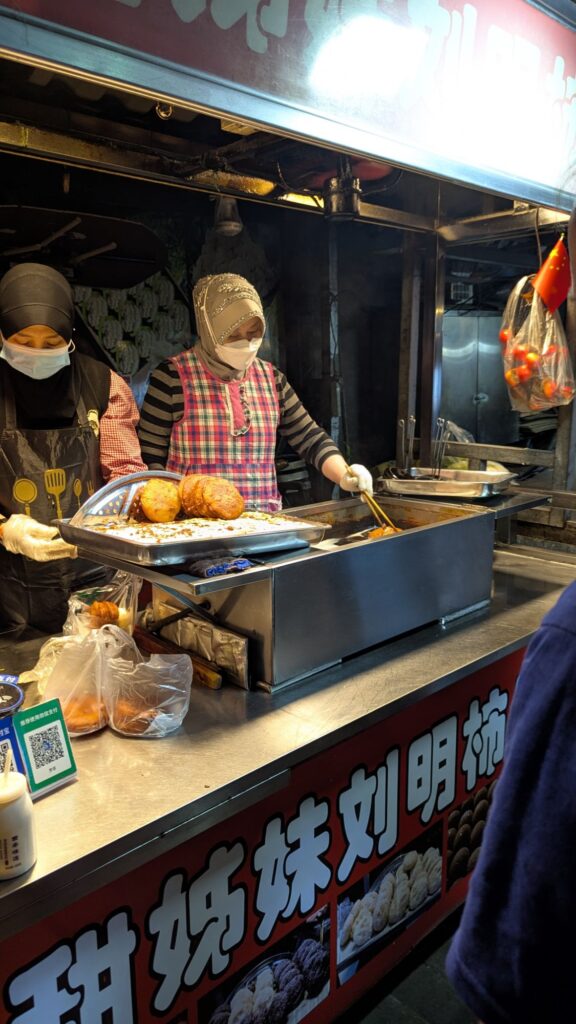
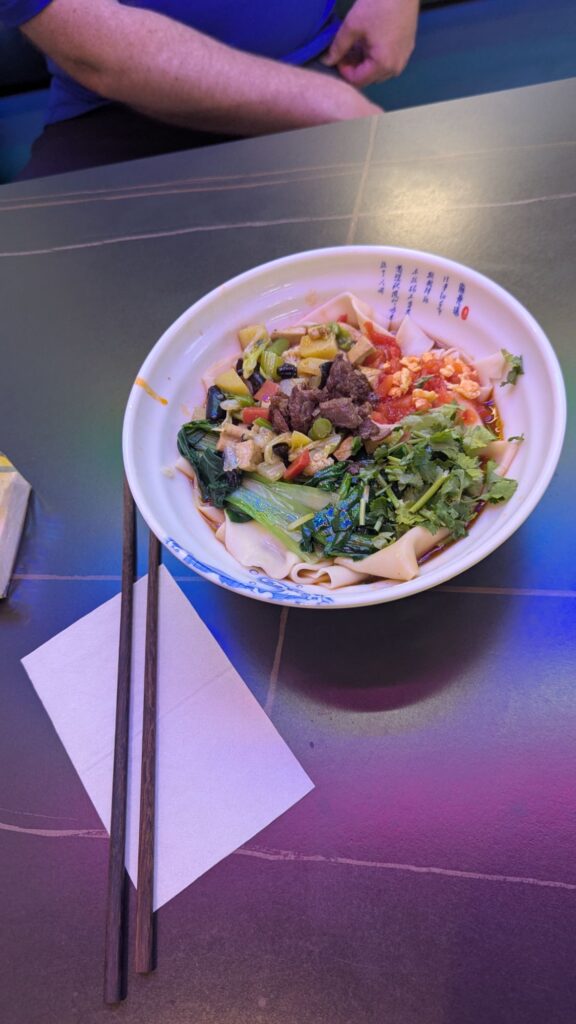
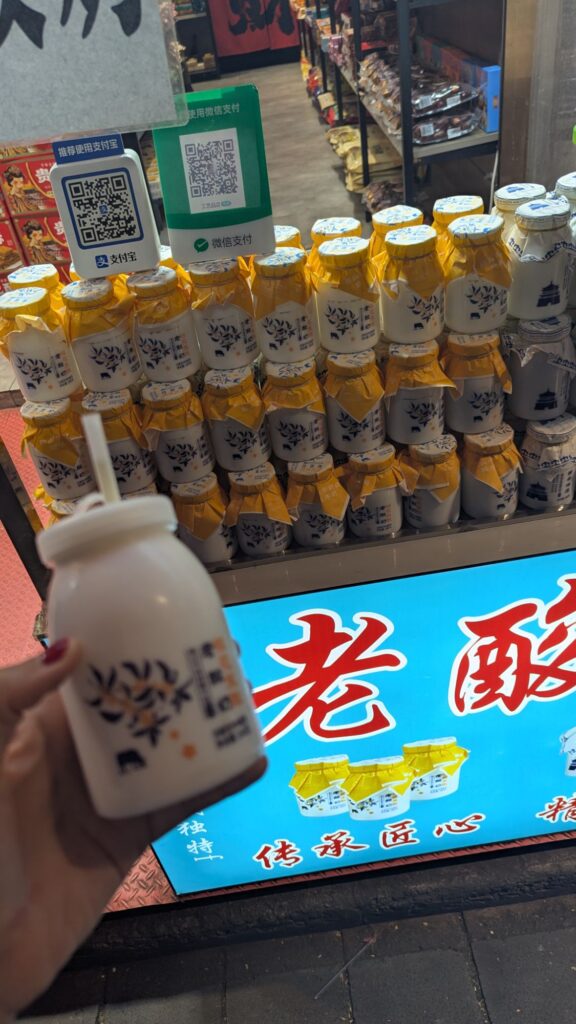
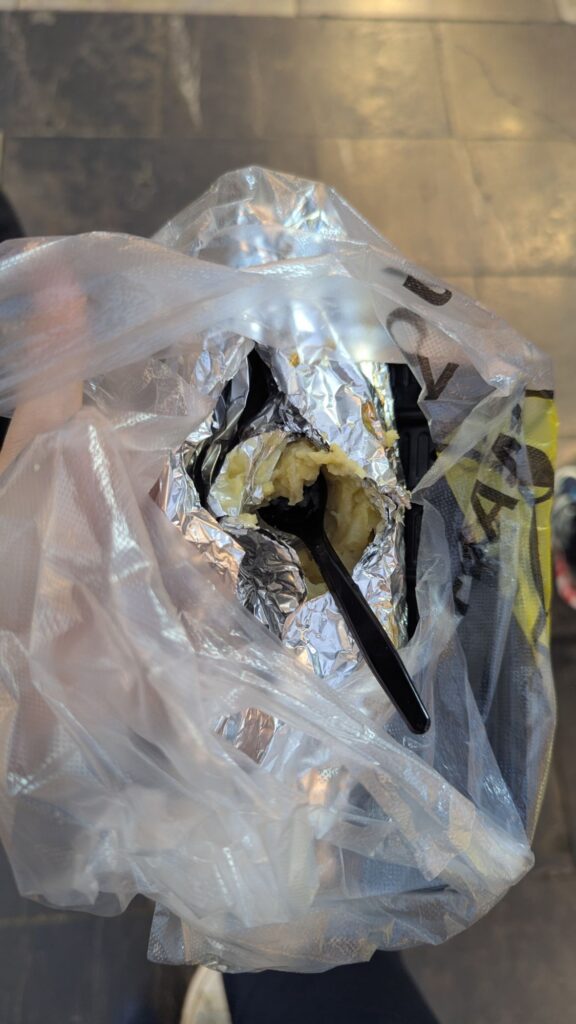
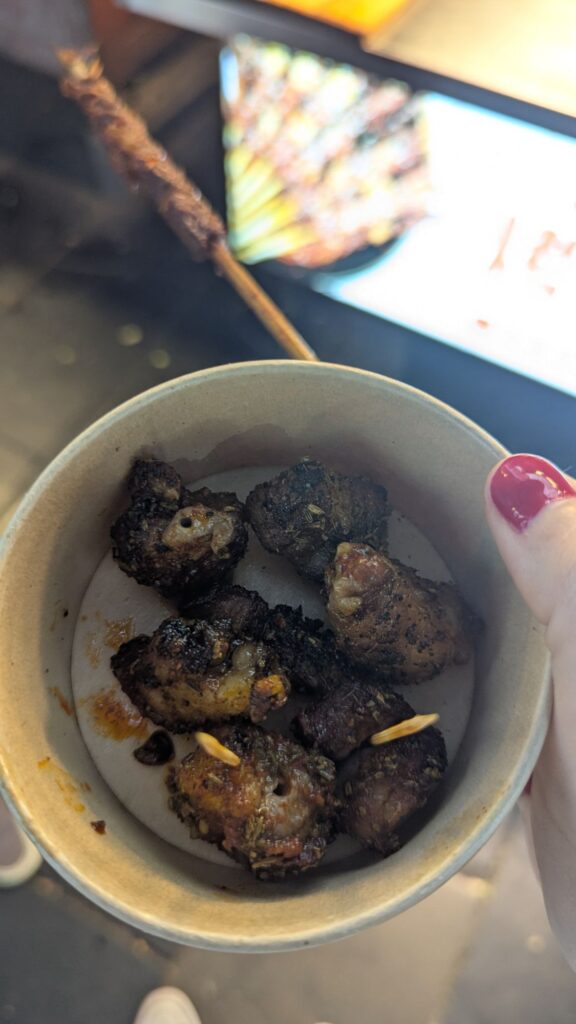
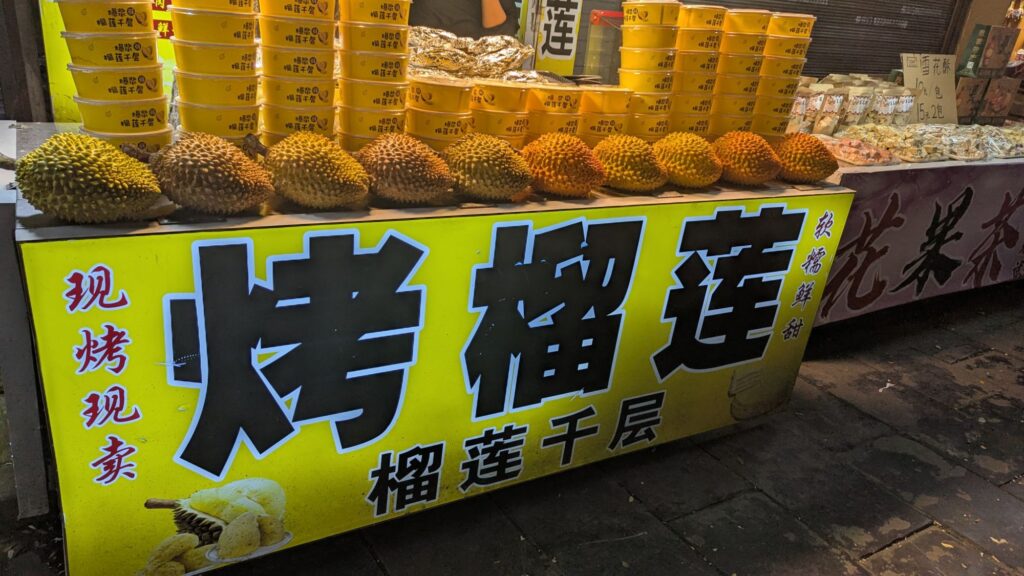
Every single bite was delicious, with one notable exception: the durian. This was pretty disappointing since I have wanted to try durian for years and finally decided to bite the bullet. It is the famously pungent fruit that is banned from public buildings across Asia, and it set me back £17, which is more than the cost of a full dinner for two in China. In my opinion, it was aggressively average.
Luckily, the dozens of other dishes we tried were amazing. By the end of the walk, it is safe to say we were completely stuffed. Unfortunately, we might have been a little too enthusiastic with our street food marathon, as both of our stomachs were feeling a bit loosey-goosey by the time we got back. As you can imagine, that made our see-through bathroom setup extra romantic.