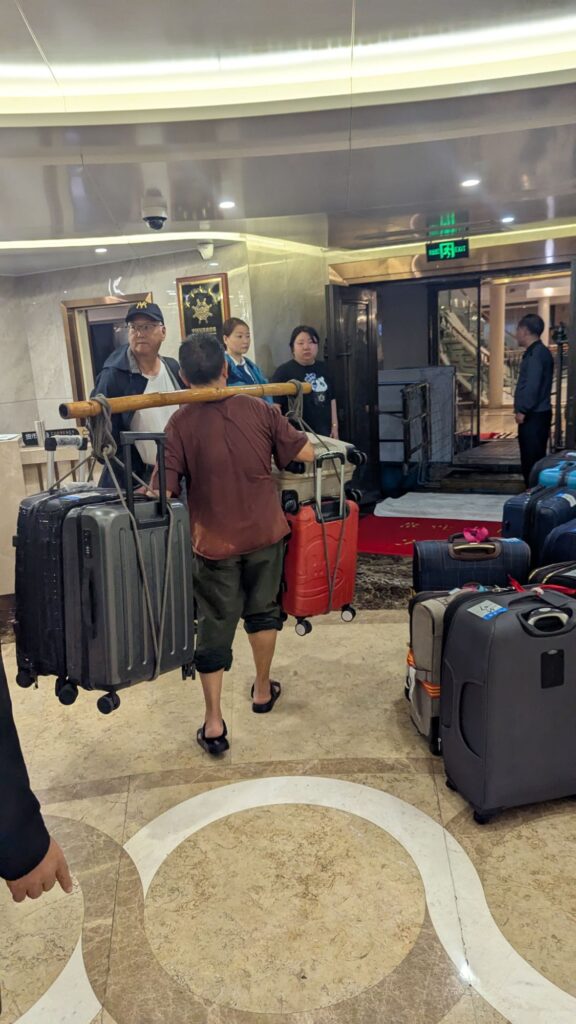
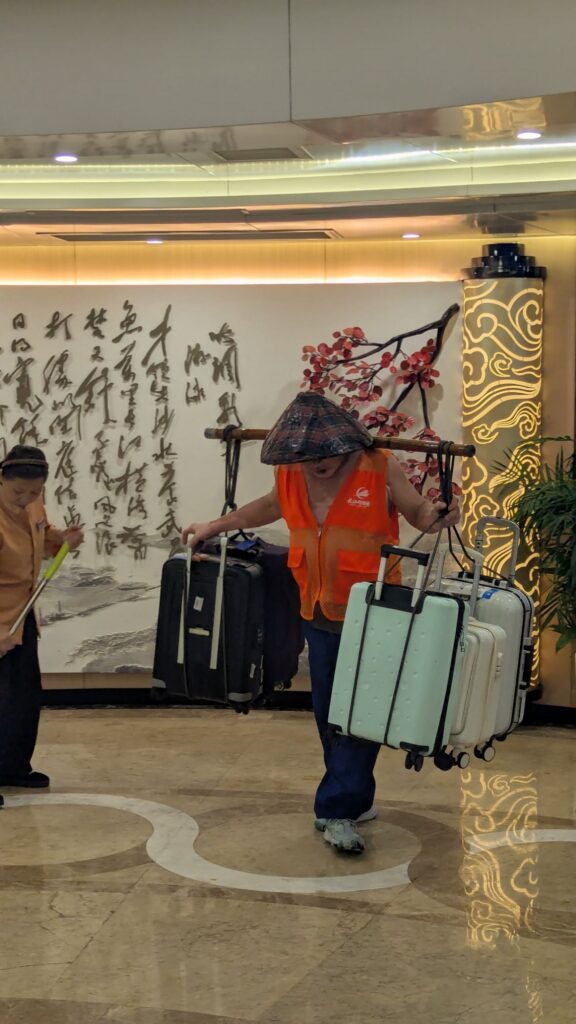
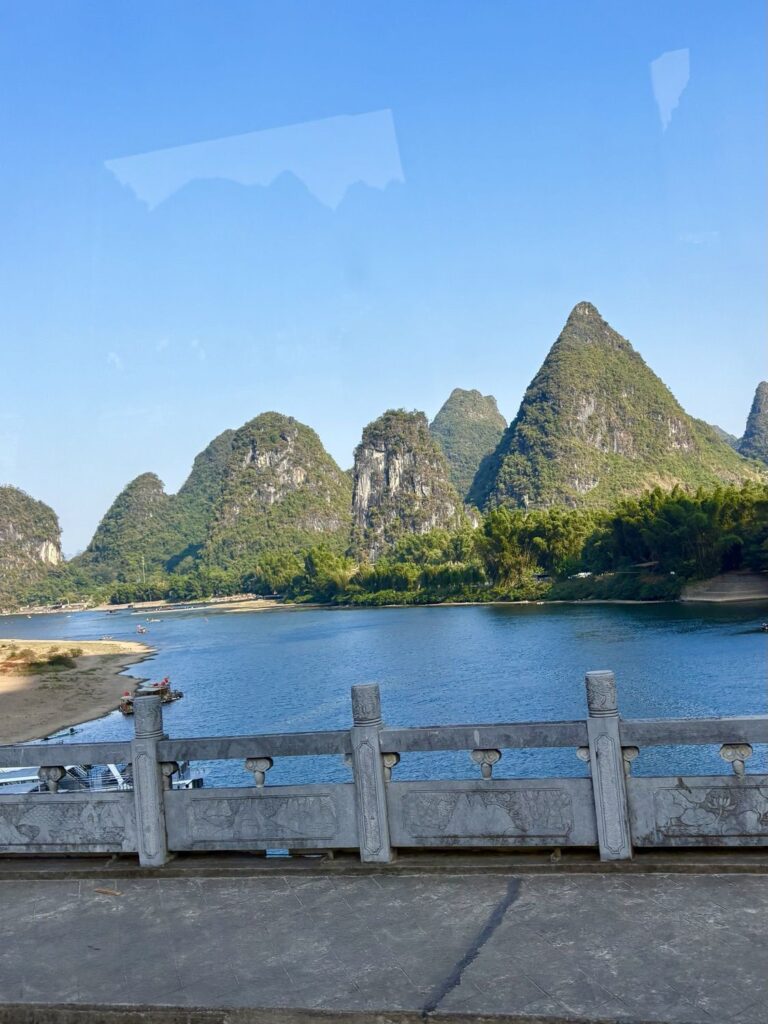
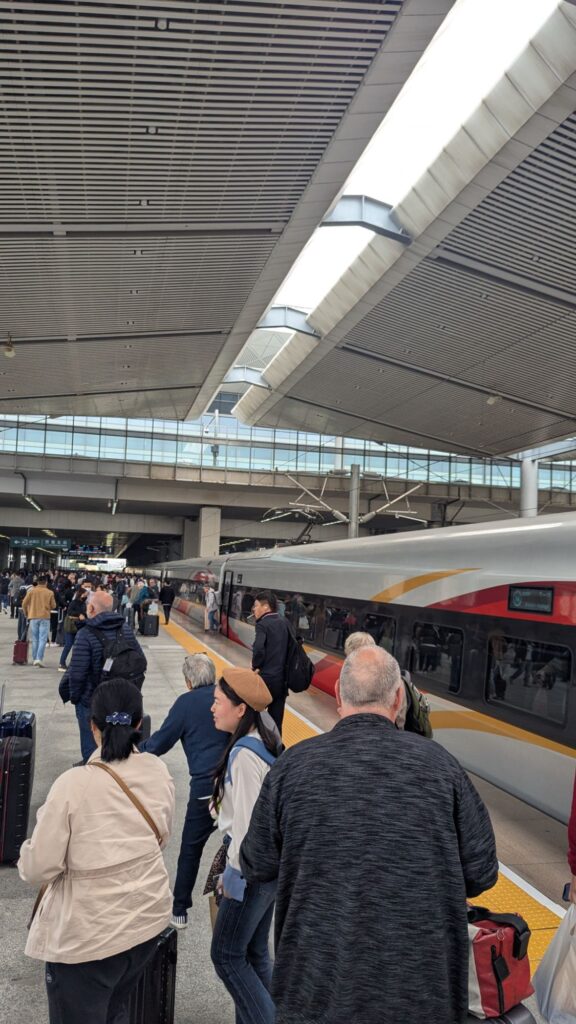
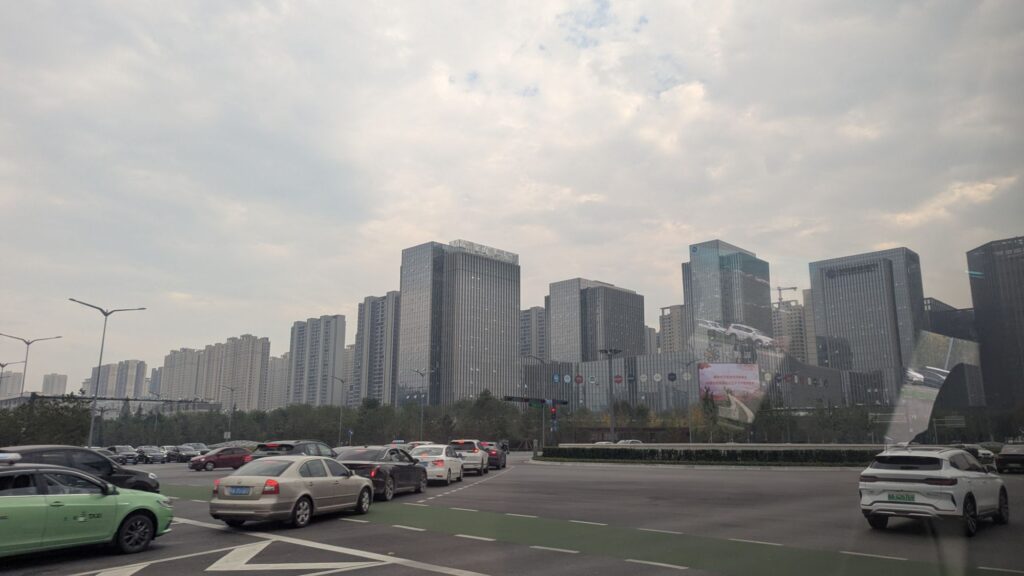
After our final buffet breakfast on the cruise, our luggage was taken ashore by some remarkably strong porters using rope and bamboo back braces. Not only did it save us a task, but it was also genuinely impressive to watch. With us and our bags back on dry (well actually, very rainy) land, we headed for the train station for another long travel day. Another bullet train brought us into Yangshuo right around 3:00 PM.
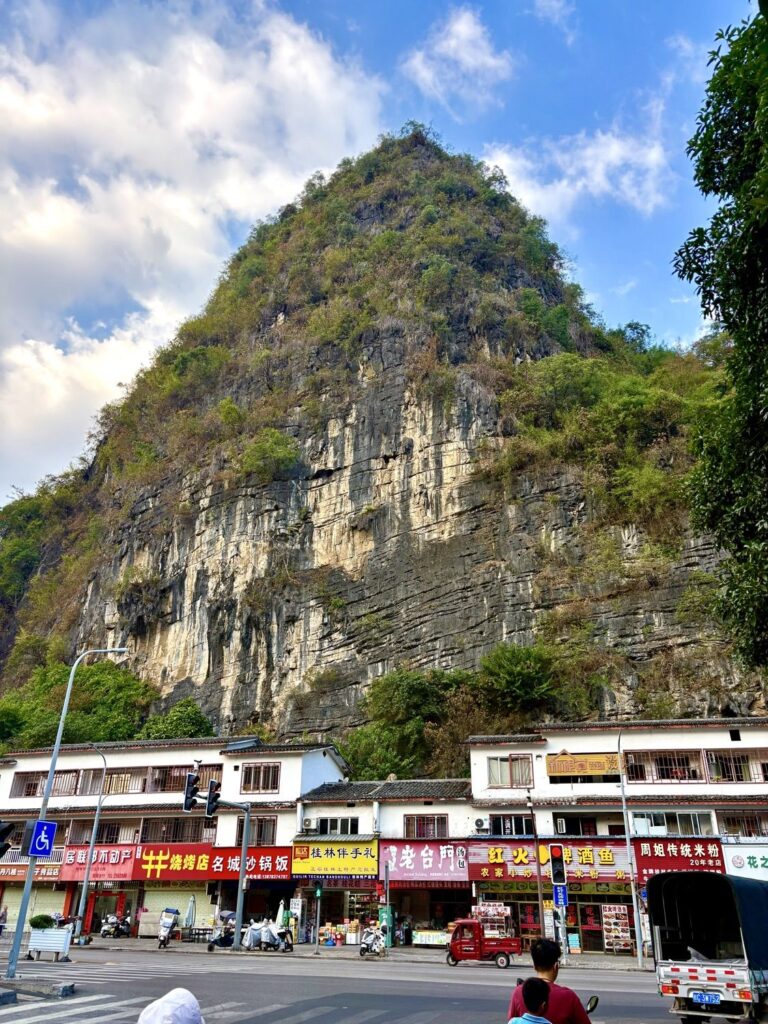
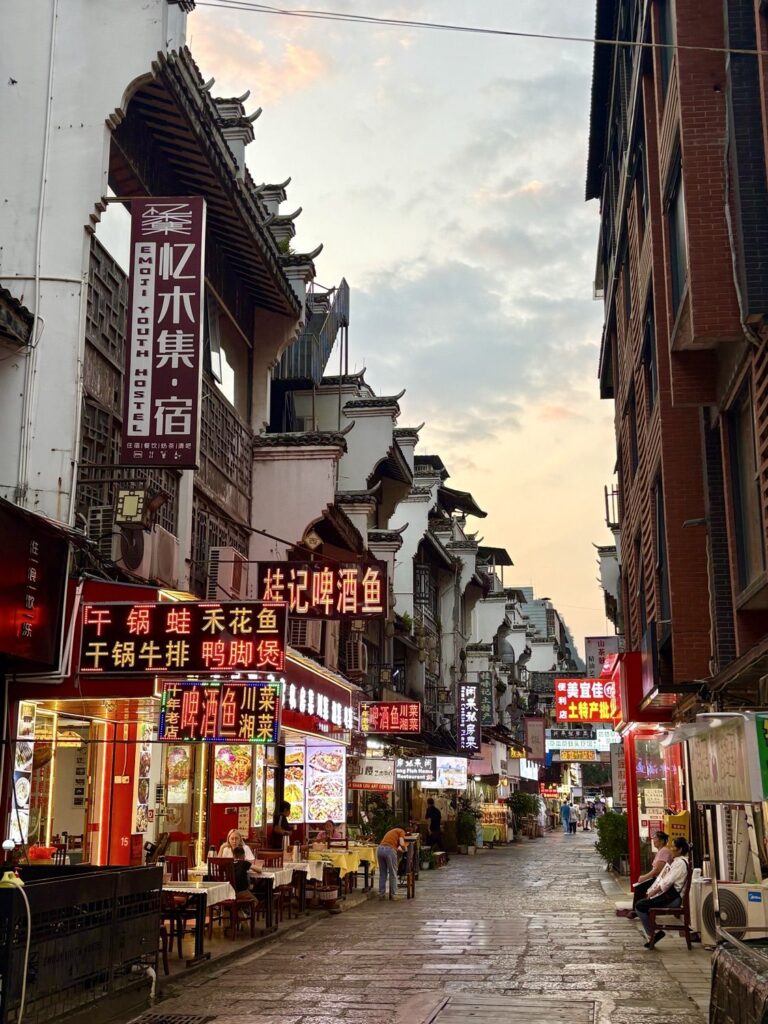
We headed to our hotel to drop off our bags before our tour guide Michael took us on an orientation walk around town. Yangshuo is a countryside resort town known for its dramatic mountain landscape and stunning scenery. On the slightly less charming side, it is also known for the local tradition of eating dogs, which is one regional delicacy I don’t think we will be trying this trip.
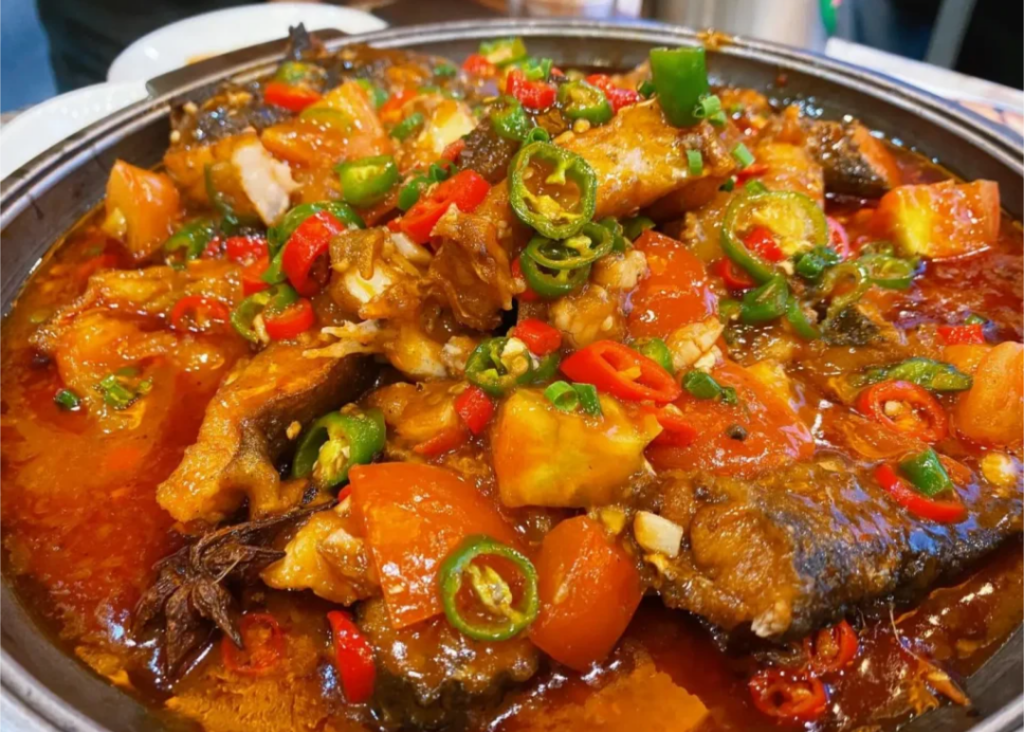
One local dish we did try during our group dinner was beer fish: a local white fish cooked with light beer, tomatoes, peppers, ginger, garlic, soy sauce, and oyster sauce. It was very tasty, though it had a few too many bones in it for my liking. Adam was a fan, though. He has definitely been the more adventurous one out of the two of us on this trip, fully embracing the local culinary mindset. So far, he has sampled a whole assortment of pig parts, including ears, tongue, and stomach, as well as duck gizzards and various other unexpected organ meats. Michael mentioned that snake is also popular around here if we wanted to give it a go, so maybe that is up next on Adam’s plate. Michael even joked that he knows Adam and Eve could not have been Chinese, because if they were, we would all still be in the Garden of Eden. According to him, the moment they saw the snake, they would have eaten it before it ever had a chance to mention the apple.
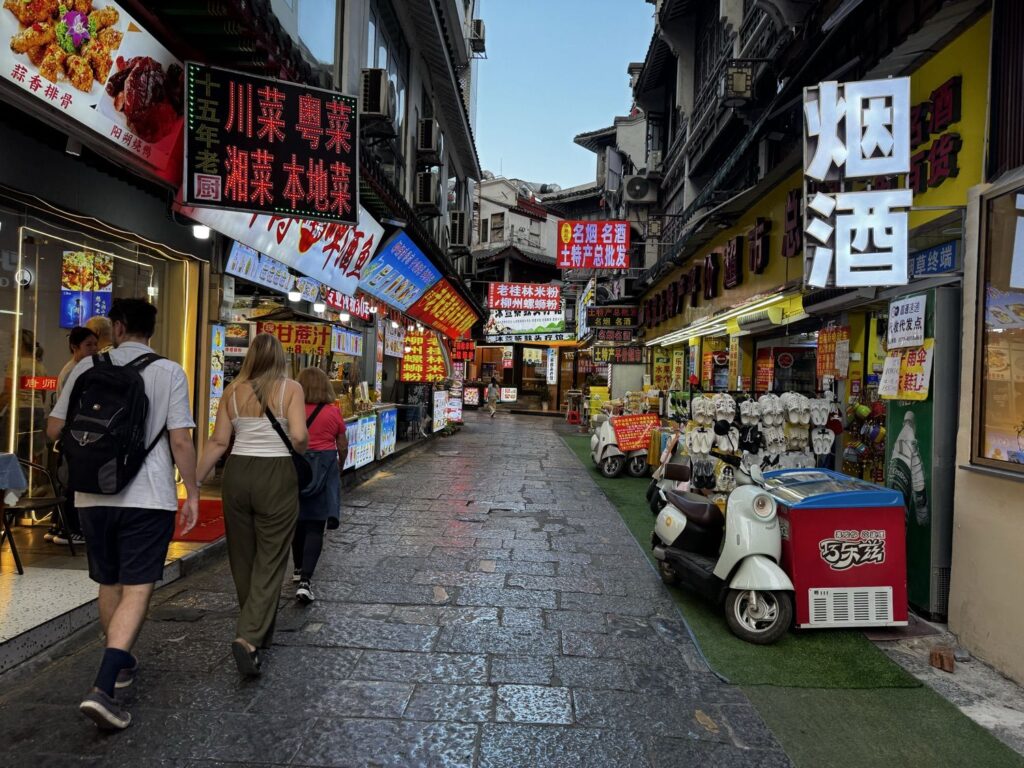
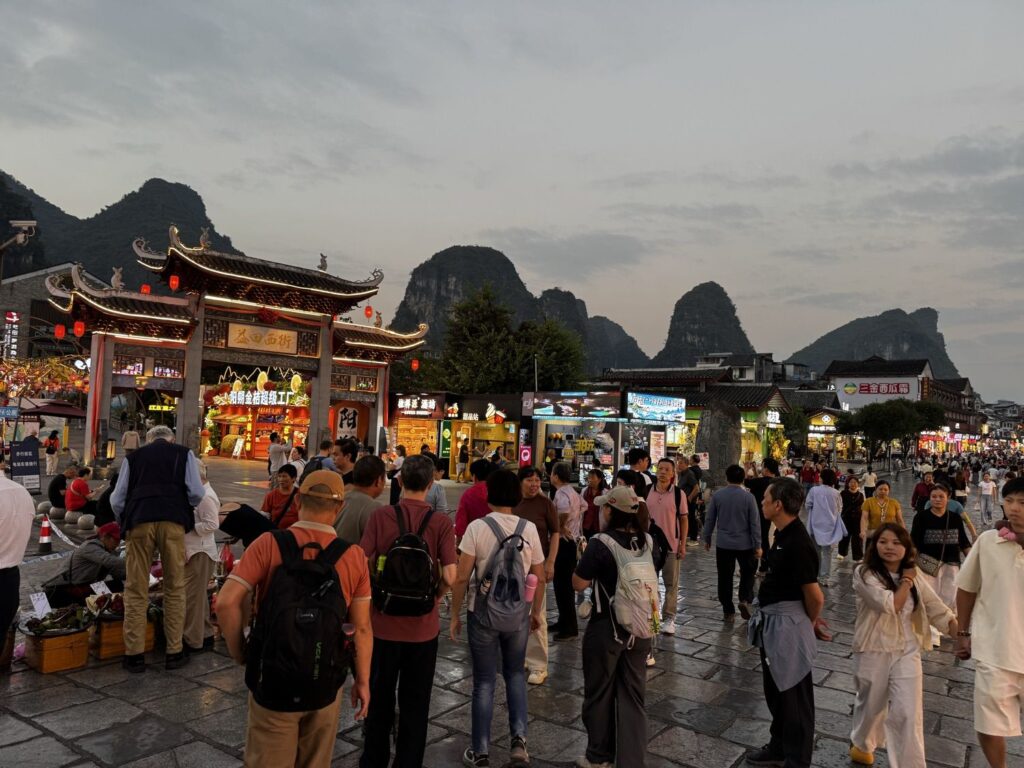
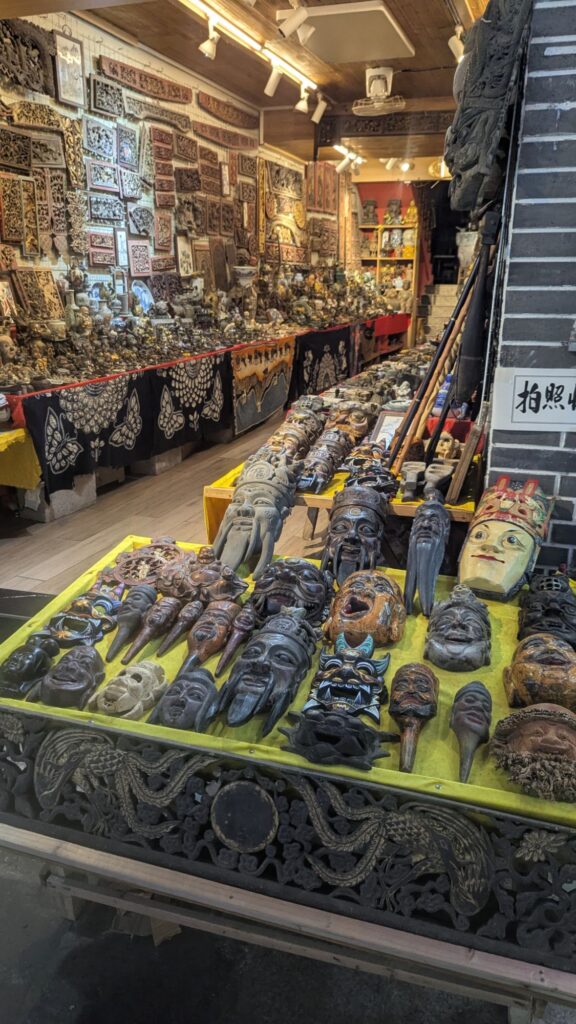
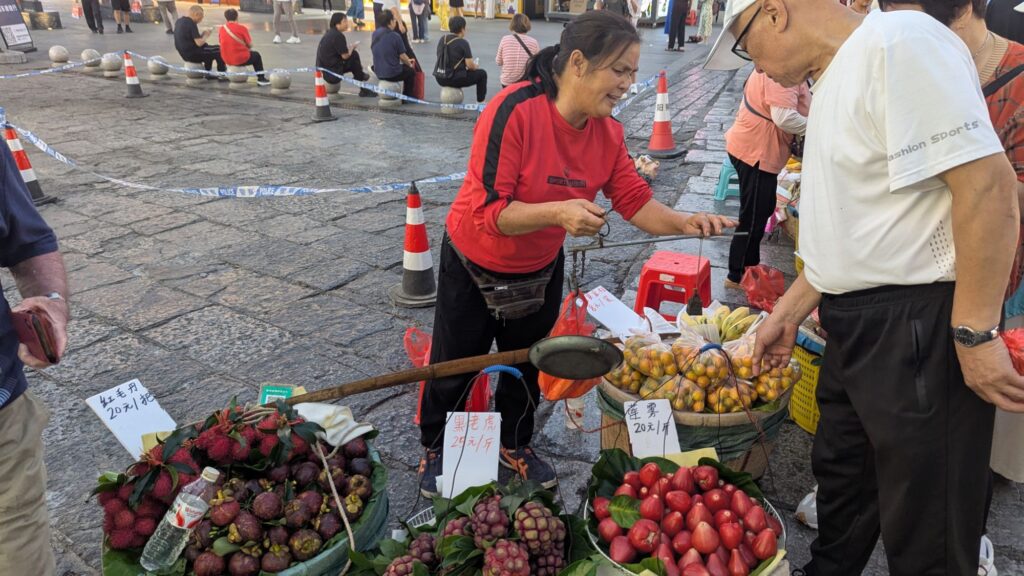
After dinner, we walked over to West Street, the bustling pedestrian centre of town and a bit of a tourist trap that we managed to fall right into. We had a nose around the stalls and spotted a small mahjong set. Having enjoyed playing it the other day, we decided to buy one. We managed to haggle the shop owner down from 300 yuan to 230 yuan (around £23). Feeling pretty pleased with ourselves, we turned the very next corner only to see rows of stalls selling the exact same set, with Kathy from our tour group picking one up for 90 yuan (around £9). I would like to think she is just a world-class negotiator, but I think we are just total rookies.
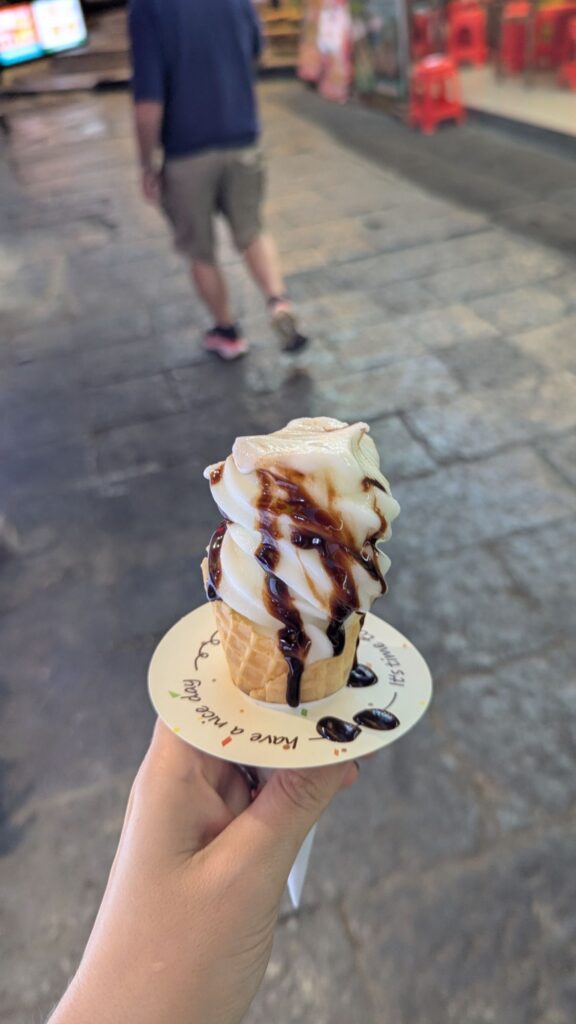
We spent a bit more time wandering around looking at all the different shops, and I even bought an ice cream that turned out to be frozen yogurt. Scammed again. I really should have seen that coming given how common lactose intolerance is across Asia.
Once we were done perusing, we headed back to the hotel where Michael laid out the plan for tomorrow: a five-hour bike ride. Hopefully that includes plenty of stops along the way. If that is not knackering enough, we have also signed up for every optional excursion available during what was supposed to be our relaxing downtime. I suppose we can always relax when we get home.
Will tell you all about our next adventure tomorrow.
Our day started at the bright and early hour of 7:30 AM with a private bus to the local station. We pulled up by 8:30 AM, only to discover our crack-of-dawn departure was just a strategic maneuver to beat Beijing’s legendary morning traffic. Our train didn’t actually leave until 10:30 AM, so we piled our bags up at the gate and took up residence in the departure lounge, chatting and watching the room slowly fill to the brim.
By 10:15 AM, everyone began forming multiple single-file lines. The moment the gate swung open, it became a full-blown competitive sport to board. I was relieved we were near the front, though even there it was a total mad crush of humanity. We all had assigned seats, but overhead luggage space is a finite resource. Thankfully, we managed to claim the racks above our heads and avoided spending the next four hours with heavy backpacks wedged onto our laps.
The bullet train was ridiculously fast, covering 1,100 kilometers in four hours. We spent much of the ride chatting with our guide, Michael, who gave us a fascinating look into his daily life in China, which in many ways feels surprisingly similar to our own. Michael was remarkably open about communism, explaining that people today know a lot about the outside world and view daily life as fairly comparable. He jokingly described China’s current system as capitalism under a single party.
He also spoke fondly about his 16 year old daughter, who is clearly his absolute pride and joy. Due to the legacy of the former one-child policy, Michael, his wife, their parents, and his daughter are all only children. His family places immense faith in her, and their entire lives revolve around giving her every possible advantage.
To keep up with her education, the family moves house every time she transitions to a new school. Her schedule is nothing short of intense. Her day starts at 7:00 AM, followed by morning classes until midday. She comes home for lunch and a quick nap before returning for afternoon lessons from 1:30 PM to 6:00 PM. After eating dinner at school, she attends evening classes until 10:00 PM, comes home to work on homework until midnight, and finally goes to sleep. She repeats this routine six days a week, with private tutoring taking over her Sundays.
When we asked if that felt like a bit much, Michael explained that this is standard for every child. University spots are so insanely competitive that you have to keep pace with everyone else. With only one child, families feel they have just one shot at success, and failing to perform brings shame on parents and grandparents alike. He added that his wife regularly reminds their daughter, “You have no friends in school, only competition.”
It sounds absolutely brutal. Yet just a few minutes later, Michael casually mentioned that despite all this effort, there are surprisingly few jobs for university graduates because of the sheer volume of applicants, leaving many to end up working as delivery drivers.
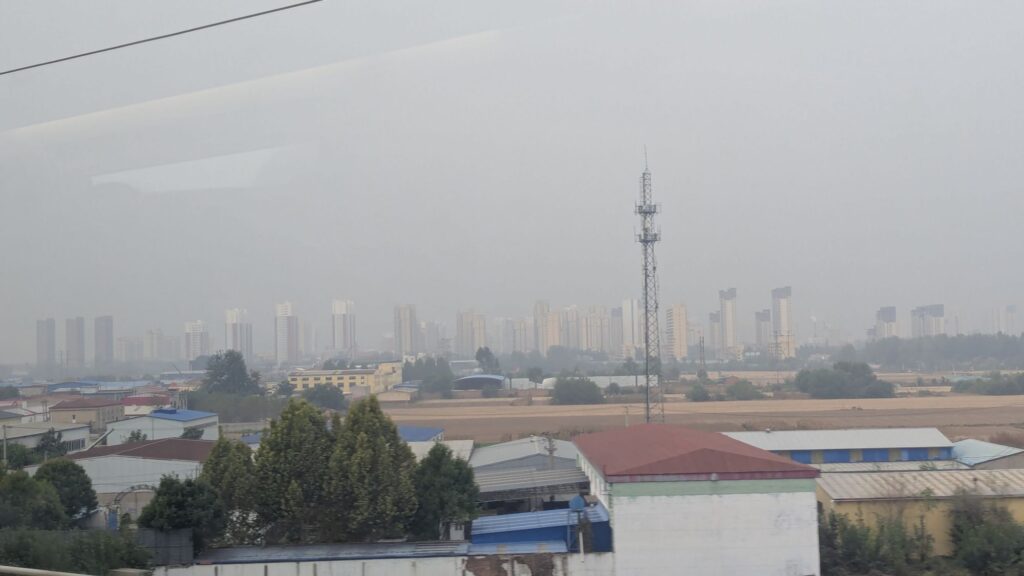
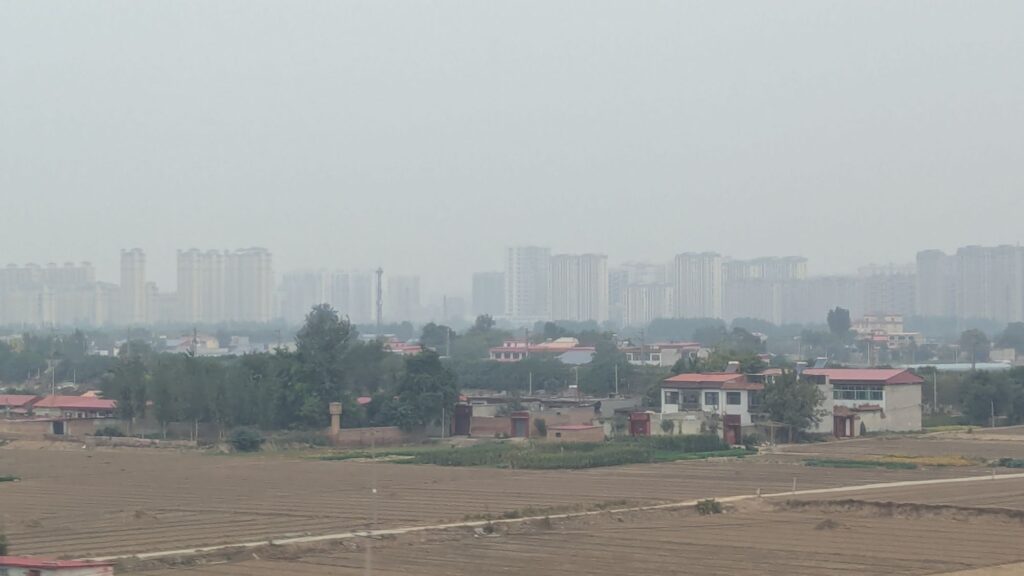
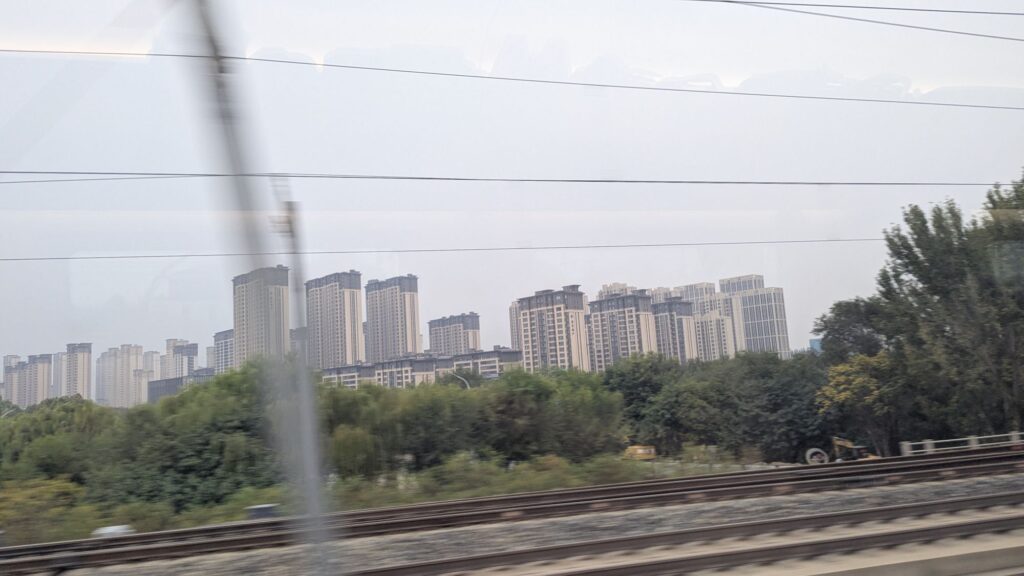
When we weren’t chatting with Michael, we spent our time watching the landscape whiz past the window. Even though you know the statistics on paper, seeing the country fly by really hammers home just how massive China’s population actually is. Outside, I saw what I can only describe as endless forests of high-rise apartment blocks, easily two to three times taller than anything you would find in London or other European cities. They weren’t just concentrated in urban centers either, they were everywhere, even dotting the rural countryside, with countless more under construction.
It is actually impressive that you do not feel the true weight of this population on a daily basis. The train stations, museums, and public parks are built on such a grand scale and planned so efficiently that huge crowds rarely cause a disruption, aside from the occasional mad dash for train seats.
Our destination is Xi’an, one of China’s four ancient capitals (specifically the Western Capital) and the seat of imperial power for over a thousand years. It is famous for being the starting point of the Silk Road and was supposedly one of the first cities in the world to reach a population of one million back in 700 AD. Today, it is humorously considered a modest, small-town Chinese city, boasting a tiny population of just 12 million people.
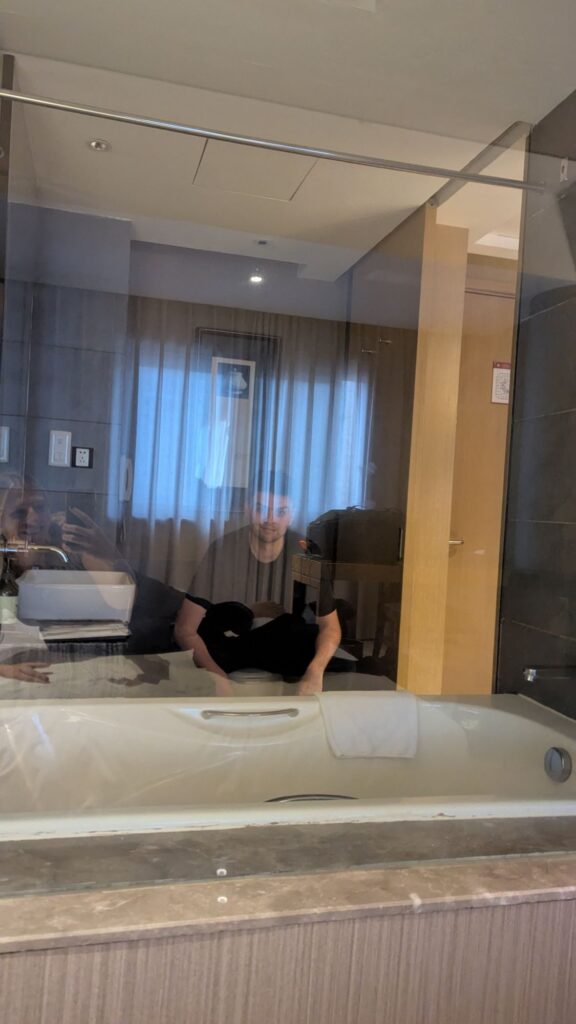
When we arrived, we dropped our bags off at the hotel, which was a huge upgrade from the last one. Although, this room came with a bathroom featuring full glass walls, which made for an… interesting setup.
Our plan for the afternoon was to explore the Muslim Quarter, a 1,000-year-old neighborhood right in the center of Xi’an. Its roots go all the way back to the Tang Dynasty, when Arab, Persian, and Central Asian merchants traveled to ancient Chang’an to trade silk and goods, eventually settling down for good.
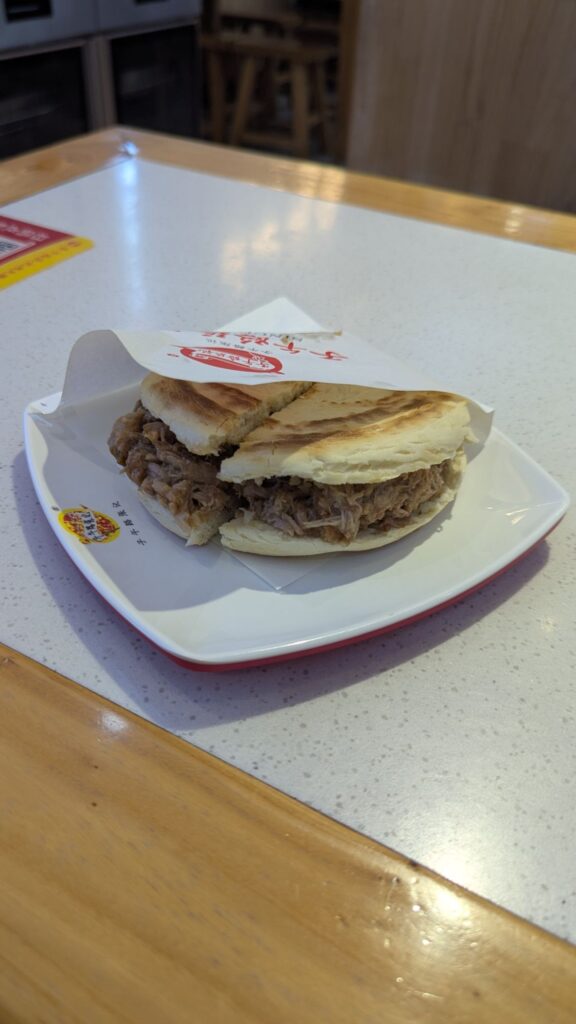
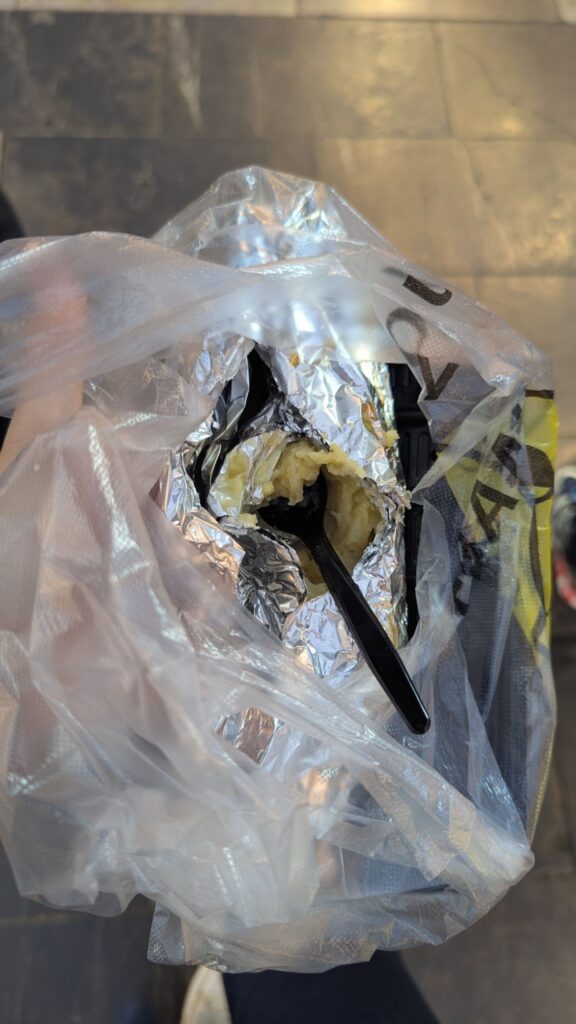
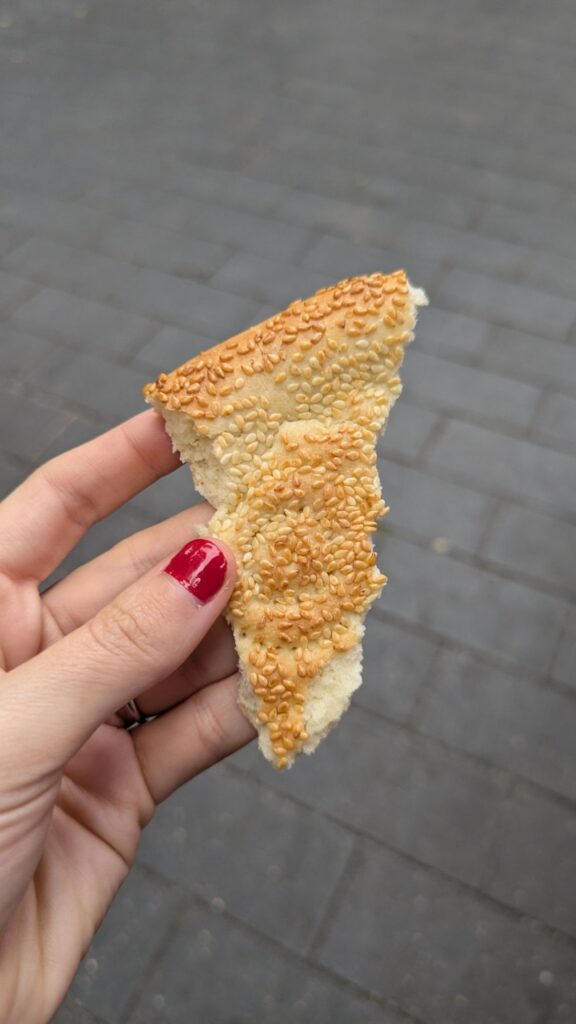
On our way over, we spotted an ad for Roujiamo, a local specialty of the Shaanxi Province. We stopped to split one, and while it is often called a Chinese burger, it is actually a lot more like Chinese pulled pork stuffed inside a flatbread bun. It was easily the tastiest thing we have had in China so far. Then again, I seem to find a new favorite dish every single day at the moment, so we will see how long this one holds the crown.
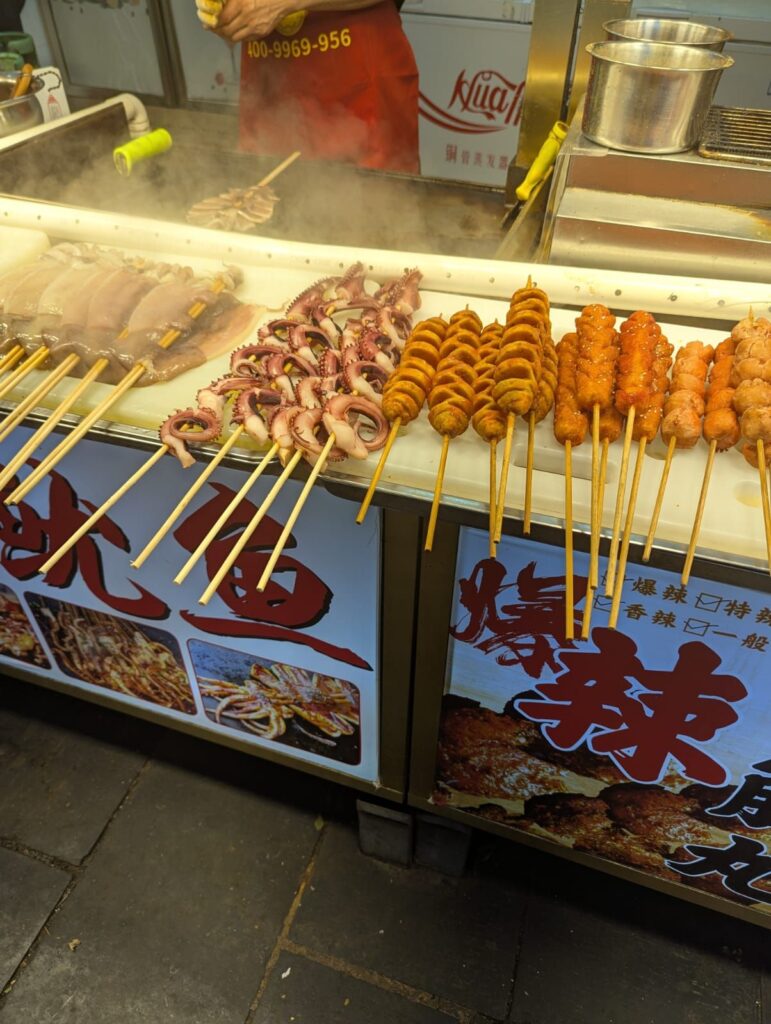
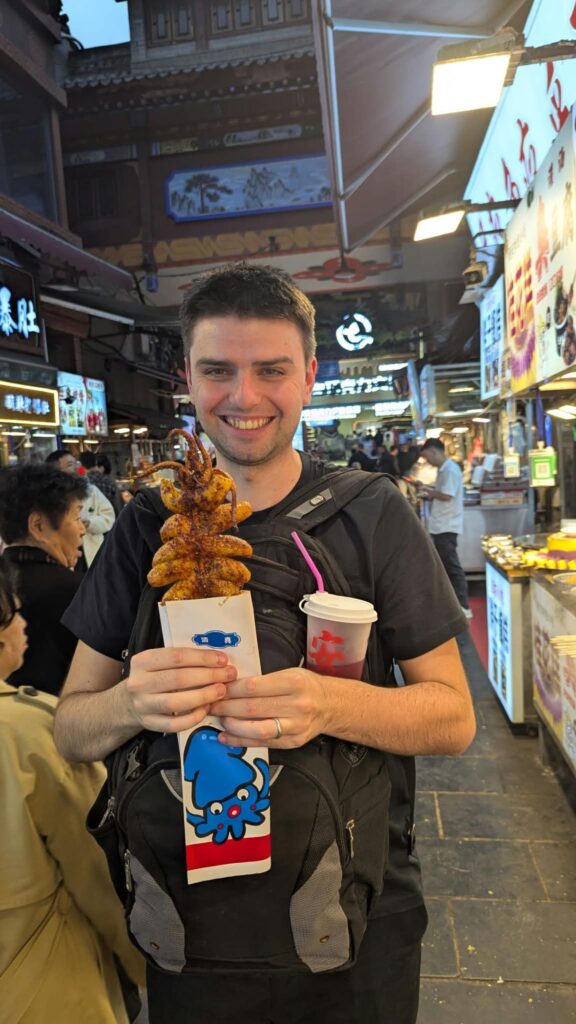
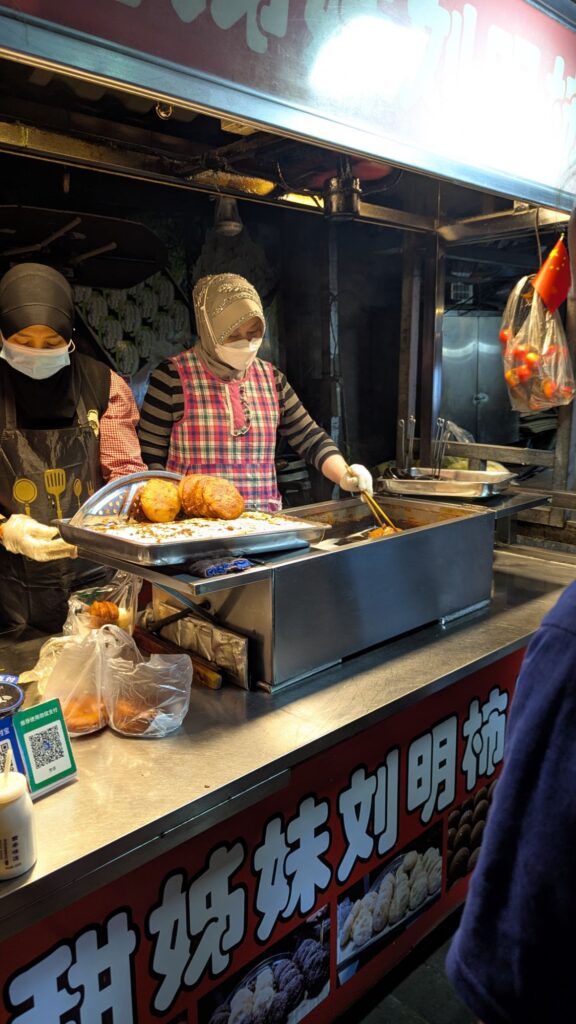
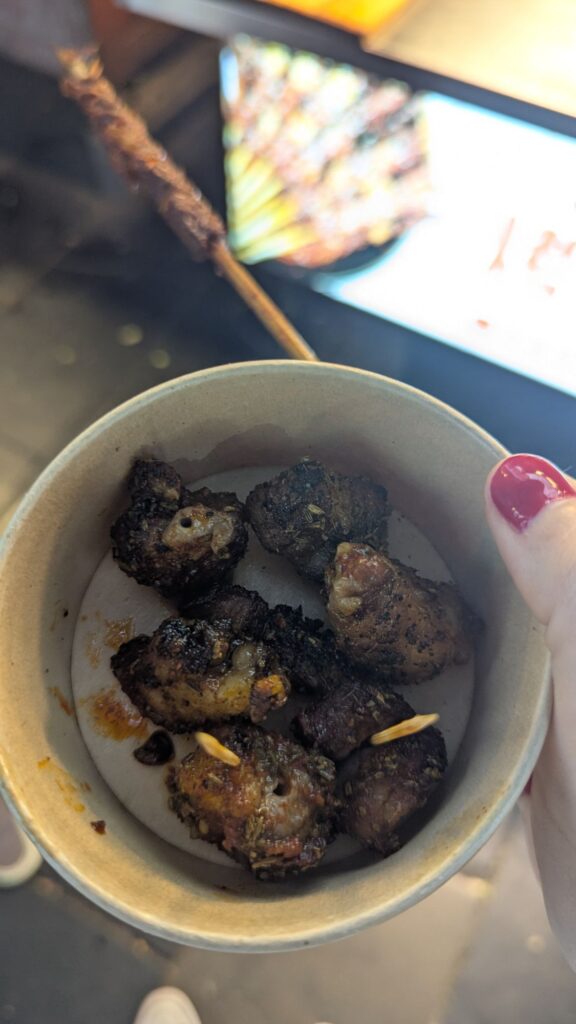
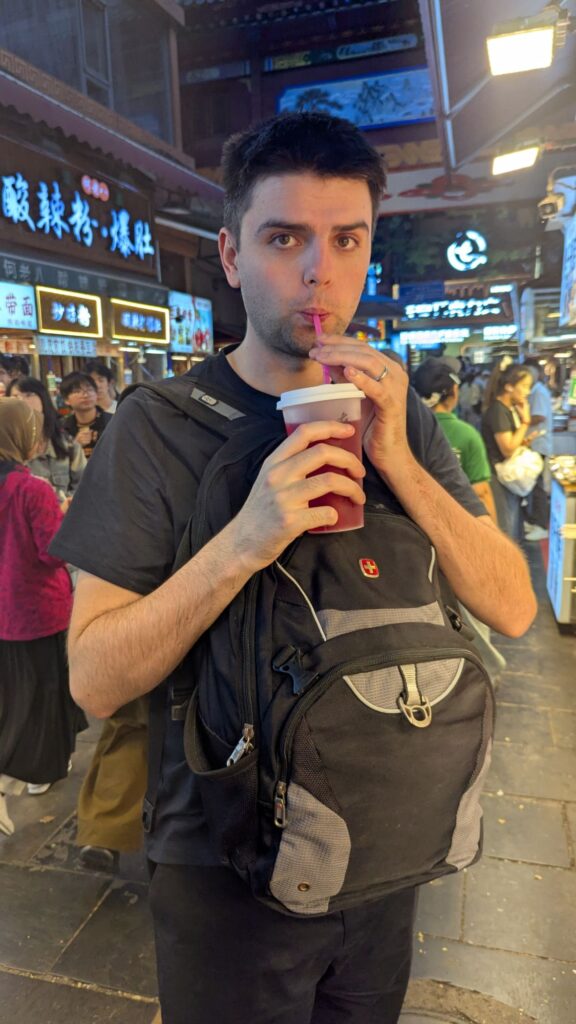
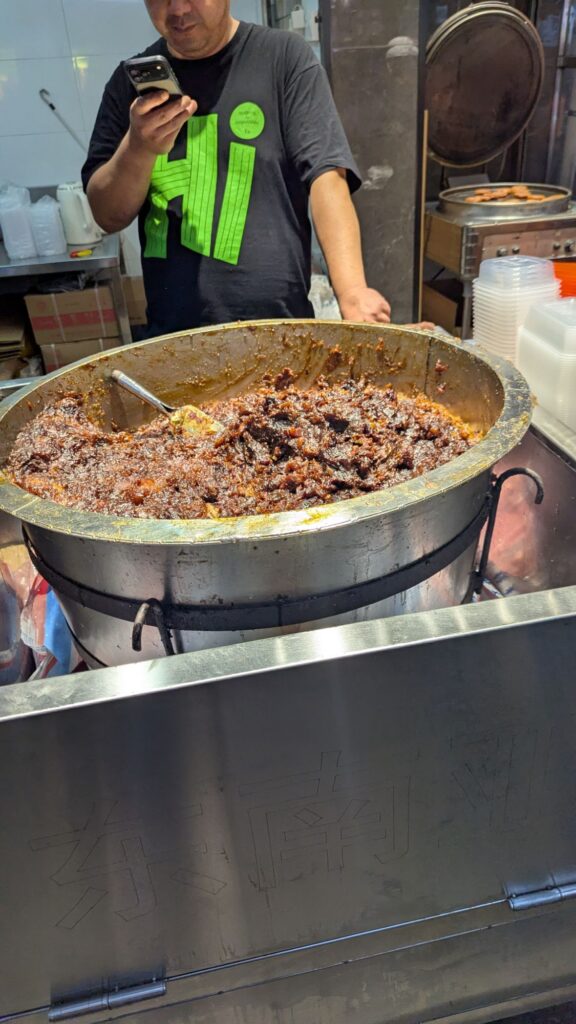
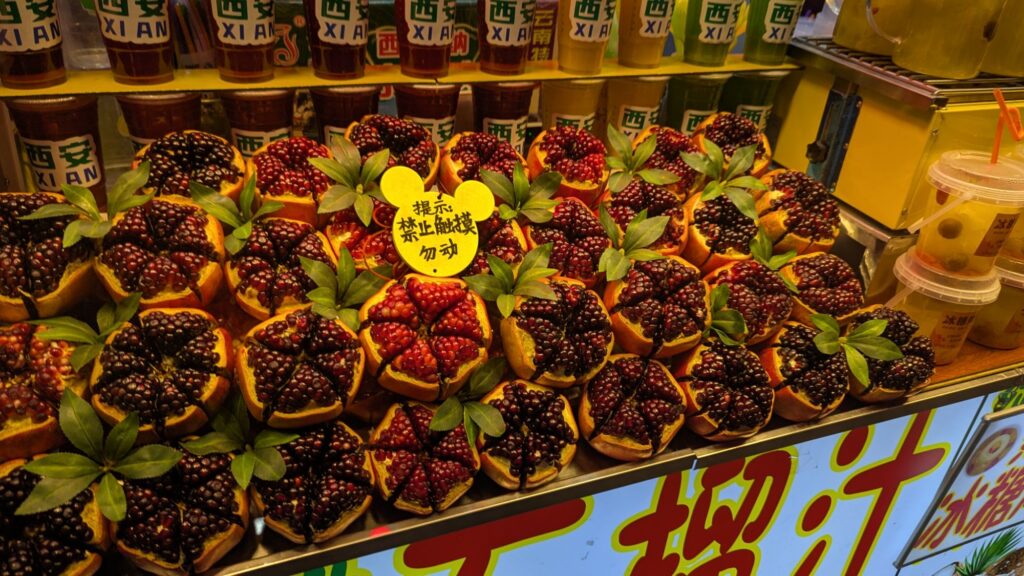
The Muslim Quarter was packed with incredible food options. Everywhere we looked, there were fresh fruits, cooked dates and rice, dried breads, hotpots, hand-pulled noodles, savory pies, roasted chestnuts, seafood, and a massive supply of my personal favorite: meat on a stick.
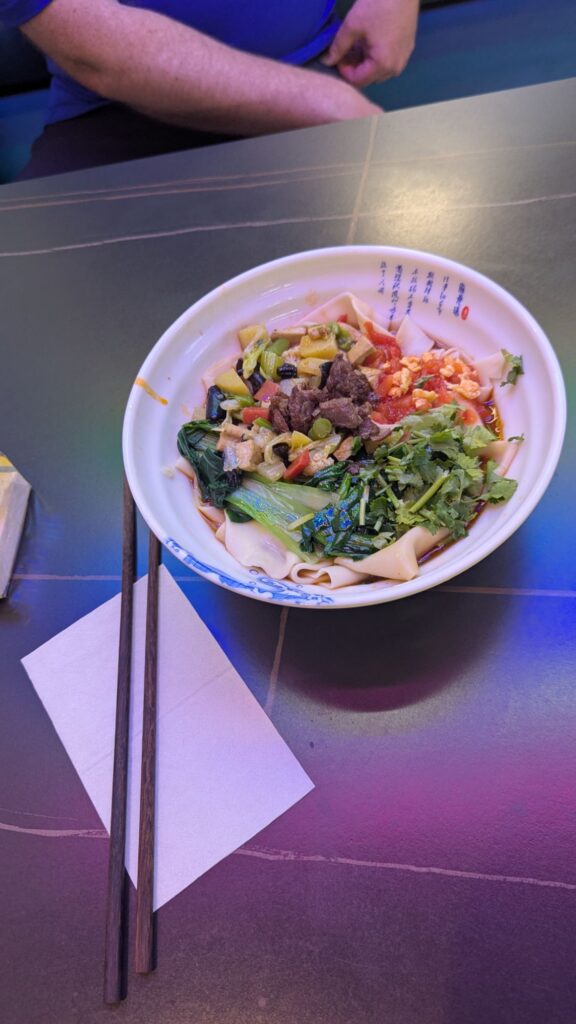
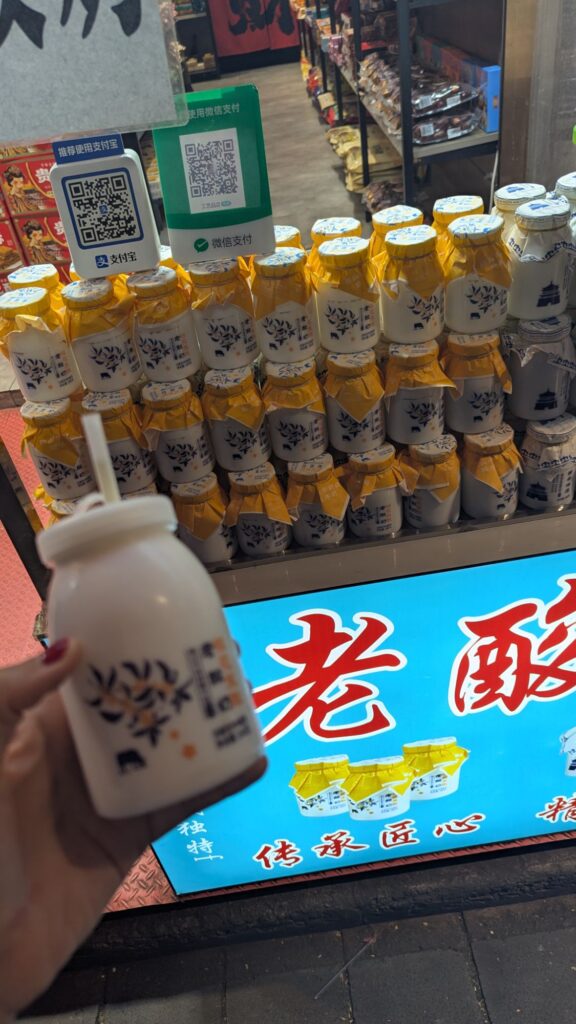
Naturally, we sampled as much as humanly possible. We teamed up with Daniel, a guy from our tour group, so we could split dishes and avoid filling up immediately. Together, we tackled pomegranate juice, mango juice, lamb, beef, squid skewers, biang biang noodles, specialty milk drinks, dates, sticky rice treats, and a persimmon doughnut.
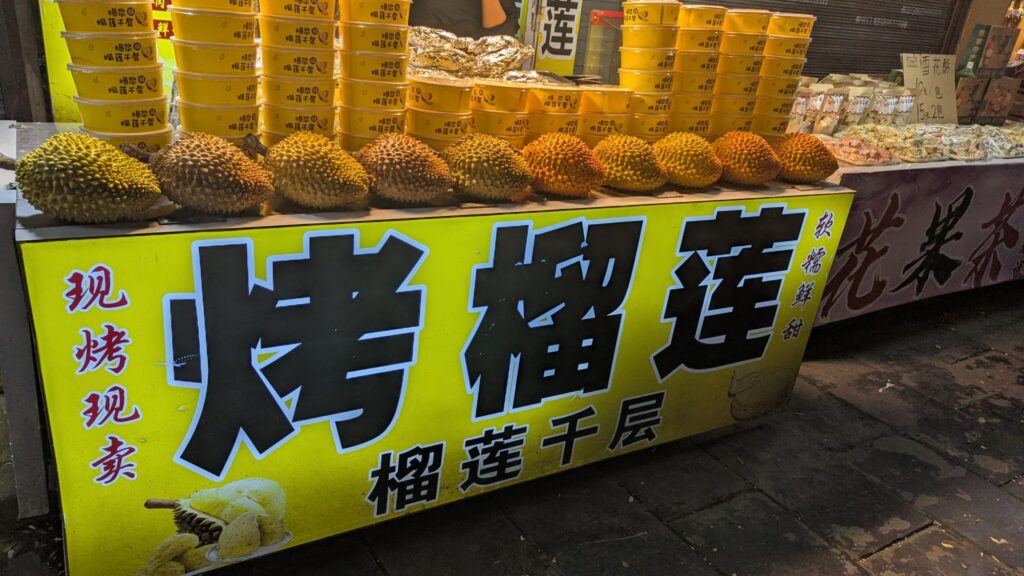
Every single bite was delicious, with one notable exception: the durian. This was pretty disappointing since I have wanted to try durian for years and finally decided to bite the bullet. It is the famously pungent fruit that is banned from public buildings across Asia, and it set me back £17, which is more than the cost of a full dinner for two in China. In my opinion, it was aggressively average.
Luckily, the dozens of other dishes we tried were amazing. By the end of the walk, it is safe to say we were completely stuffed. Unfortunately, we might have been a little too enthusiastic with our street food marathon, as both of our stomachs were feeling a bit loosey-goosey by the time we got back. As you can imagine, that made our see-through bathroom setup extra romantic.
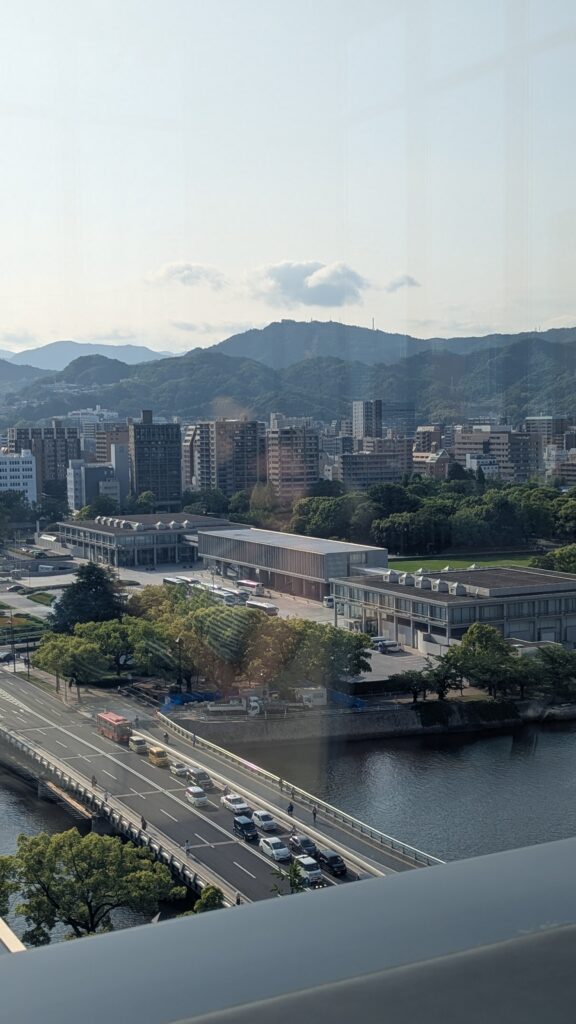
After a very snazzy bullet train ride, we arrived in Hiroshima just in time for lunch and checked into our equally snazzy hotel—our home for the final three nights of the trip.
Not wanting to waste the rest of the afternoon, we headed straight back out in search of lunch. Unfortunately, we seemed to have picked the wrong time and the wrong part of town. Even though it was only 12:30, all the restaurants were either packed with businessmen or completely sold out of food. In the end, we reluctantly settled for pizza—very tasty, but not very Japanese for one if our final meals here!
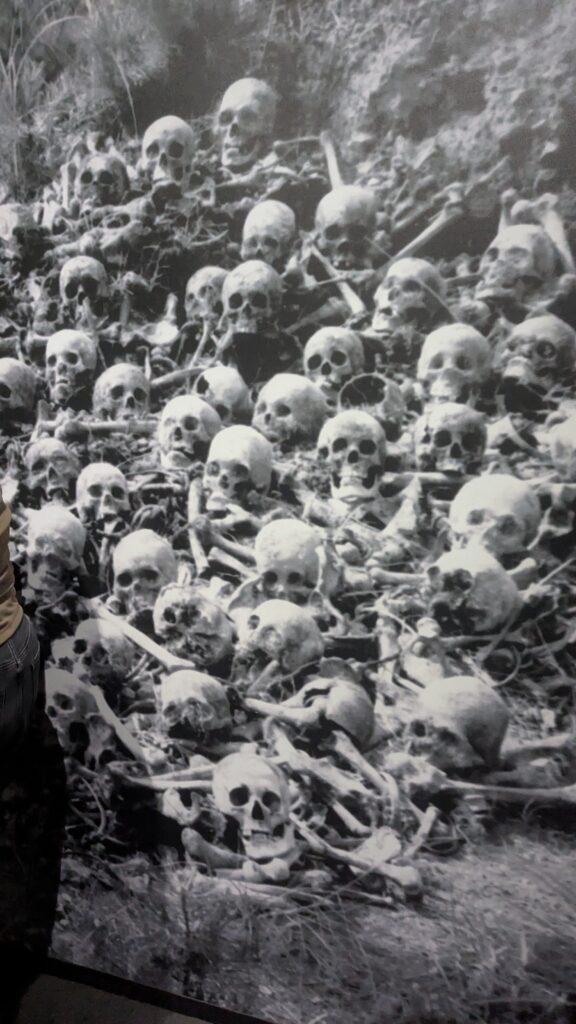
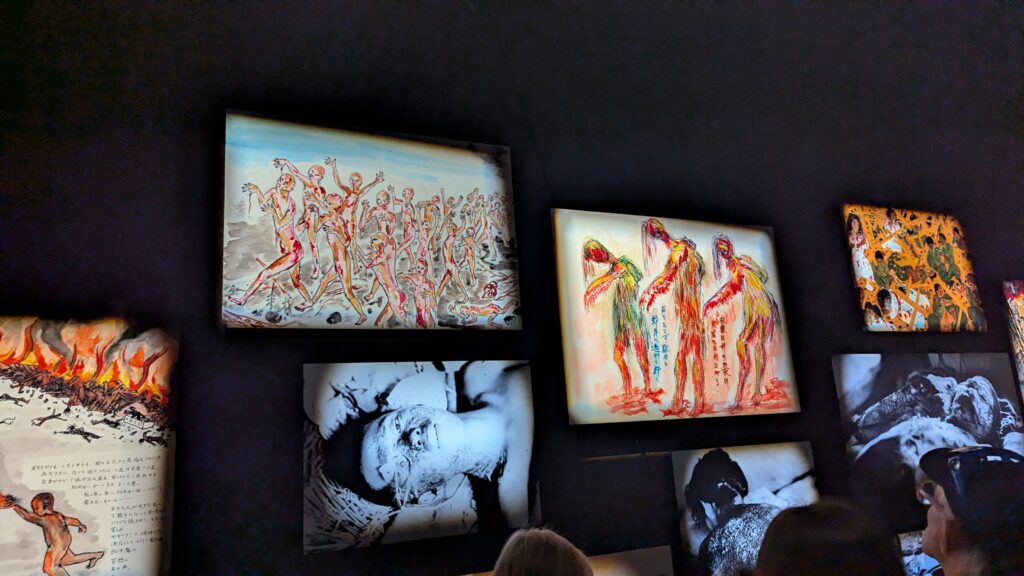
After lunch, we visited the Hiroshima Peace Memorial Museum. Built to commemorate the victims of the atomic bomb and to educate visitors about the horrors of nuclear warfare, it was one of the most powerful and moving museums I’ve ever experienced. It was harrowing. I found myself in tears multiple times. The museum covered everything: the lead-up to the bomb, the reasons Hiroshima was chosen, survivor accounts, the scientific development of the bomb, and its devastating aftermath. Photos of victims were few and far between as they are so horrific and yet some of the most haunting exhibits were drawings from survivors—childlike sketches that somehow managed to convey more emotion and horror than any photograph ever could.
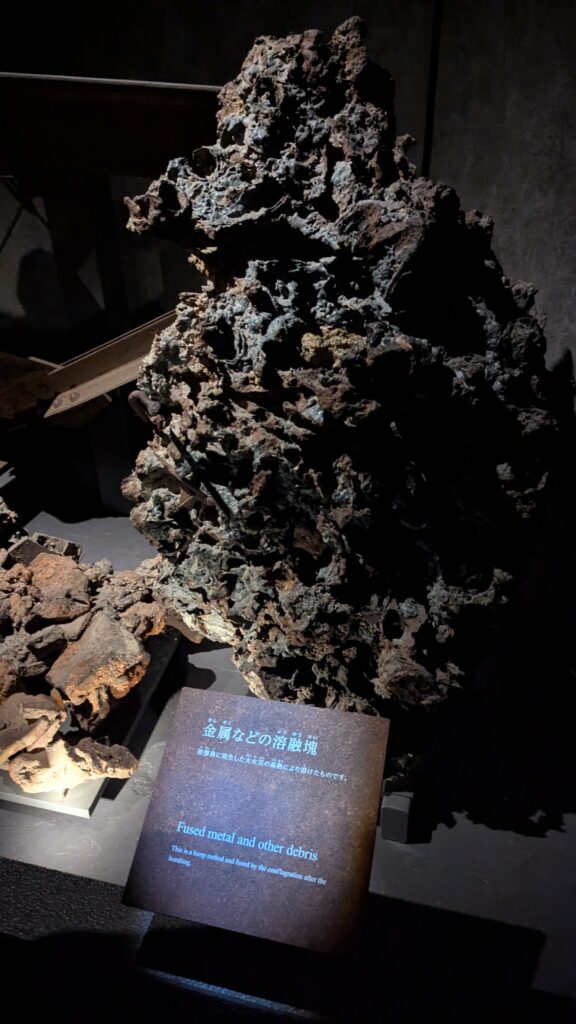
Even so, the few physical remnants on display were enough to make your stomach turn—melted metal, vaporised shadows etched into stone, and personal belongings charred beyond recognition. One particularly upsetting section explained how survivors were silenced and ostracised, their radiation-related illnesses misunderstood or deliberately covered up. The pain didn’t end with the blast; it lingered in bodies, families, and memories for generations.
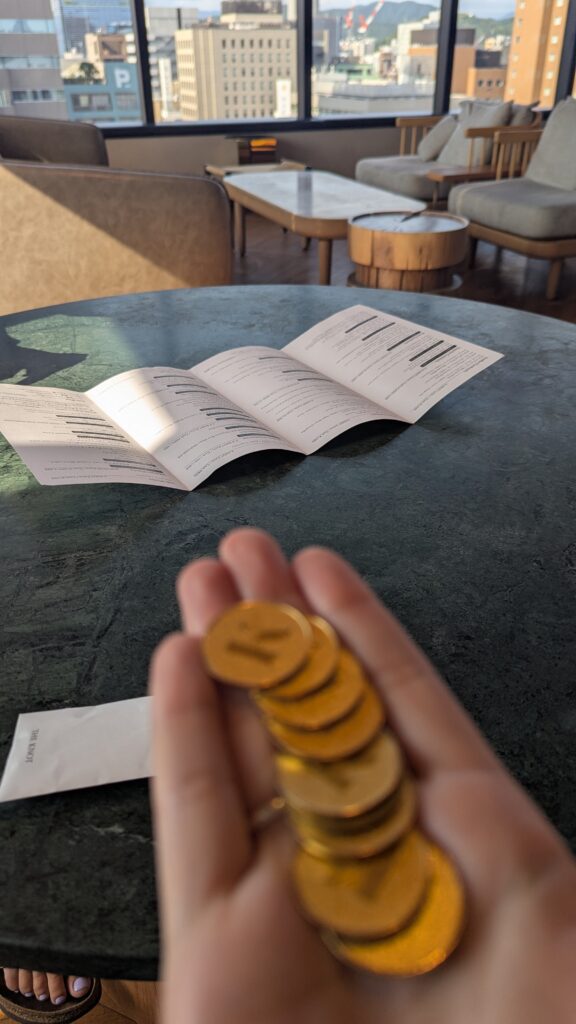
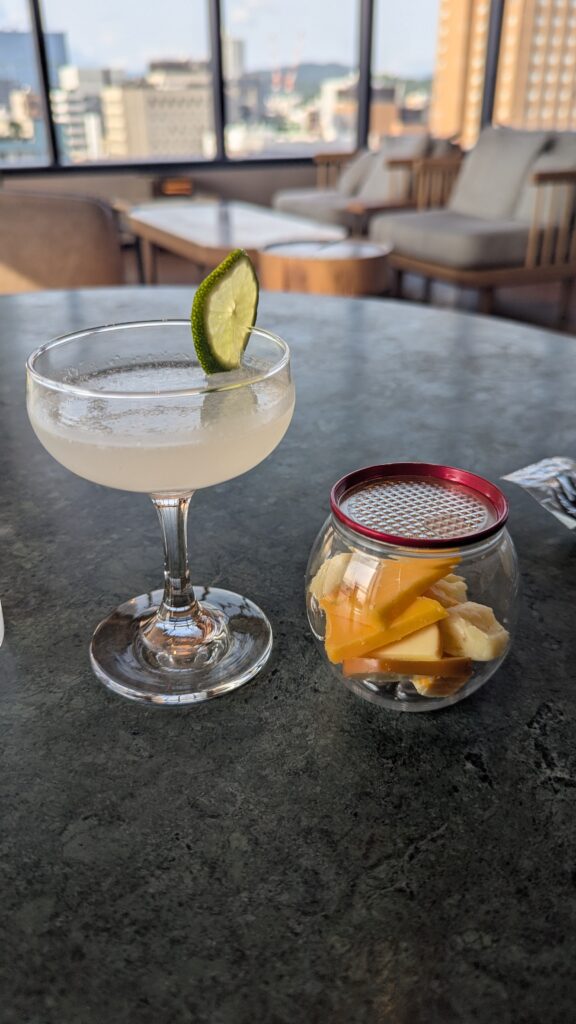
After that heavy experience, we took a quiet walk around the Peace Park to clear our heads, then returned to the hotel for a much-needed drink. We’d been given some novelty gold coins to use at the hotel bar, which made us feel like pirates counting our treasure. We cashed them in for cocktails on the rooftop bar, the city stretched out below us, and the sky slowly turning golden.
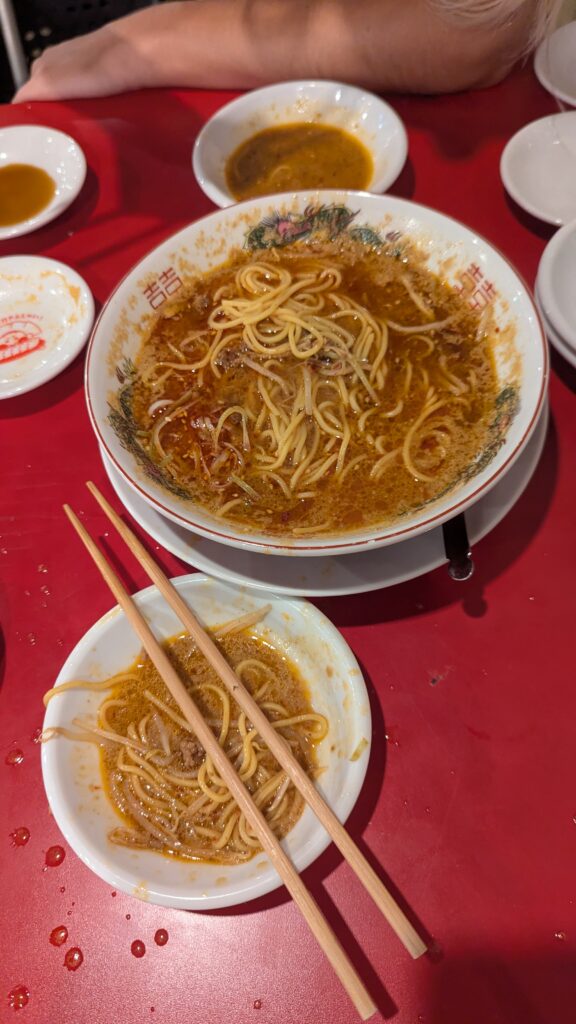
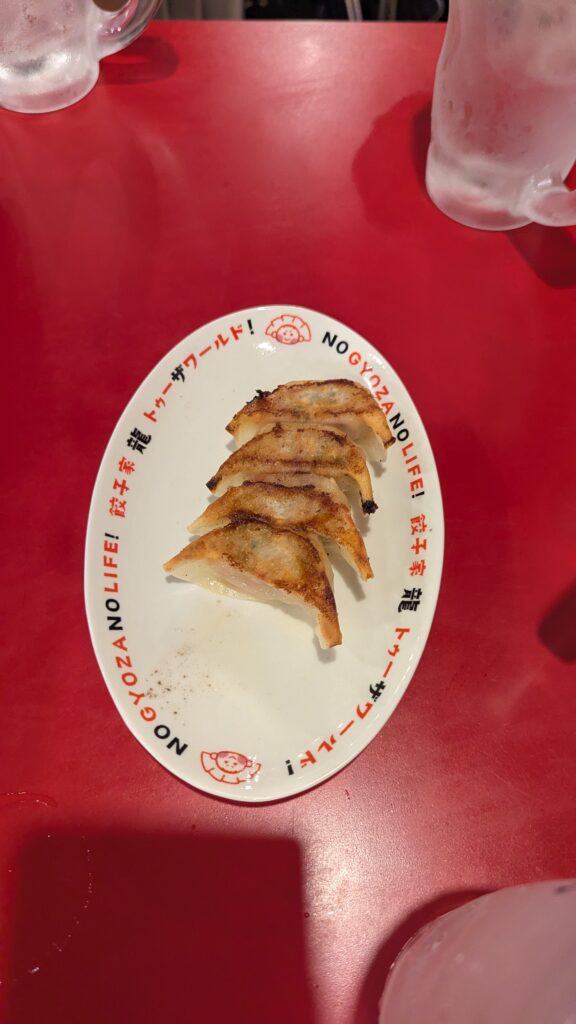
For dinner, we found a cosy gyoza place and ordered a generous plate of dumplings along with a spicy dan dan noodle soup to share. The soup gave us a bit of a scare at first—Szechuan pepper has a numbing effect that makes your lips and tongue feel like they’re numb and tingling—but once we realised we weren’t having allergic reactions or strokes, it was actually delicious.
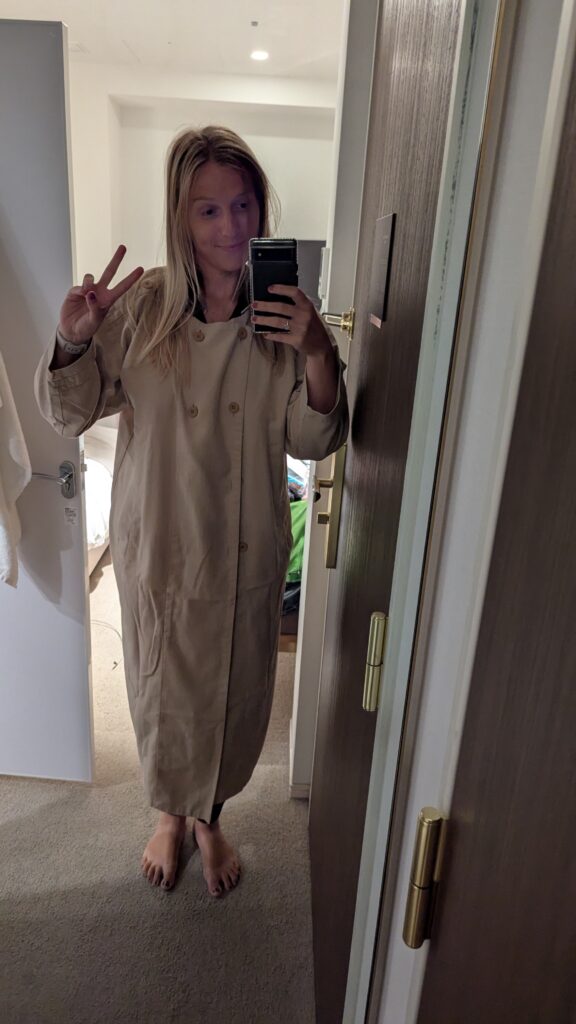
Back at the hotel, we got changed into the free but wildly unflattering pajamas provided in our room and settled in to watch a bit of Japanese TV. It’s hard to explain if you haven’t seen it, but everything is so exaggerated, loud, and brightly coloured—it feels like children’s programming for adults. We gave it about 15 minutes before deciding sleep was the better option.
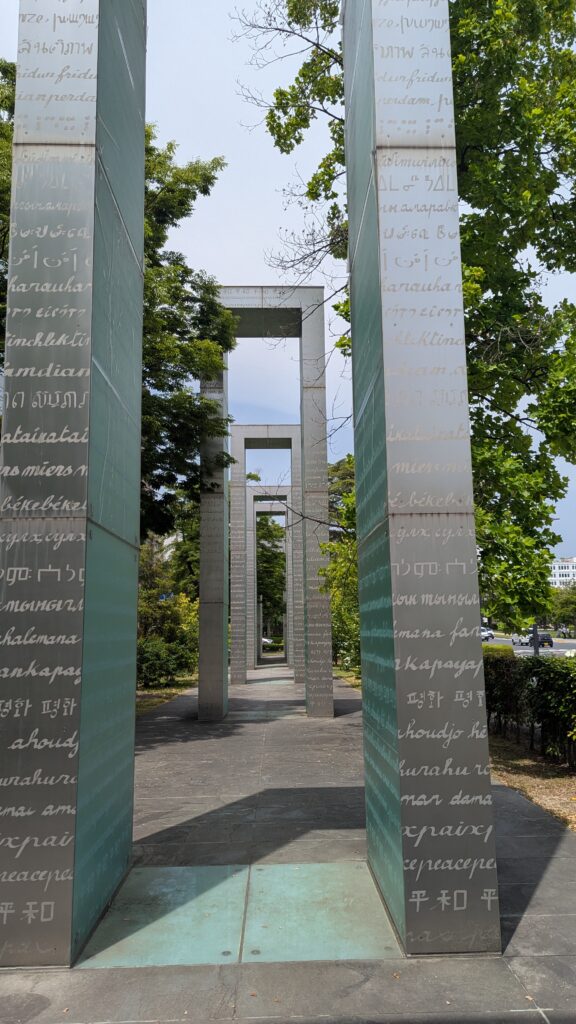
The next morning was our final walking tour of the trip. It took us around the monuments in Peace Park, starting with the Gates of Peace. After the bomb dropped, survivors described the sky going pitch black with ash and debris, and for over an hour no one could see anything. When visibility returned, all they could see was ruin—buildings flattened, people walking in a daze, their skin literally melting. Then came the infamous black rain. Many thought they had died and gone to hell. The Gates of Peace memorial symbolises Dante’s nine gates of hell—with one additional gate for peace.
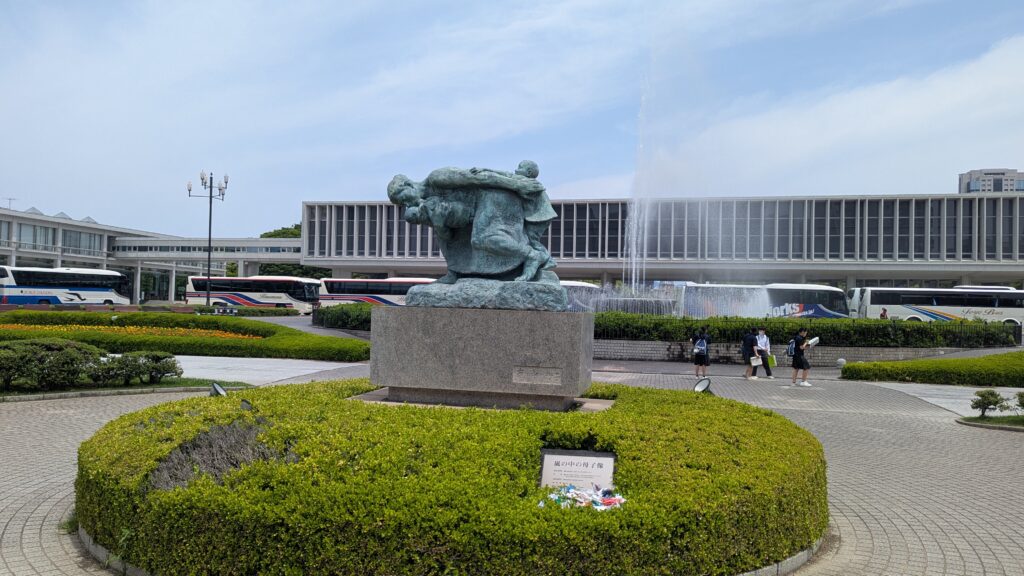
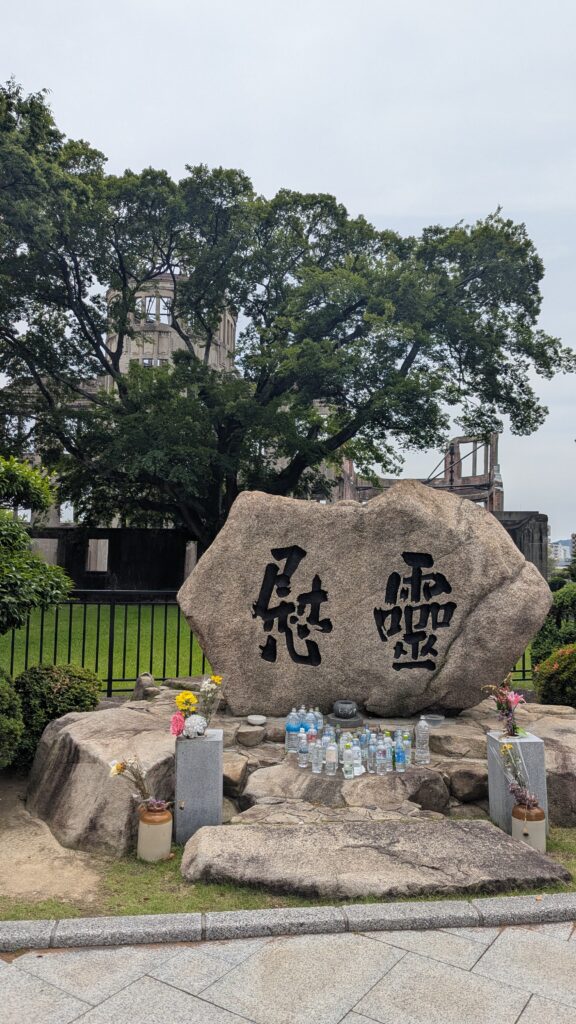
Next, we visited the Mother and Child statue, honouring the many women who died trying to protect their children, and all the babies who later died from radiation. Nearby, the Prayer Fountain gently flowed, inspired by survivor stories of people begging for water in the days after the blast. It represents the wish to finally give peace to the souls of the dead. All around Hiroshima, we noticed people leave bottles of water at memorials—small, touching gestures that feel deeply human.
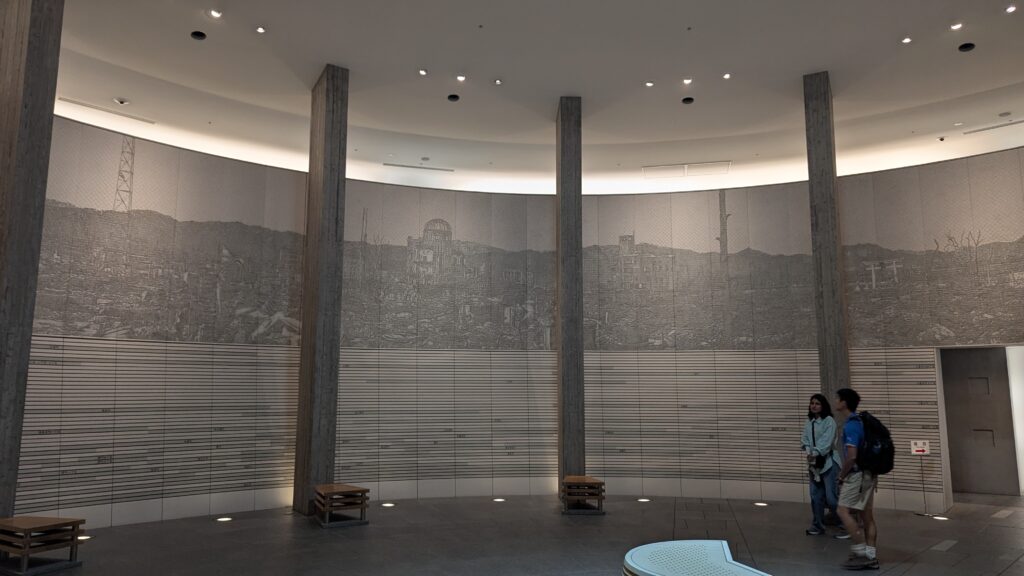
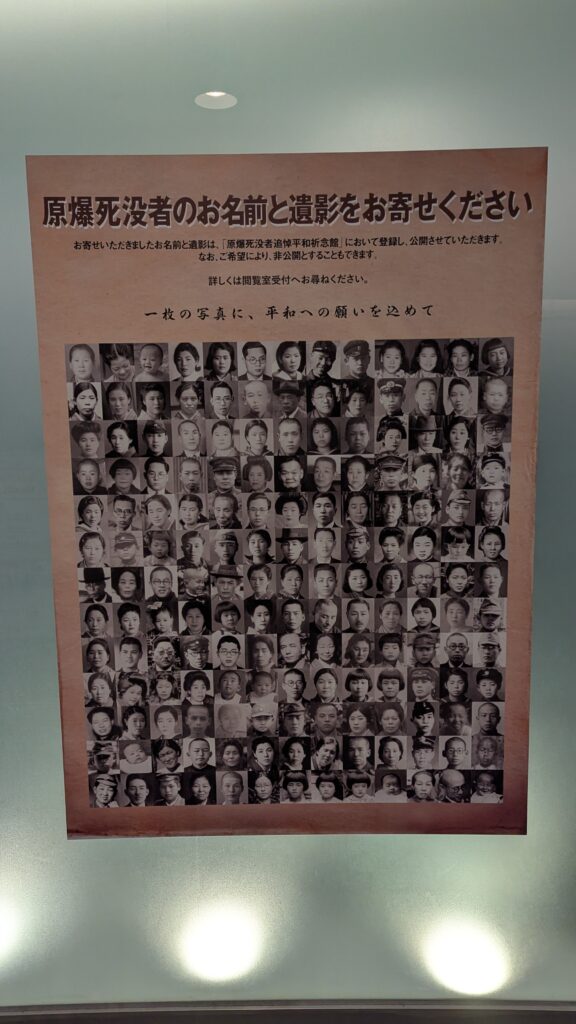
We continued to the Peace Memorial Hall, where a 360° panoramic engraving recreated the destroyed city using 140,000 tiles—one for each life lost. The real number is likely higher, but exact figures are impossible due to the complete obliteration of records and bodies, there are still posters asking for information on some missing people presumed dead.
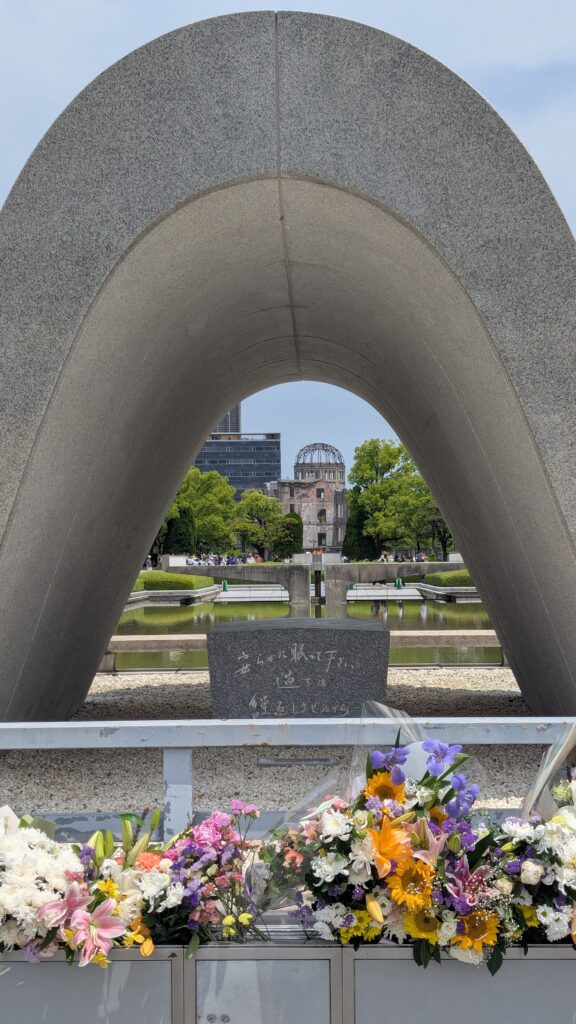
From there, we saw the cenotaph and the Flame of Peace, lit from a Buddhist monastery fire that has been burning for centuries. The flame will remain lit until nuclear weapons are eradicated—an act of both hope and quiet defiance.
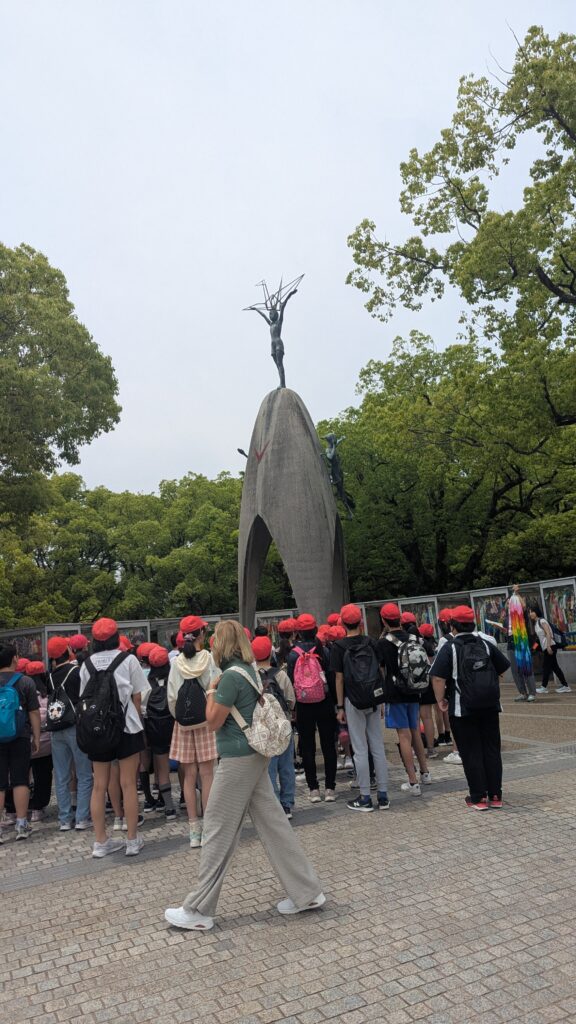
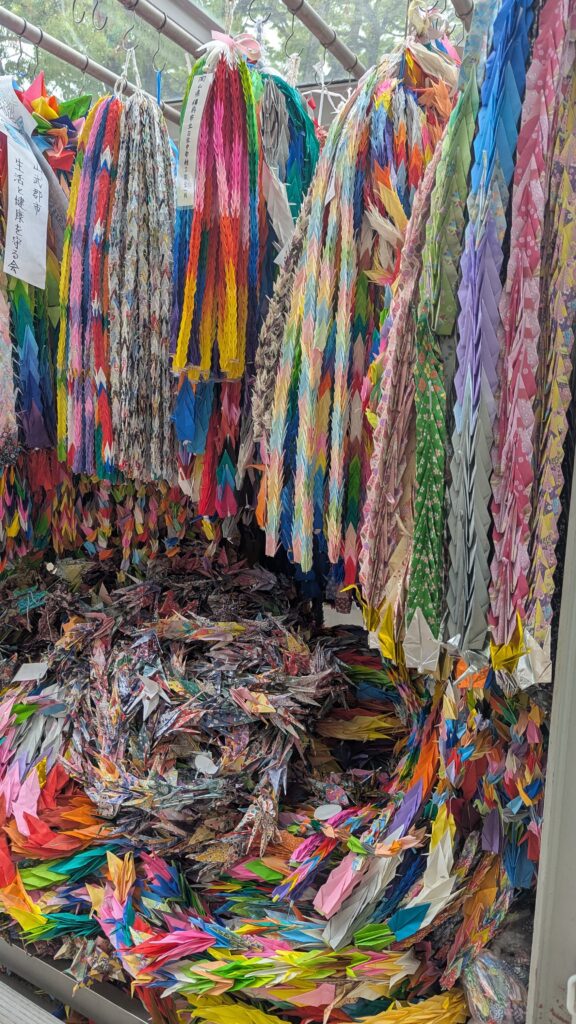
One of the most emotional sites was the Children’s Peace Monument, dedicated to a young girl who initially survived the bomb but later died of leukaemia. She believed in the old tale that if you folded 1,000 paper cranes, your wish would be granted. Despite completing the cranes, she passed away, and now schools across Japan send paper cranes each year in her memory.
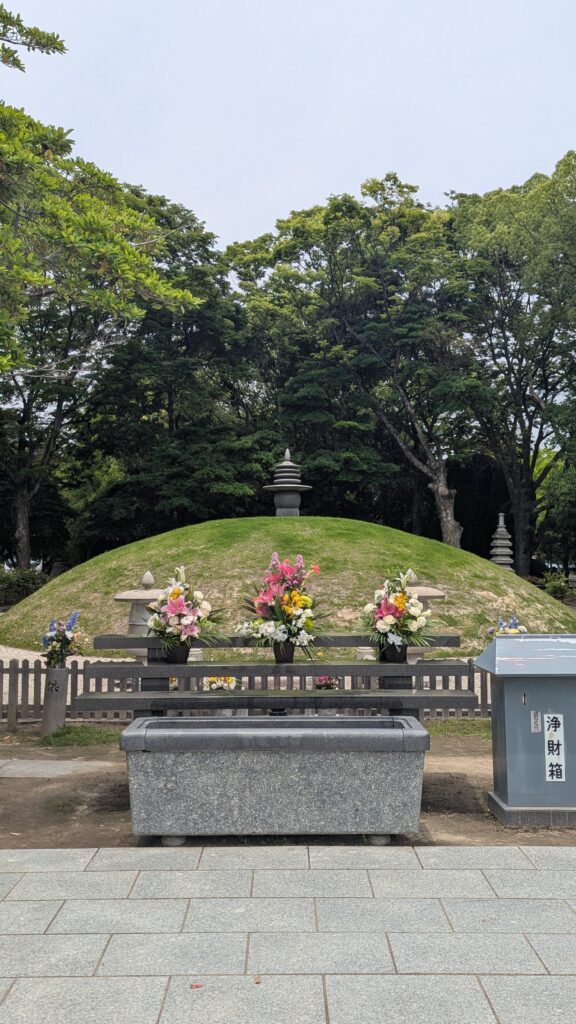
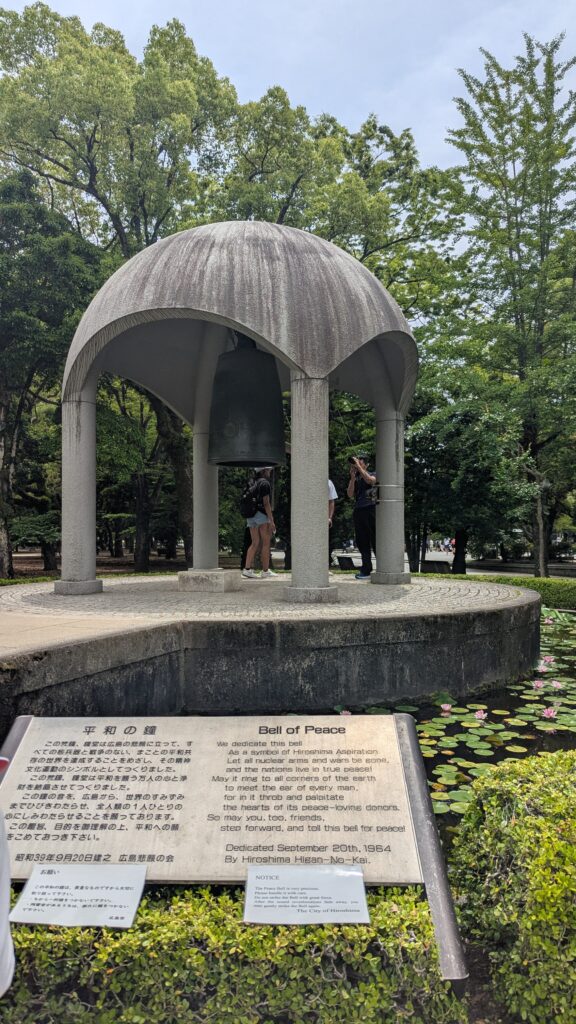
We also saw the burial mound of ashes, which holds the remains of tens of thousands of unidentified victims—heartbreakingly high and solemnly still. As well as the bell of peace.
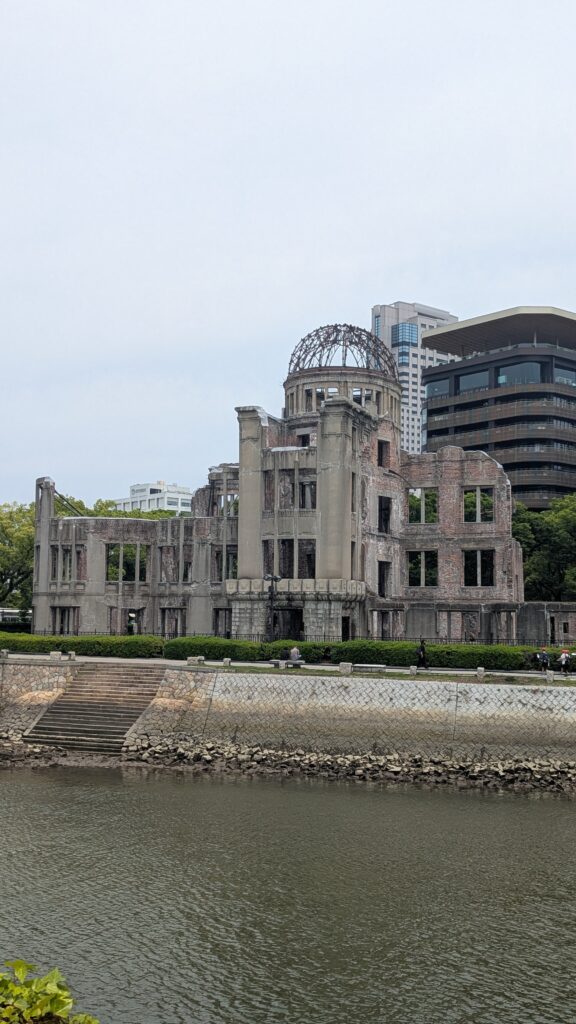
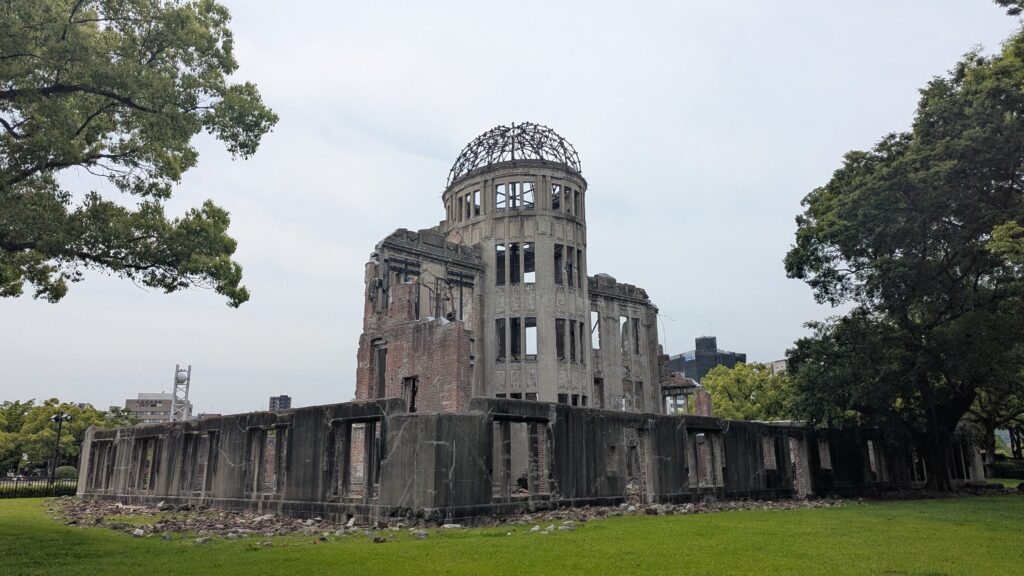
Our final stop was the iconic Atomic Bomb Dome. One of the few buildings left standing after the blast, it has been preserved in its damaged state and declared a UNESCO World Heritage site. Supported only by minimal structural reinforcement, it’s a haunting and essential reminder of what once happened here.
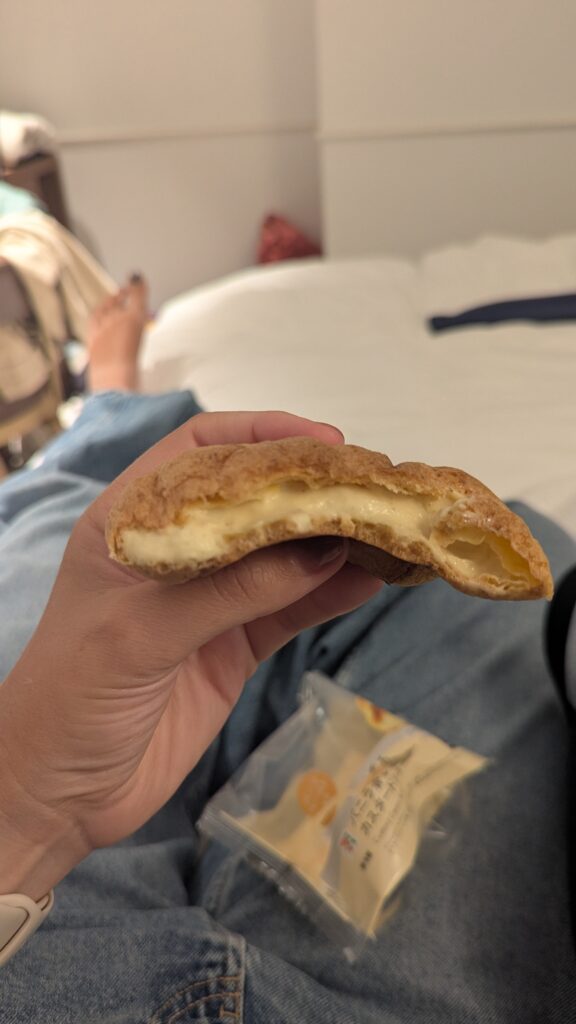
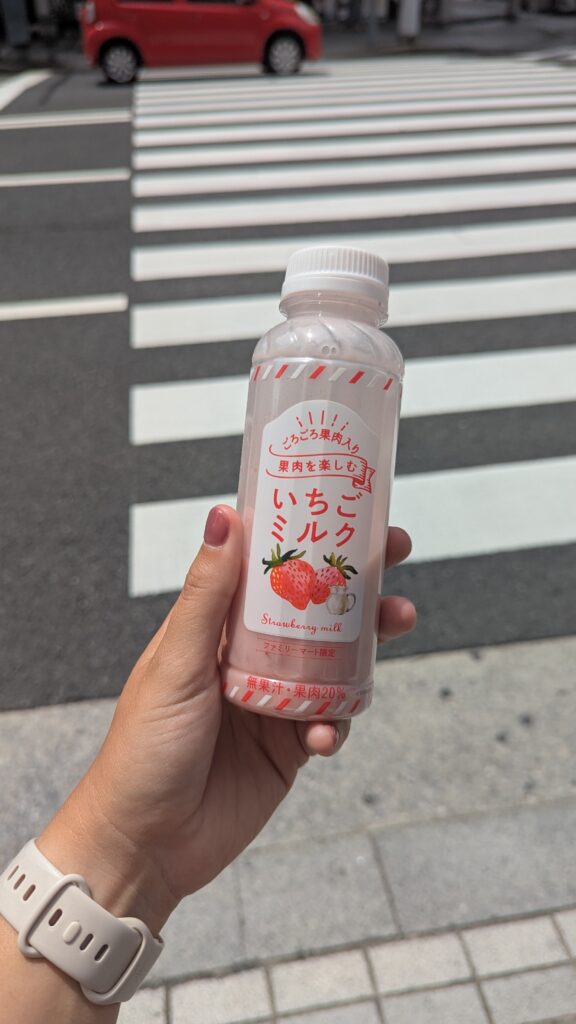
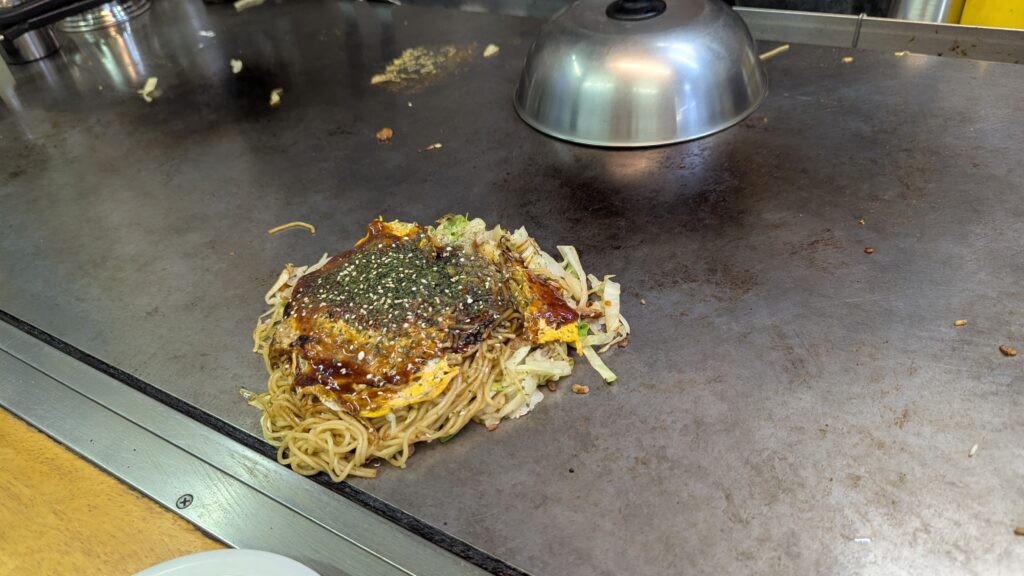
After the tour, we went for lunch at an okonomiyaki restaurant and shared a pancake and some soba noodles. It wasn’t quite as good as the one in Osaka, but still comforting and tasty. For dessert, I treated myself to my favourite 7-Eleven combo: strawberry milk and a custard doughnut. With only a few days left, I wanted to savour all the little things I’d come to love.
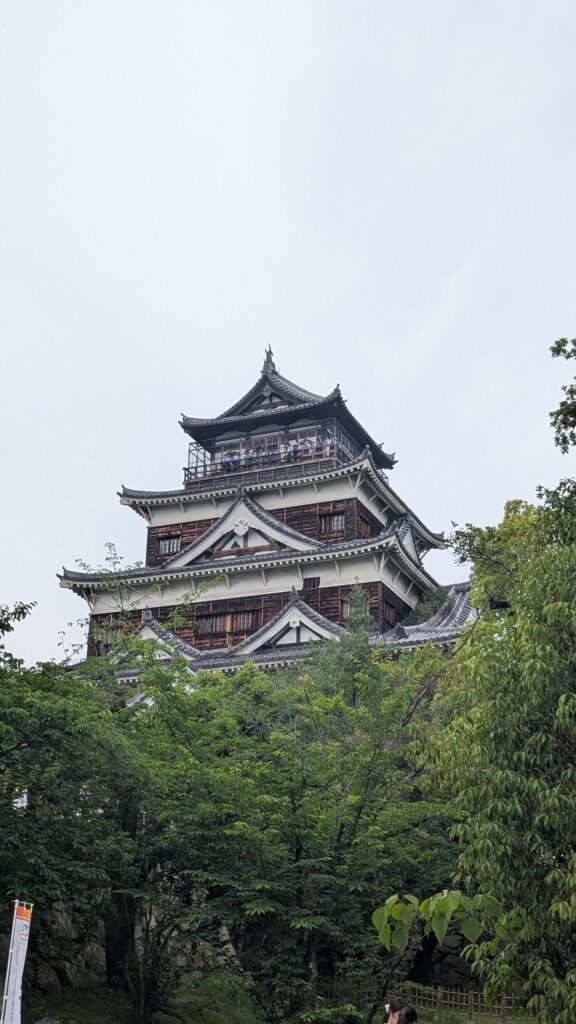
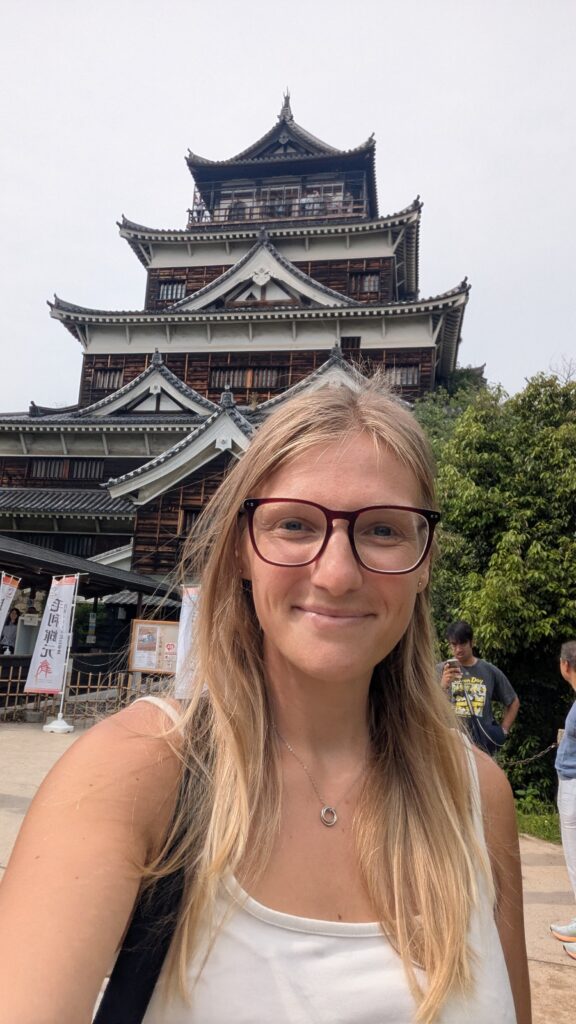
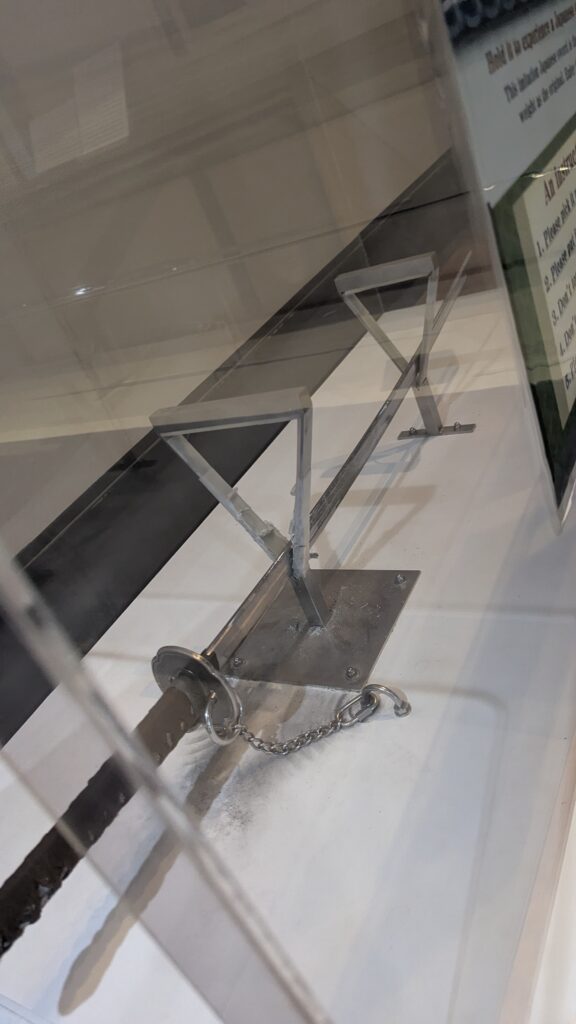
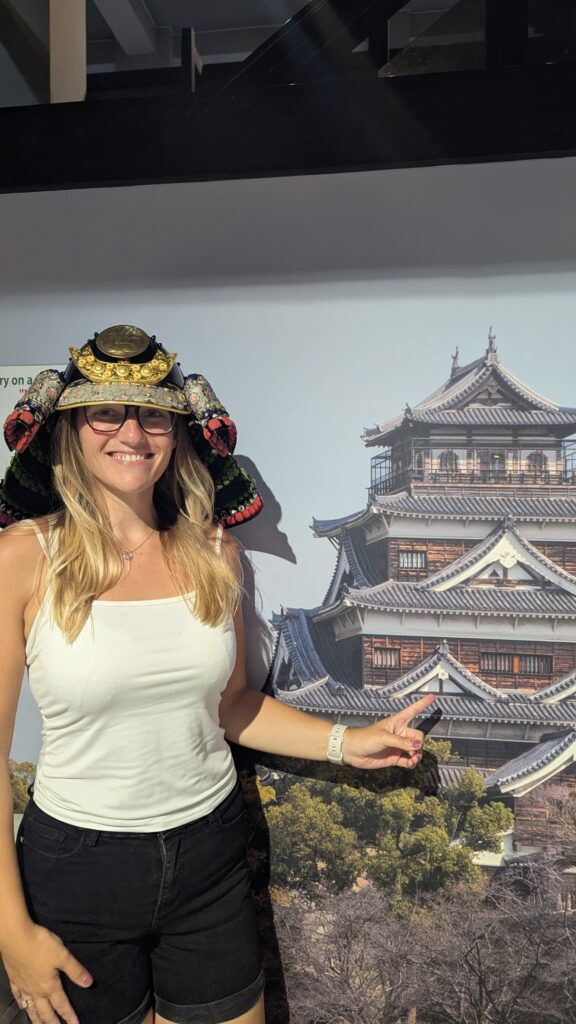
In the afternoon, we visited Hiroshima Castle. Structurally, it was similar to the others we’d seen on the trip, though this one had a clever second moat with a collapsible outer wall—designed to flood incoming attackers. There was also a samurai sword to try lifting (way heavier than it looks!) and a samurai helmet to try on (as heavy as expected).
That evening we had one final katsu curry—Grace’s favourite—ending the day the way all good days in Japan should end: full and content.
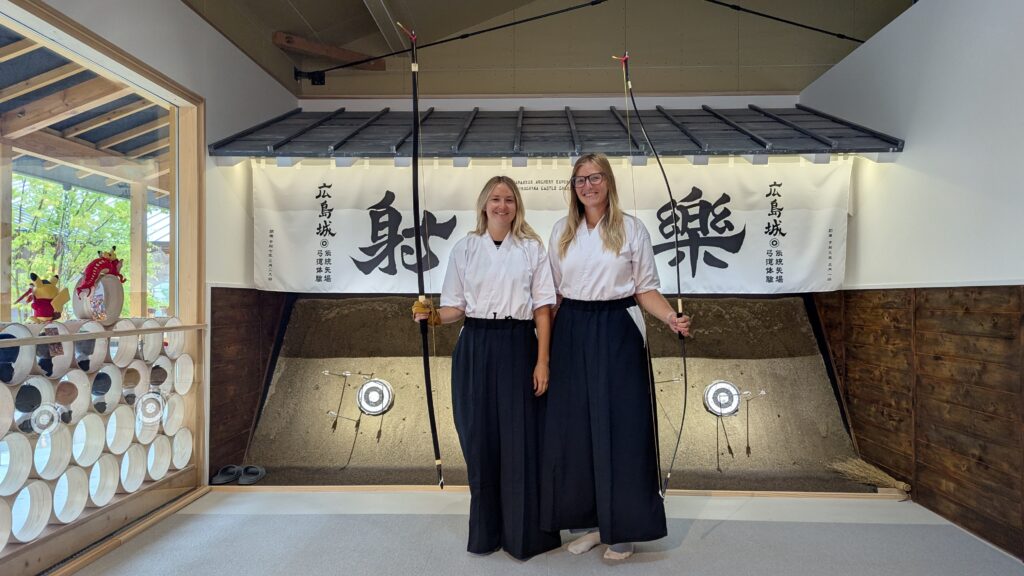
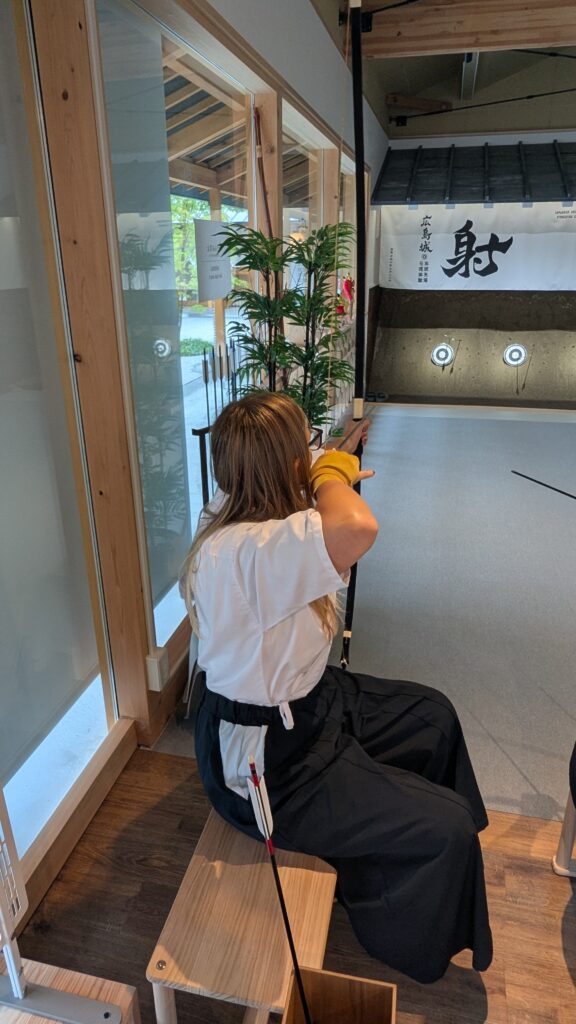
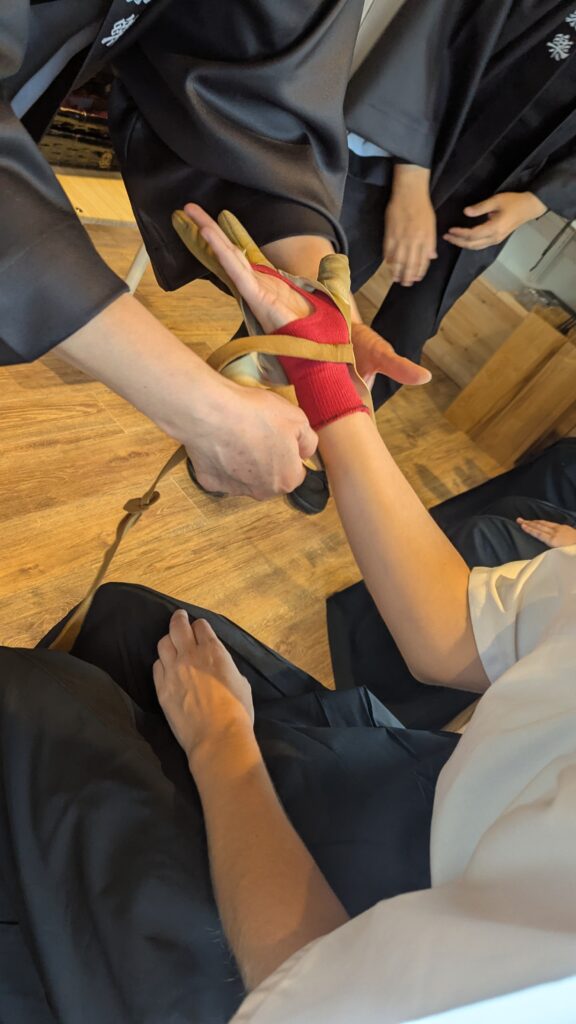
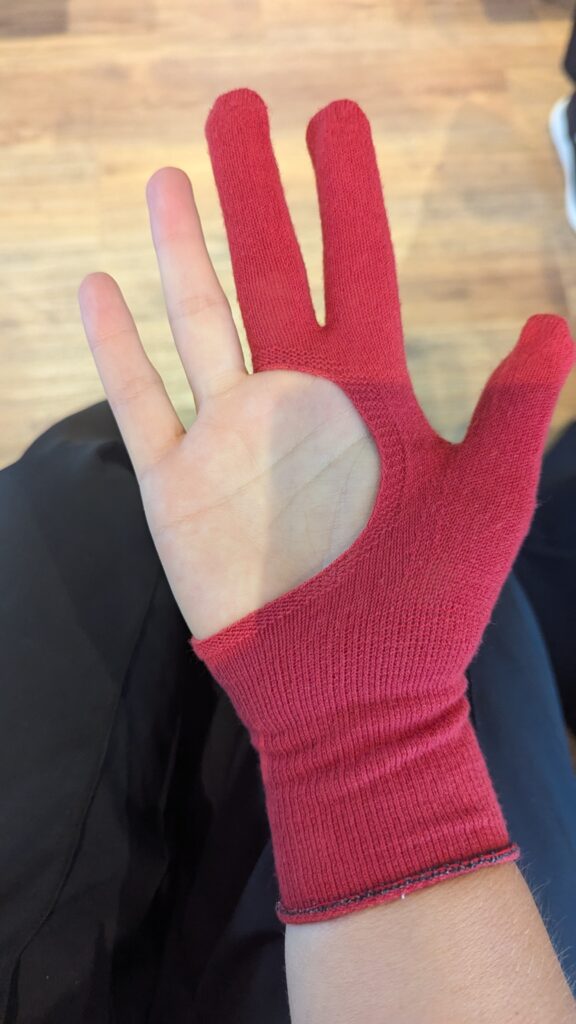
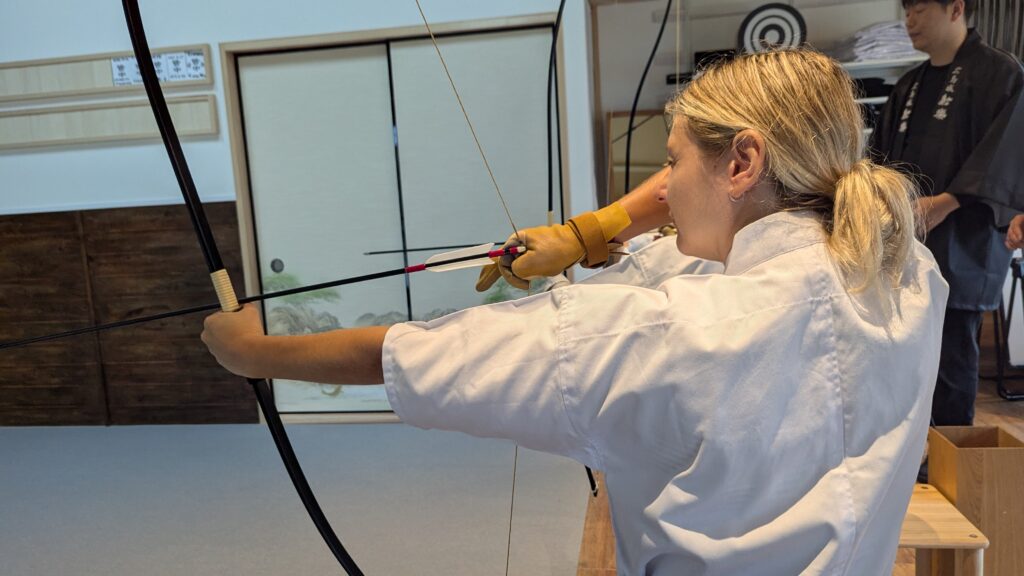
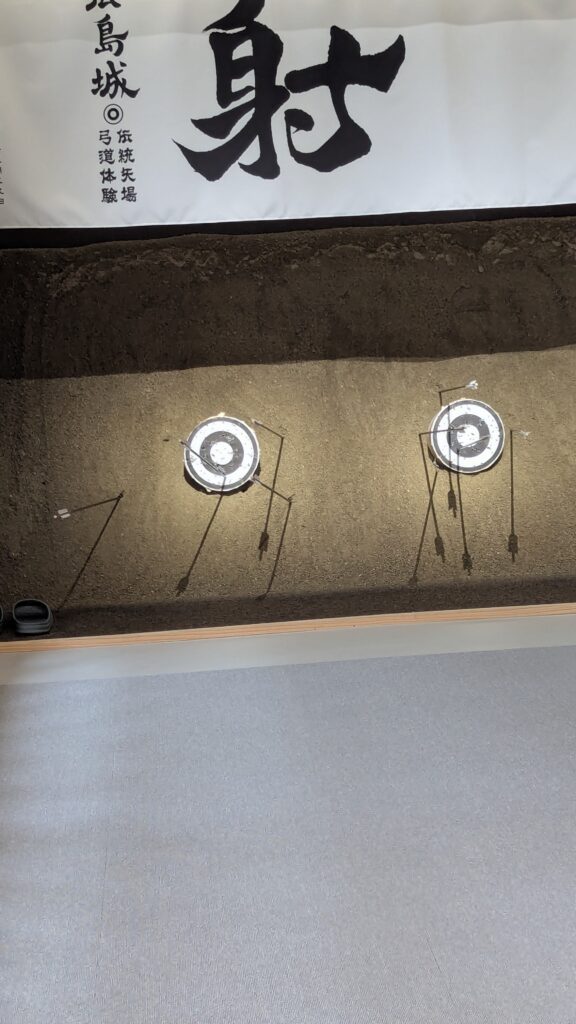
Unfortunately, our last full day in Japan was a rainy one, and since we’d done nearly every other indoor activity, we booked ourselves in for something a bit different: archery.We turned up completely soaked to a tiny indoor range, where we were taught traditional Japanese horseback archery. It’s quite different from Western-style archery—complete with special gloves, fancy outfits, and a very particular stance and technique. To draw the bow, you make an “OK” symbol with your hand and follow a multi-step process. It was much harder than we expected, and just as we thought we were getting the hang of it, we’d completely miss the target again.
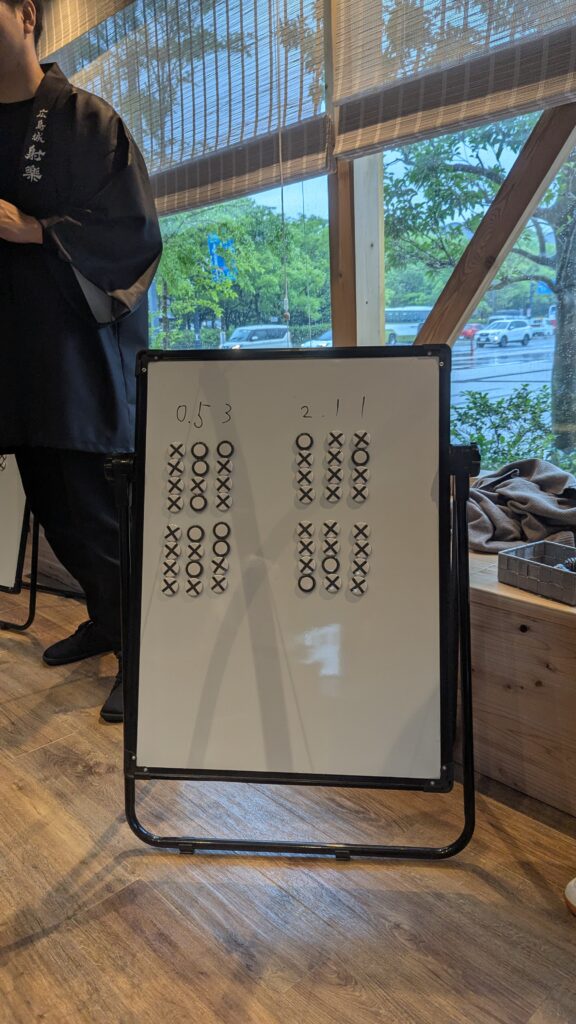
I hit the target first, but Grace quickly caught up and overtook me. By the final round, the score was 8–4 in her favour. We were both missing far more than we were hitting, so it’s safe to say we won’t be winning any medals anytime soon!
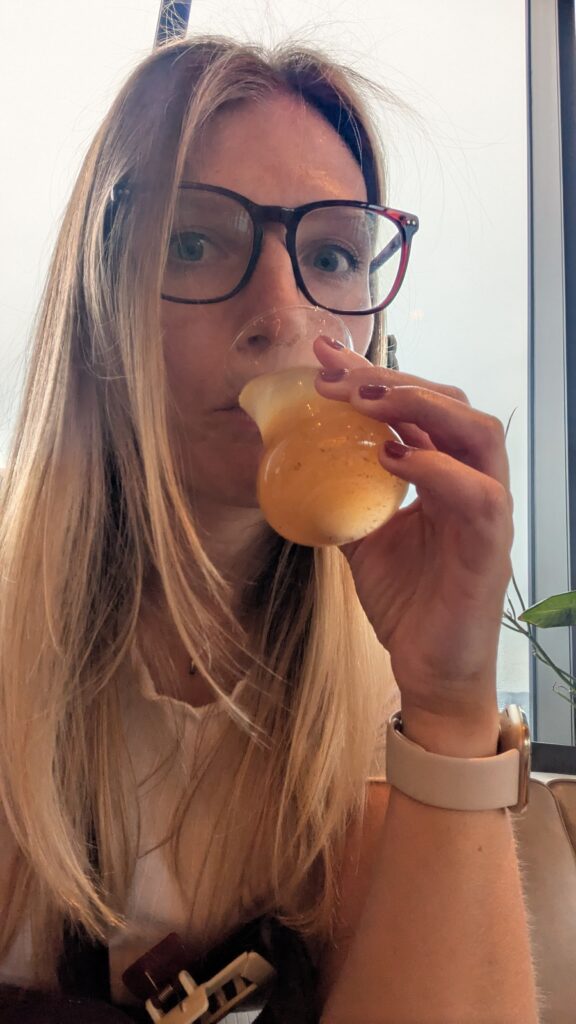
After that we perused some shops, mostly to get out of the rain, I brought some sake for Adam and we both bought and sent our last postcards of the trip before heading back to the hotel.
The final afternoon was a bit of a washout—literally. We’d hoped to spend the afternoon walking on a nearby island or exploring a canyon trail, but the rain put a dampener on that plan. Instead, we took it as a sign to slow down, pack our bags, and mentally prepare for the mammoth journey home.
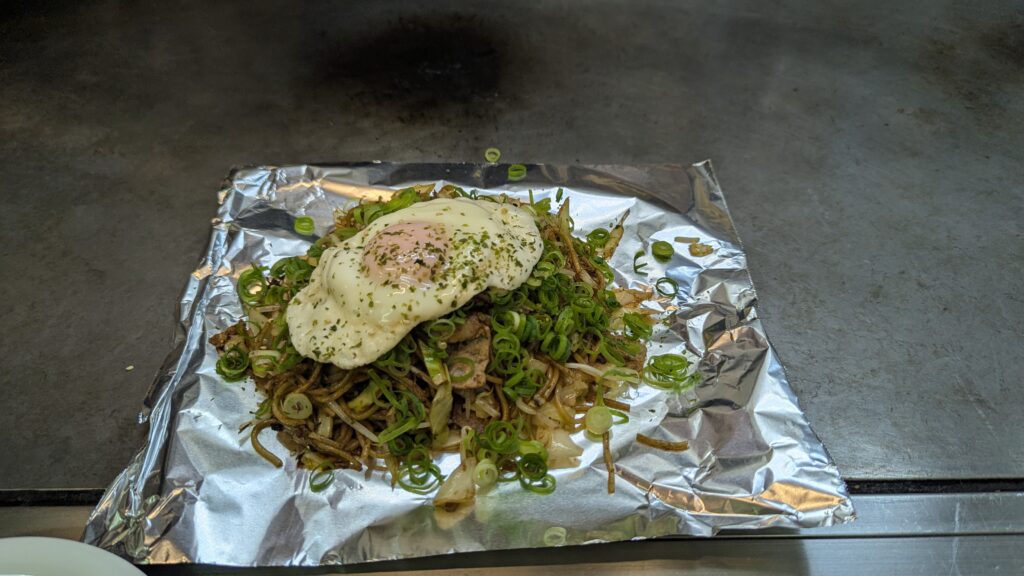
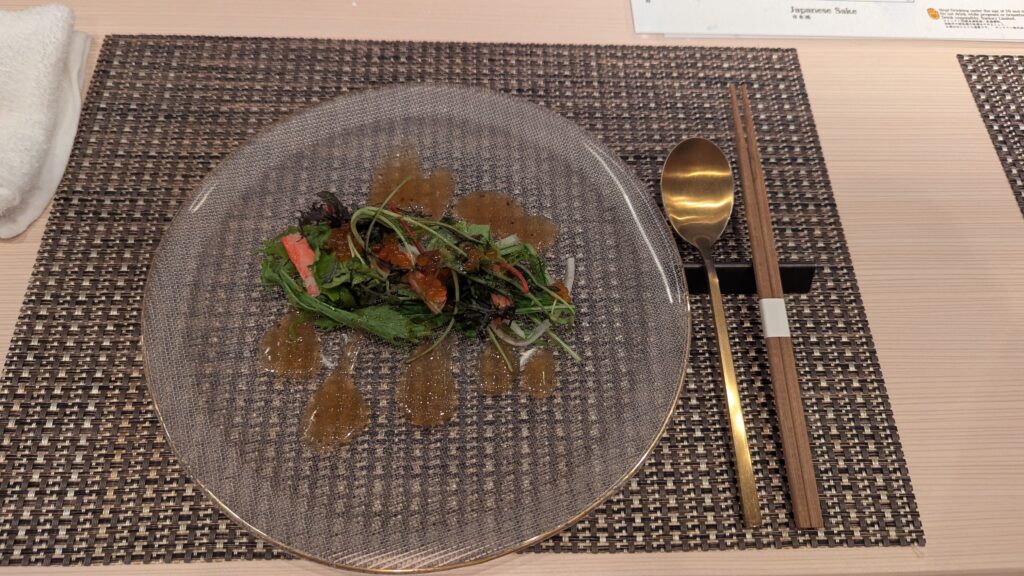
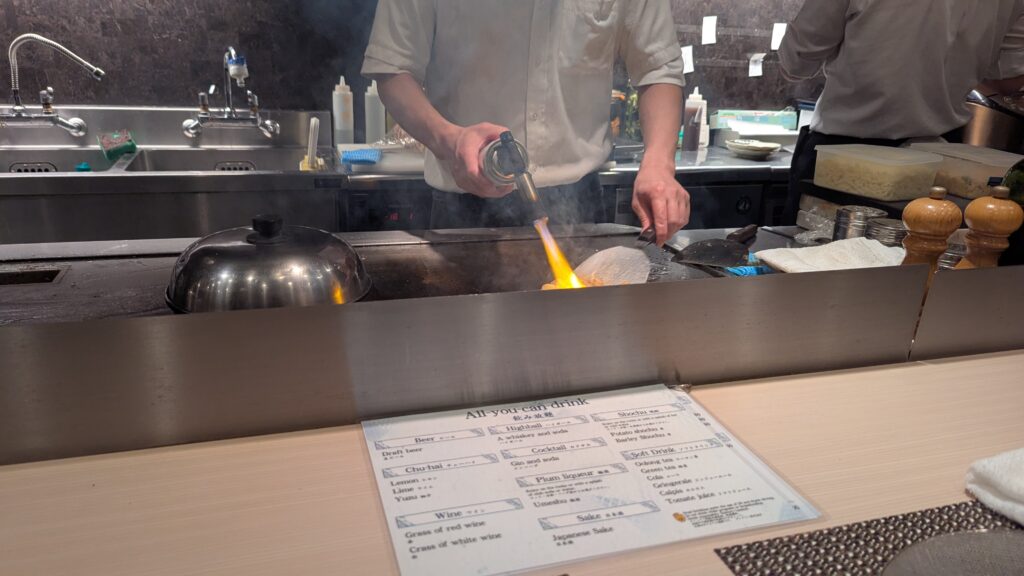
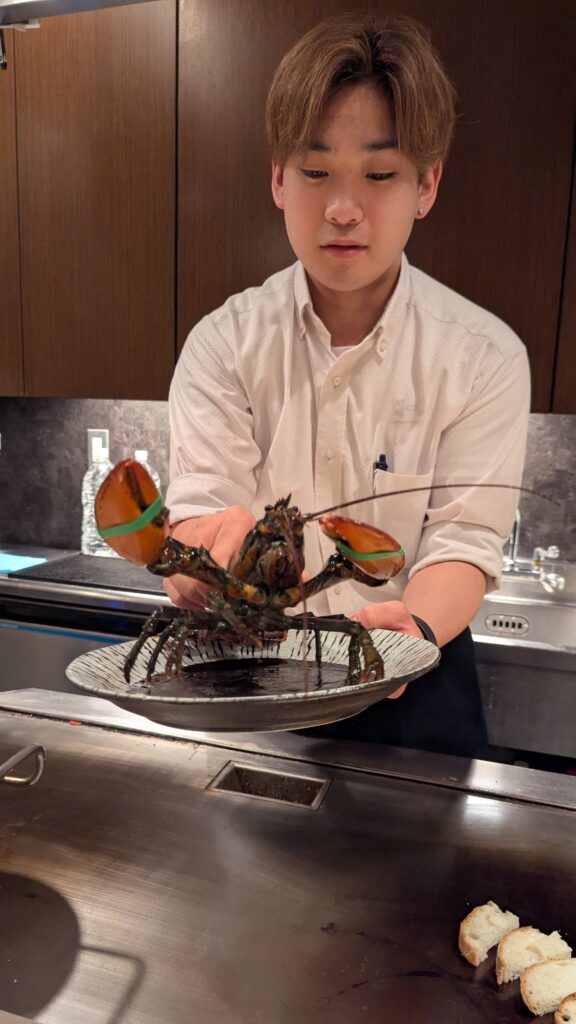
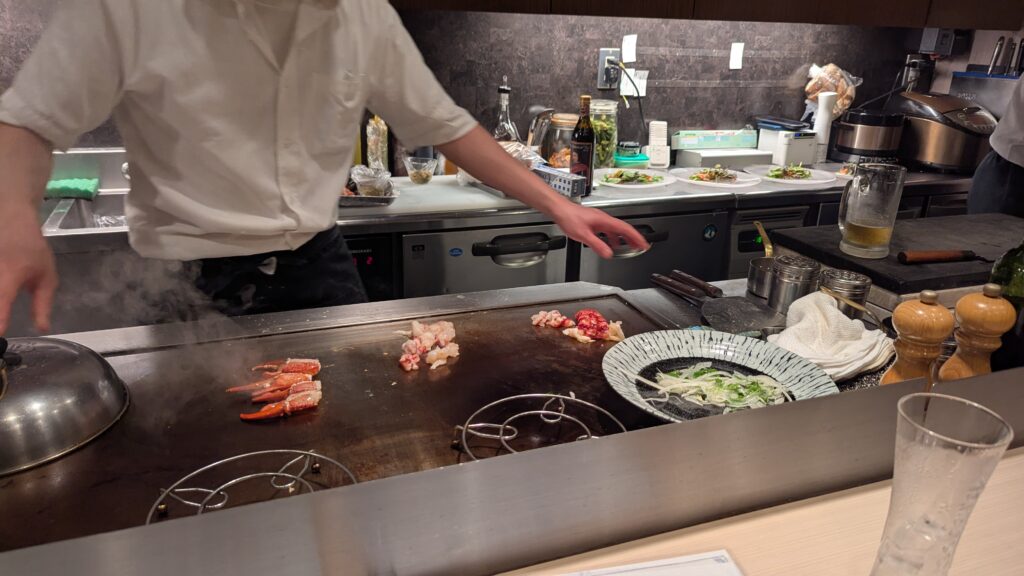
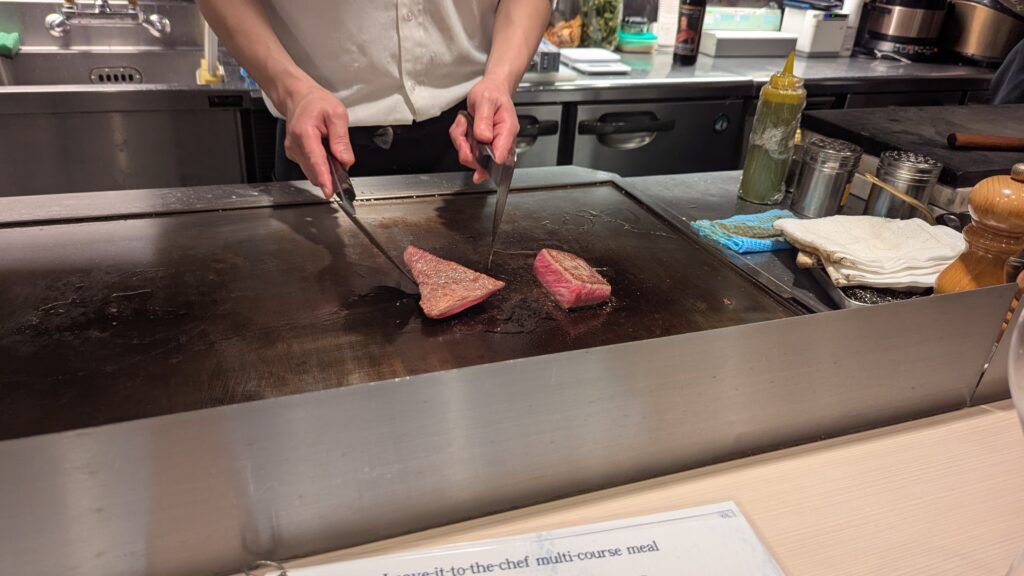
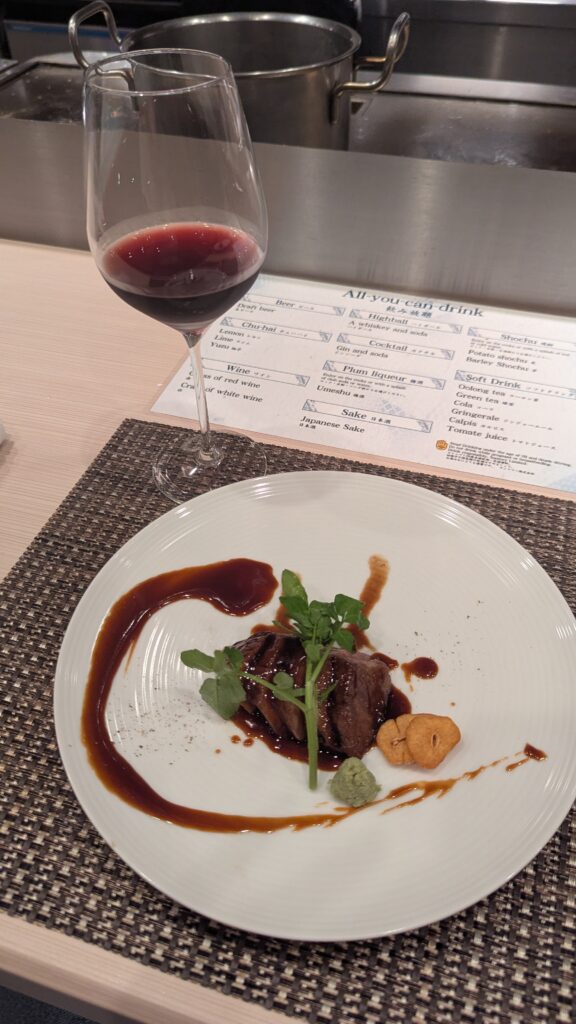
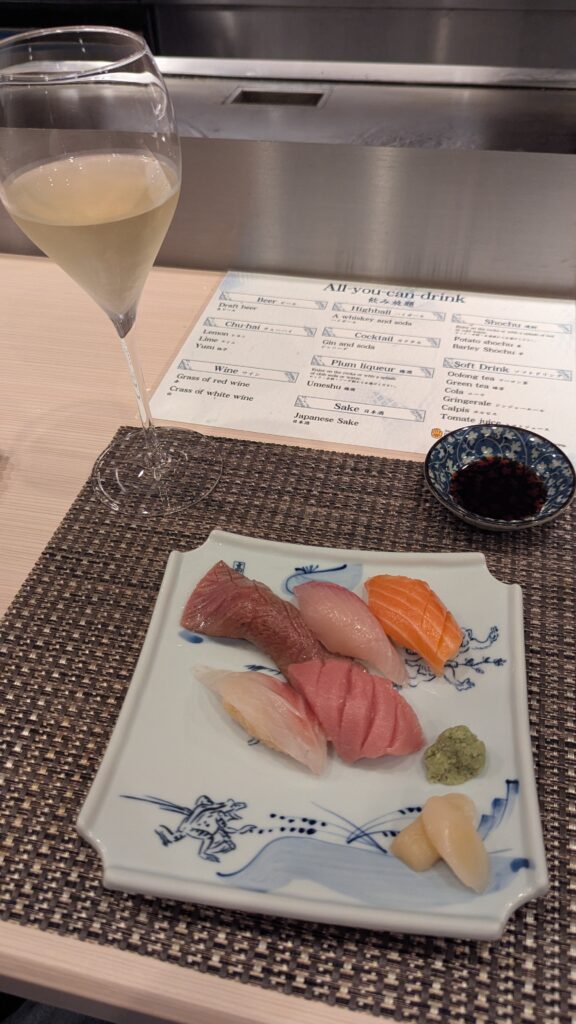
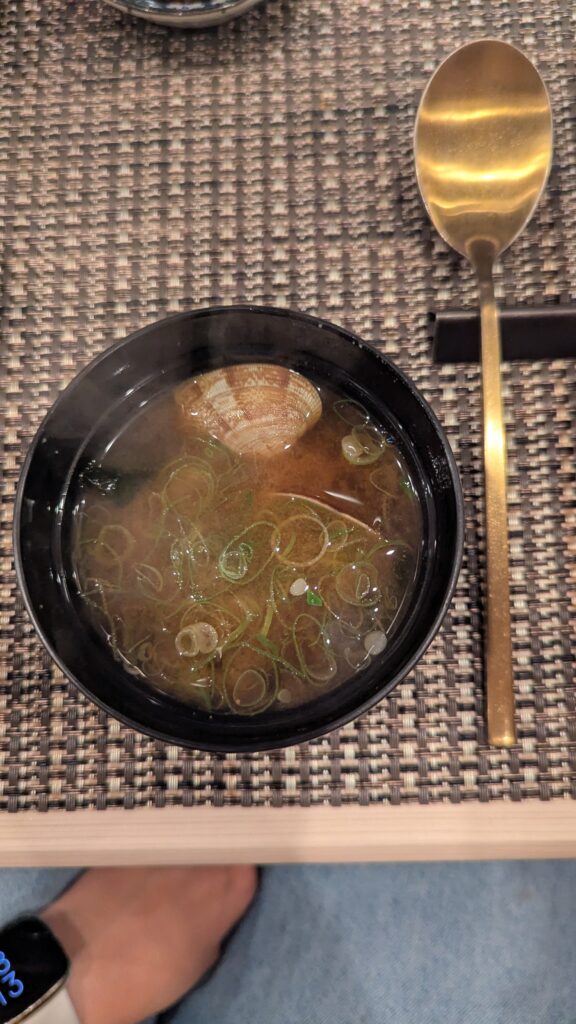
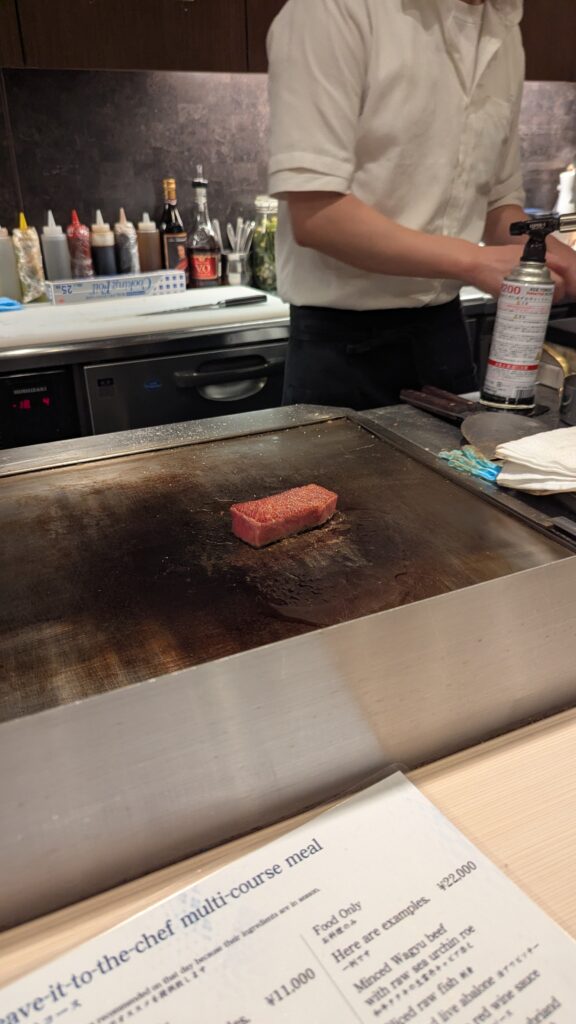
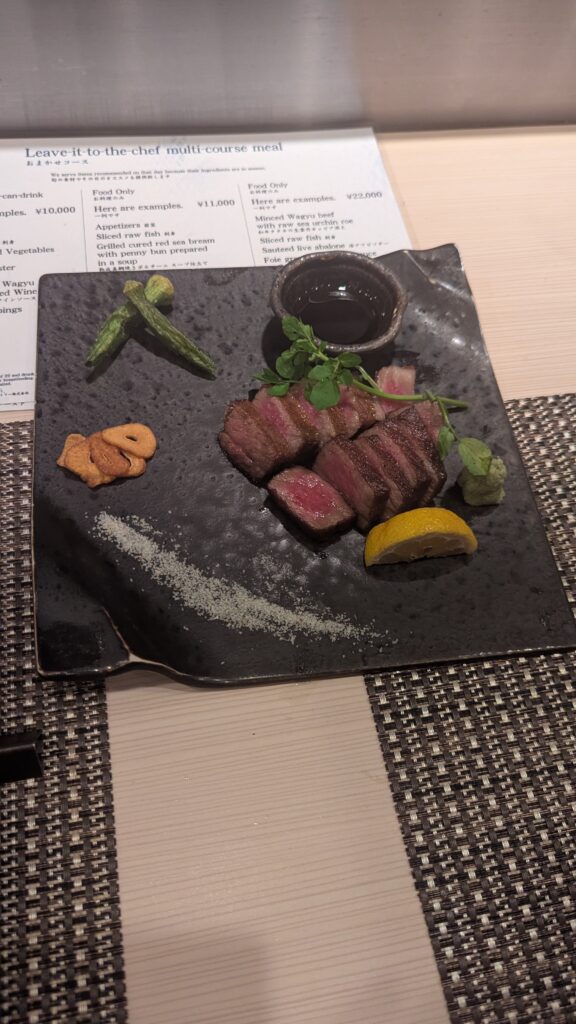
We had, however, saved one last special treat for the evening: dinner at a fancy teppanyaki restaurant, the kind where the chef cooks everything in front of you on a sizzling metal grill. It was a small and intimate spot, with only ten seats at the counter, which made the whole experience feel quite exclusive. Unsure what to order, we went with the chef’s choice set menu—eight courses and unlimited drinks for just £55 each. And honestly? It was an absolute steal.
The meal was spectacular—dish after dish of beautifully prepared food, each more delicious than the last. The wagyu beef with red wine sauce might just be one of the best things I’ve ever eaten. It was so good, in fact, that we cheekily ordered an extra round of it, which only added £10 to the bill. Worth every penny.
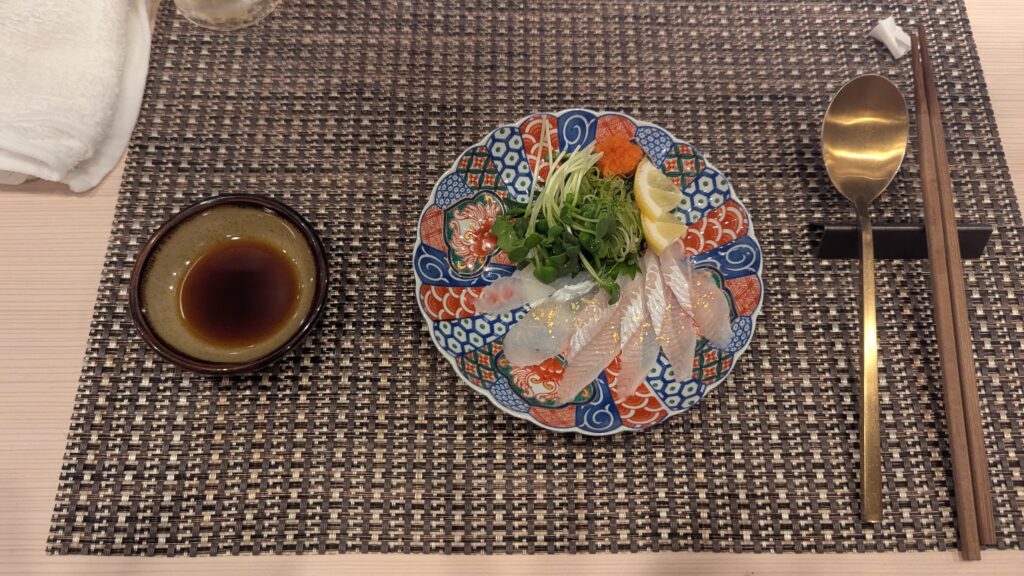
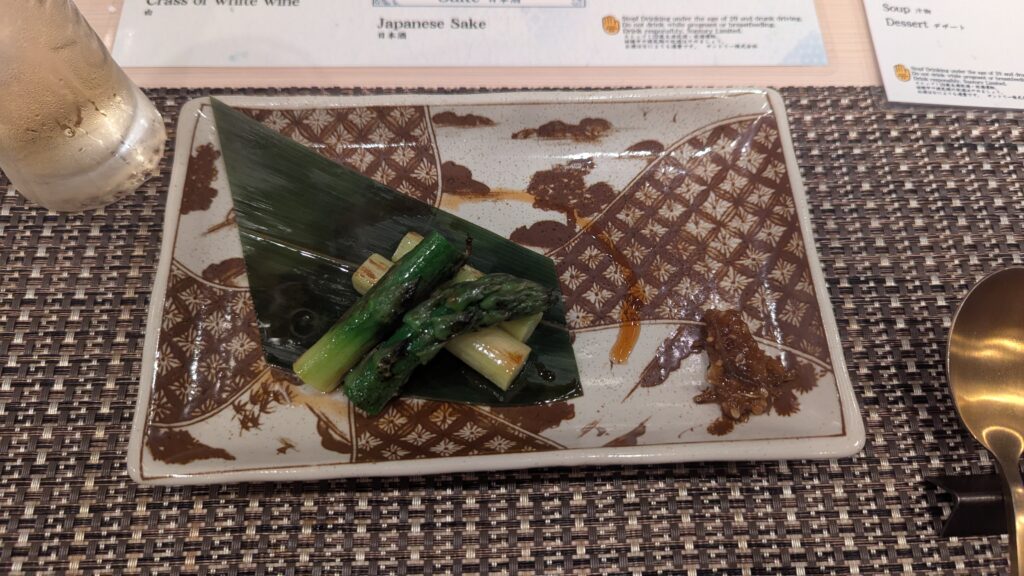
Here’s what we had:
Crab and salmon roe salad
Thinly sliced raw fish sprinkled with gold
Buttered asparagus with a rich aubergine sauce
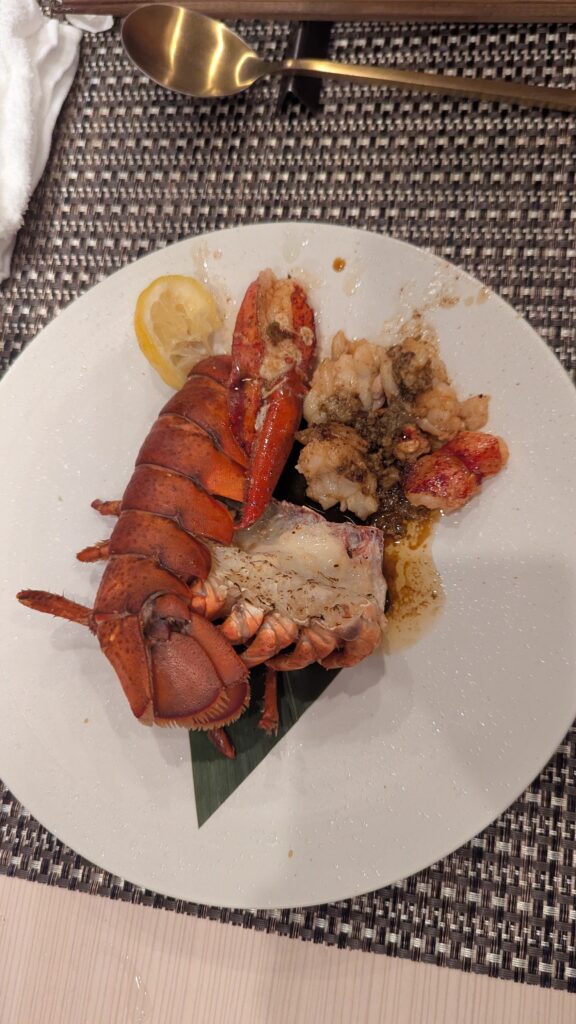
Grilled lobster
Wagyu steak with red wine sauce
Fresh sushi
Miso and clam soup
Another round of Wagyu
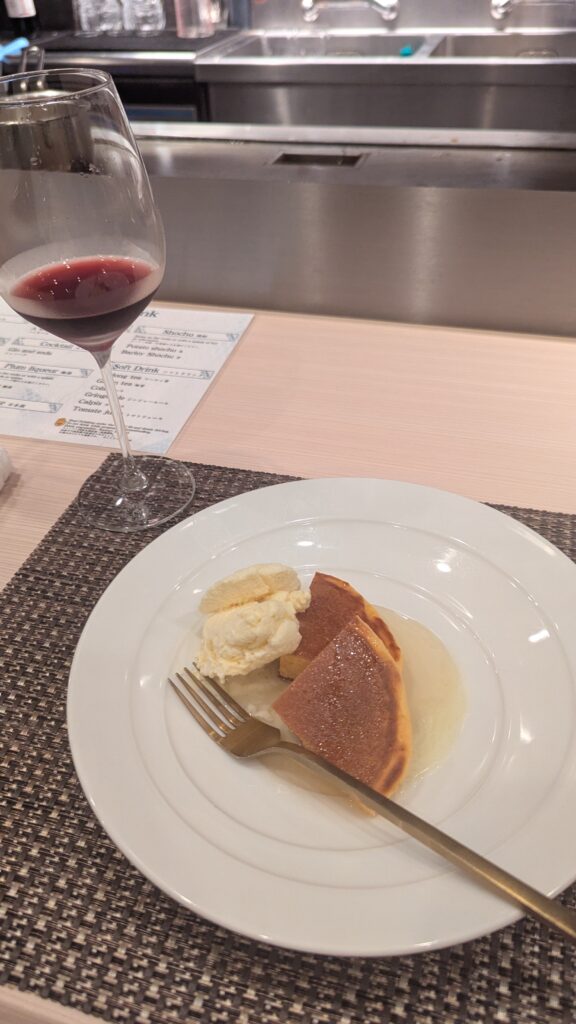
Dessert: a thick pancake topped with syrup and ice cream
All accompanied by a very generous amount of red, white, and plum wine, paired to match the different courses. Nine dishes, five drinks, and a cooking show—all for £65 each. Unbelievable value, and the perfect note to end the trip on.
There was a moment (several glasses in) where we briefly considered one final karaoke night as a last hurrah—but thankfully, good sense prevailed.
When our alarms went off at 6:30am the next morning, we were extremely relieved not to be nursing hangovers while attempting to navigate Japan’s public transport system.And so, the long journey home began: bullet train to Osaka, a maze of underground transfers, two long-haul flights with a stopover, and finally, multiple trains from London to Cambridge… on a bank holiday, no less. Wish me luck! But honestly, despite the daunting trek ahead, I wouldn’t trade this trip for anything. It’s been an incredible three-and-a-bit months—packed with adventures, new experiences, and probably a few too many snacks. We’ve seen so much, done so much, and maybe spent a bit too much, but it’s been completely worth it.
So that’s it from me… for now. Until the next adventure—I’ll tell you all about it then.