Tokyo, Japan

We’ve arrived in the fifth and final country of our backpacking trip—Japan!

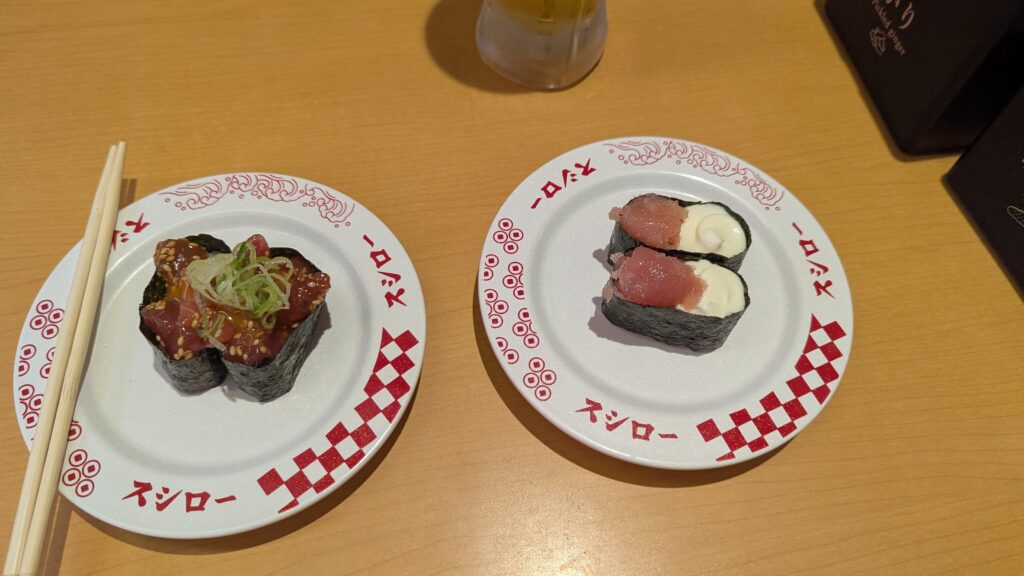
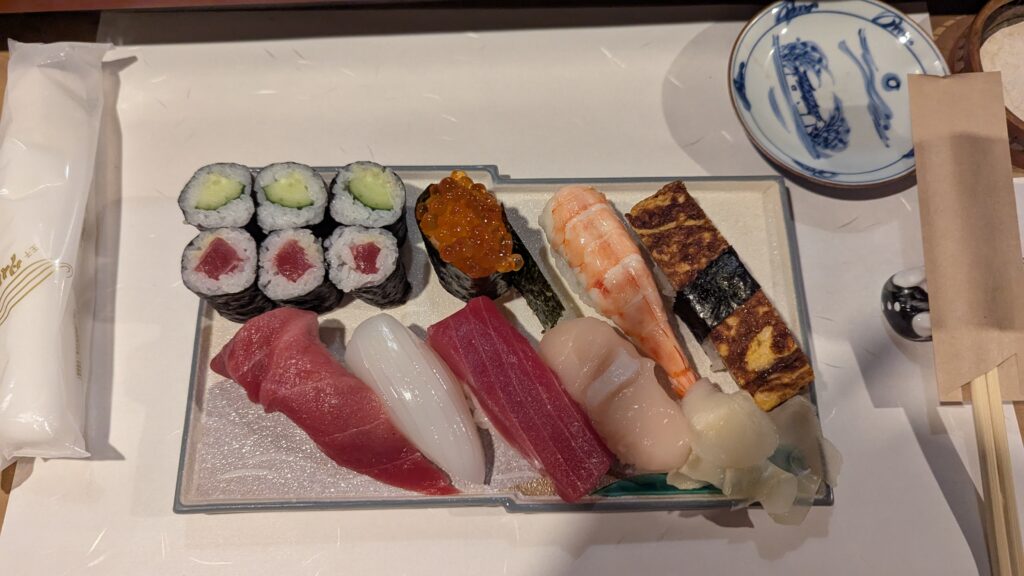
Our plane landed around 4 p.m., and after a smooth hour-long train ride, we arrived at our hostel. I didn’t even finish unpacking before I was laser-focused on one thing: sushi. My one true love (sorry family and Adam). And where better to indulge than the birthplace of the stuff?

We asked at reception for a recommendation and were soon joined by two 18-year-old Swedish lads from our dorm—Otto and Oscar—who asked if they could tag along. The more, the merrier. So, the four of us headed to a sushi restaurant about a 15-minute walk away.

We had to queue for 40 minutes to get in, but it was worth it.

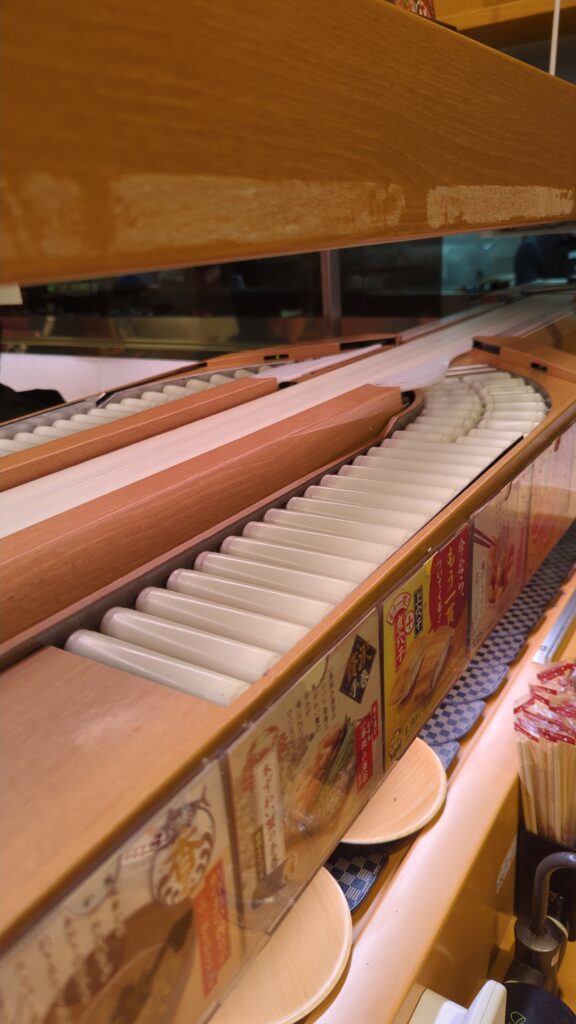
Once inside, the whole experience was delightfully dystopian—no human staff in sight. You order from a tablet, and your sushi whooshes in on a conveyor belt like some kind of edible monorail. Futuristic and delicious.
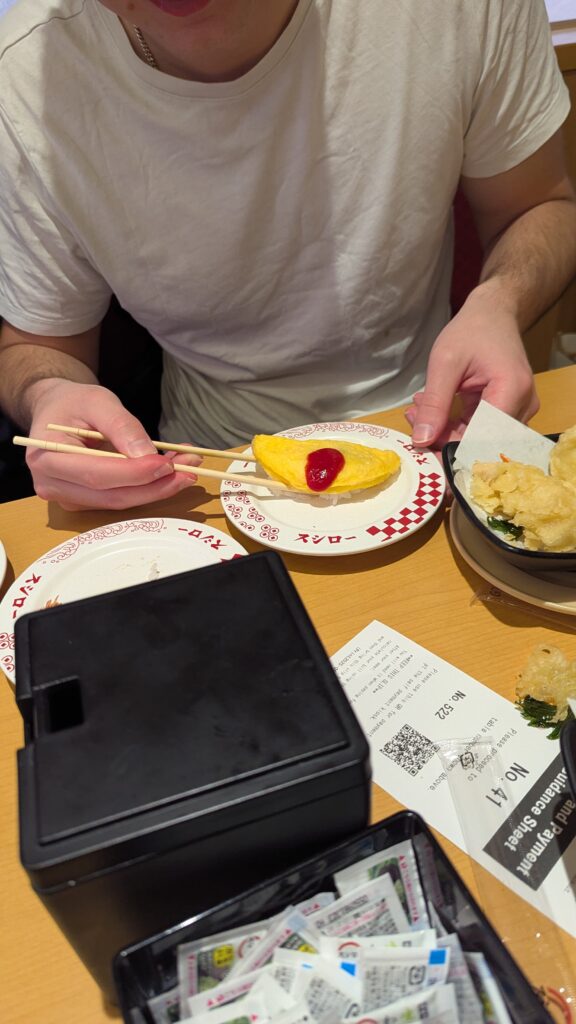
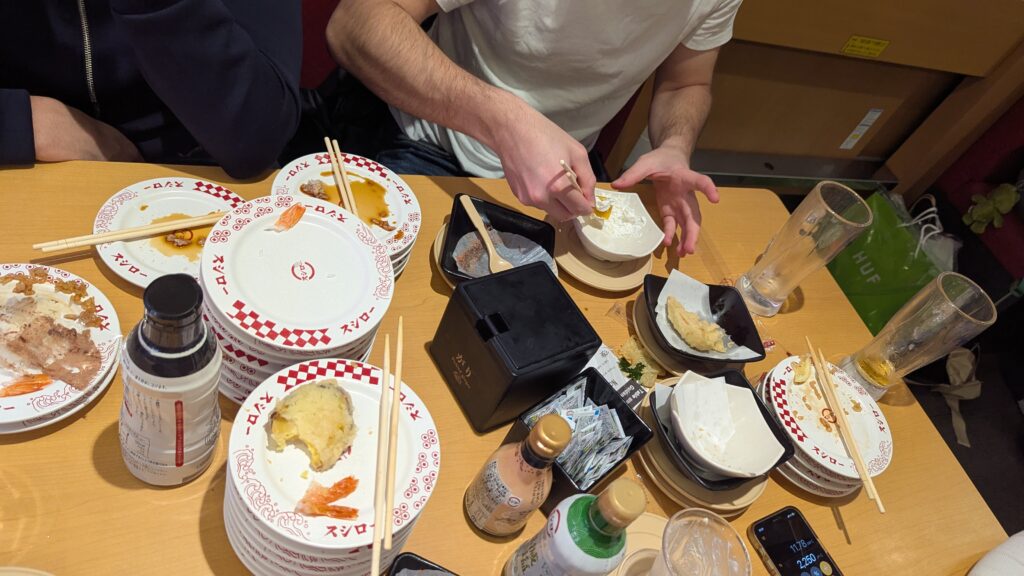
I ordered several rounds of different sushi like a woman possessed, while Grace opted for chicken and chips (sacrilege) but also dipped her toe into some seaweed-free sushi options. We even finished off with some chocolate cake because dessert sushi isn’t (yet) a thing. The Swedish teens, meanwhile, went full “growing-boy buffet” mode, racking up towers of plates like sushi Jenga, made me look like a rookie. They even tried some rogue options—omelette sushi, burger sushi… sushi crimes, basically.
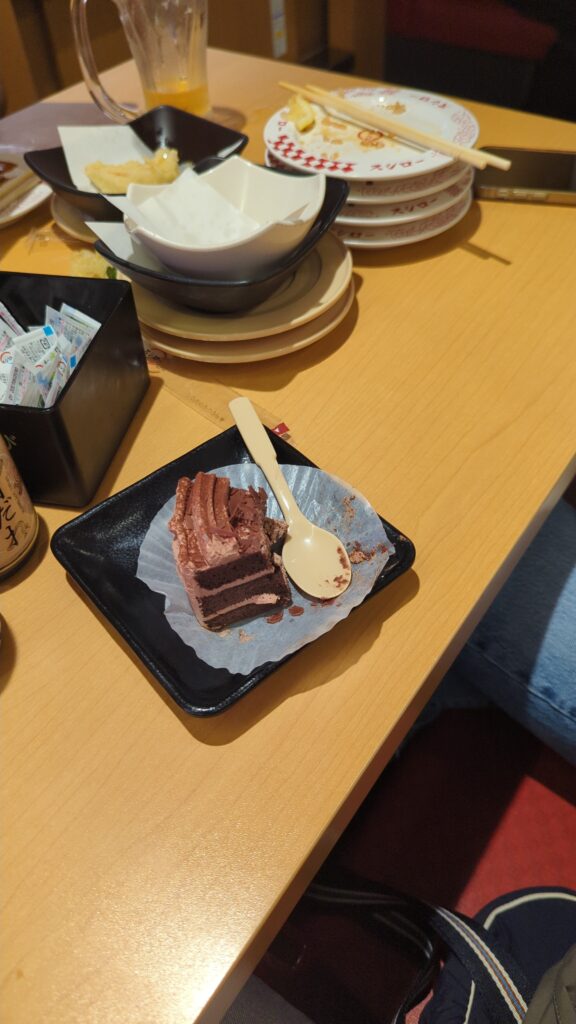
I was a bit nervous about the bill—Sushi is pricey in the UK, and we’d eaten enough to sink a small boat. Plus, my mental exchange rate was still stuck somewhere between “it’s fine” and “are we about to accidentally spend £200?” But Japan came through: two courses, drinks, and enough sushi to require rolling us out the door—just £11 each. In the UK, that would’ve cost about £60!
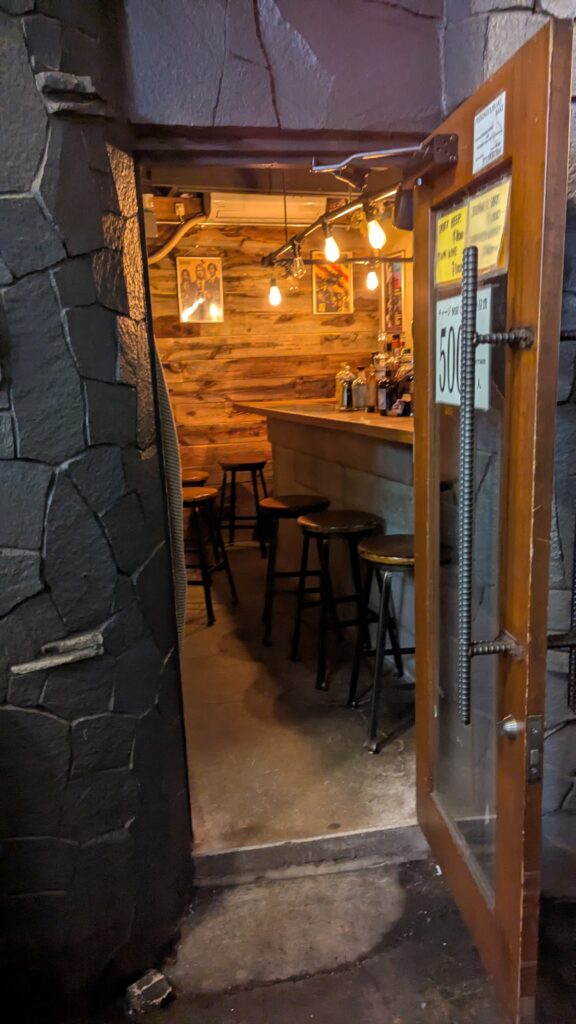
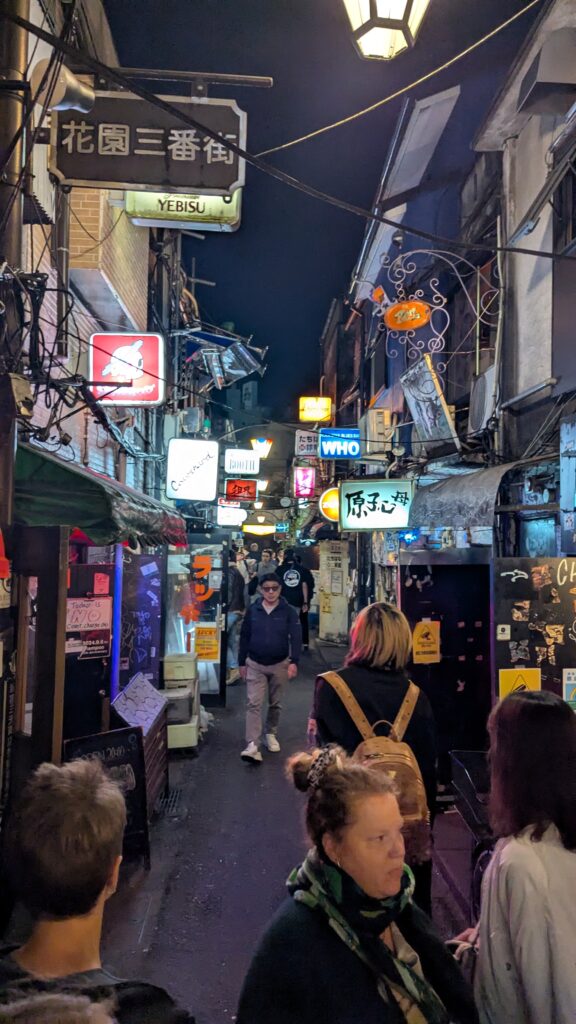
After we waved off the Swedish lads (who were headed home to recover from their raw-fish-induced food comas), Grace and I made our way to Shinjuku’s Golden Gai—an area filled with narrow alleyways packed with micro-bars, each only big enough to seat 3 to 6 people. Every bar has its own quirky vibe, and the whole premise is: squeeze in, order a drink, and make friends with whoever’s next to you. Social roulette, Tokyo-style.
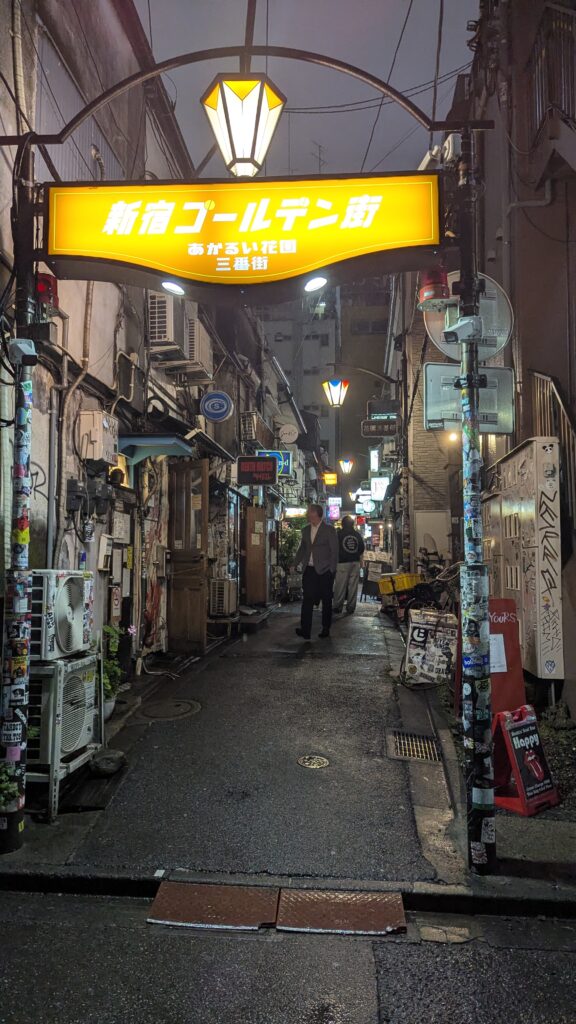
We had planned to meet up with Elliot, a guy we’d met at our first stop—Port Barton in the Philippines. He was also in Tokyo with some friends from home. Unfortunately, Elliot wasn’t feeling great and went home before we arrived, but we still met up with his friends, Jess and Scott, and had a fun night drinking beer and plum wine in various tiny bars around town. A very unique and memorable night out.

The next morning, we had signed up for a walking tour, but it was cancelled because the guide was ill. We signed up for the afternoon tour instead and spent the morning walking around town and finally purchasing our rail passes. We had planned to go to a noodle restaurant near the start of the tour for lunch, but when we got there, we found out it’s closed on Wednesdays. So, we decided to wait until after the tour to eat, but we still had 40 minutes to kill.

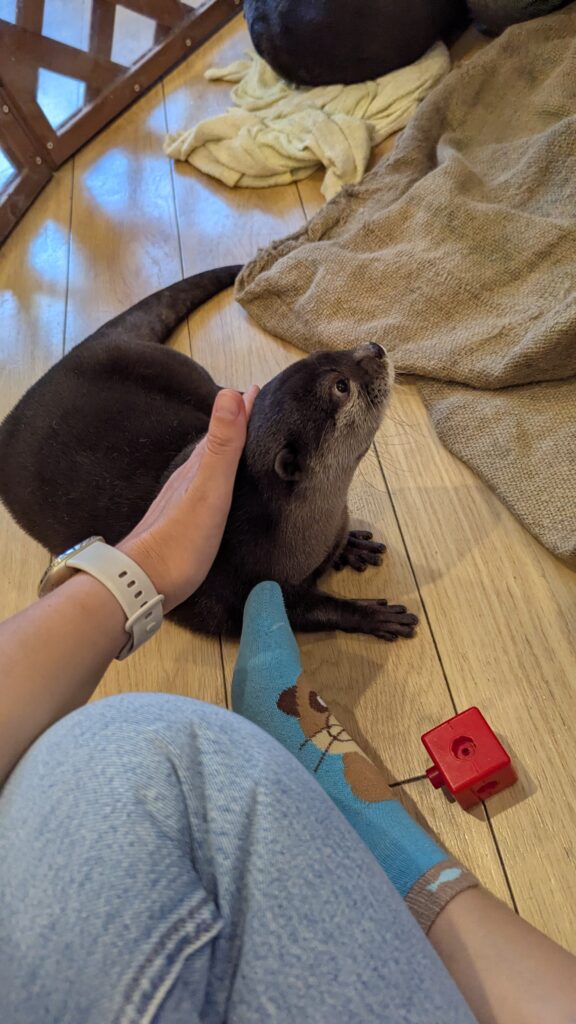
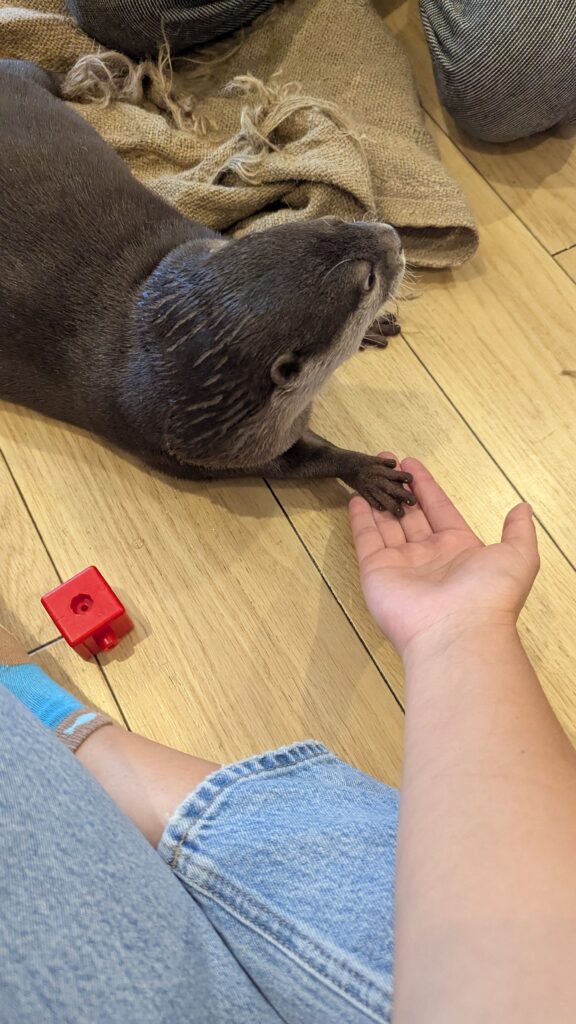
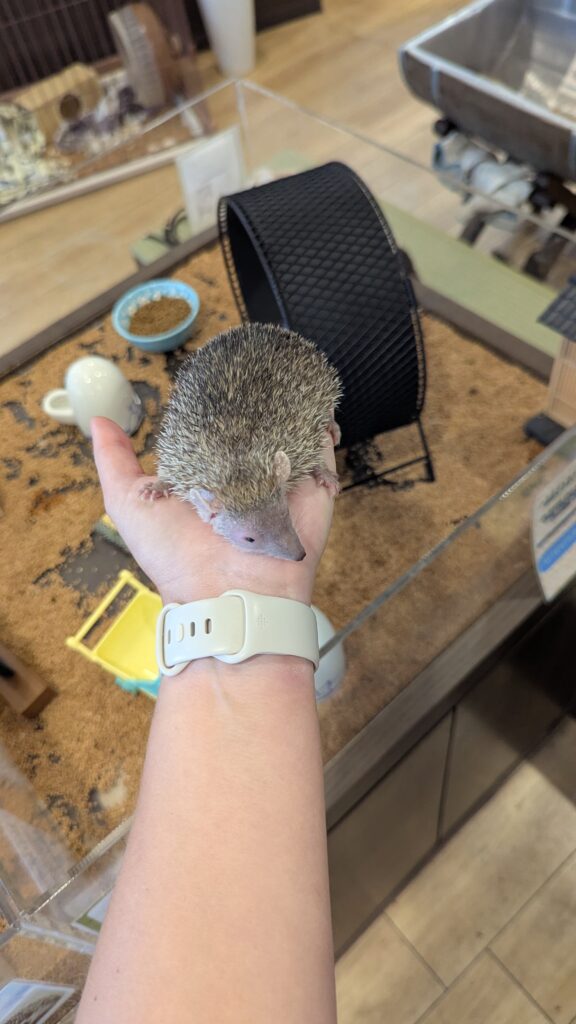
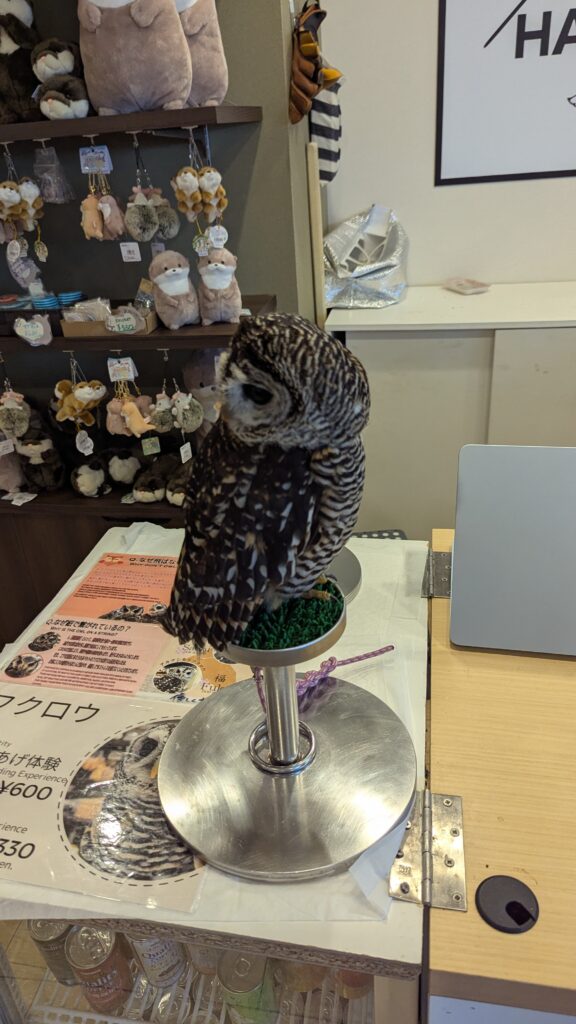
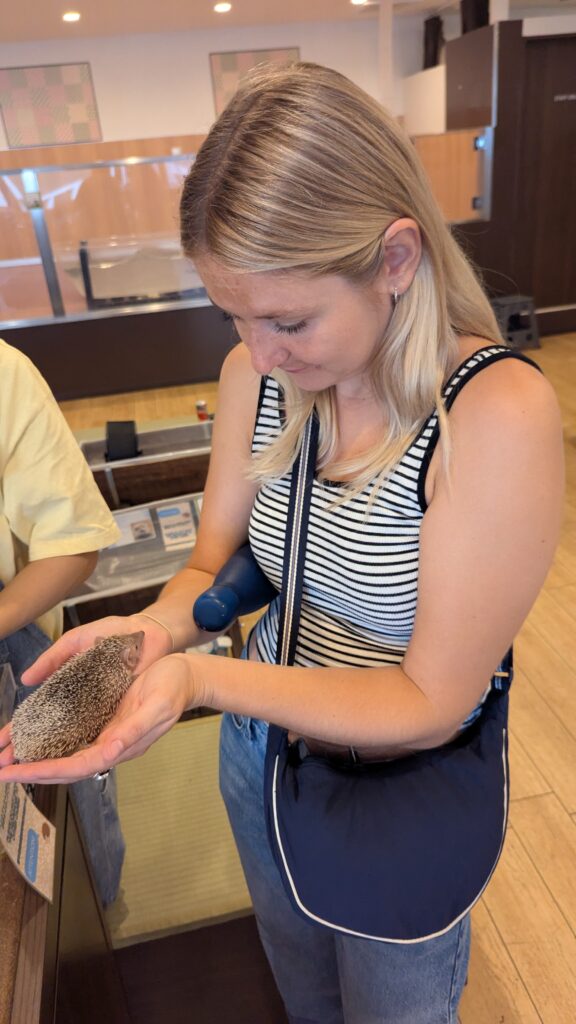
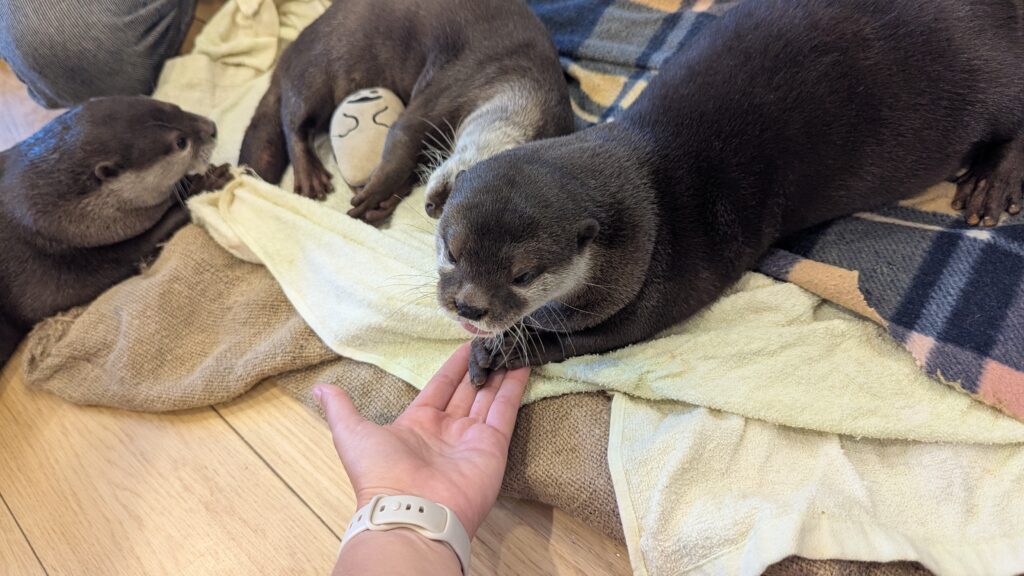
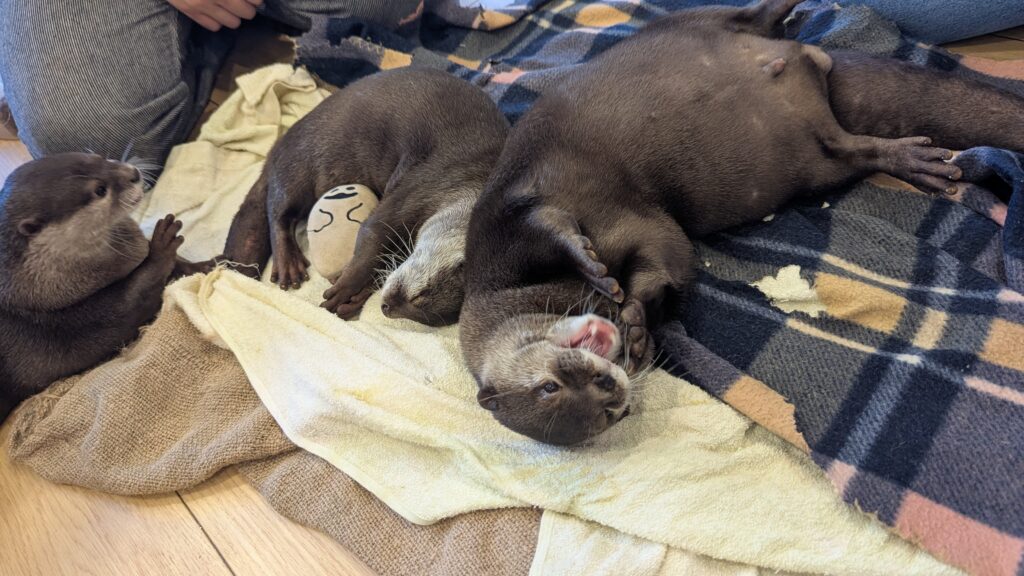
While walking, we spotted signs for “Harry’s Otter Café” and decided to check it out. We paid our entry and went in—it was a strange mix between a café and a pet shop. There were owls off to one side, hedgehogs in trays on tables, a meerkat roaming around, and a playpen filled with otters, with more in enclosures around the room and in clear tubs of water. We had paid to feed the otters, which also meant we could sit in the pen with them. They were like big puppies—very eager for treats and attention. Their little hands are surprisingly dexterous; one even sat for a while just holding my hand. It was an adorable and fascinating experience.However, in hindsight, it’s not one I’d want to repeat. We hadn’t really researched the café properly—we just wandered in—and while it was undeniably cute, it didn’t exactly scream “ethical animal care.” A staff member even woke up a hedgehog mid-nap, plonked it in my hand, and the poor guy promptly bit me in protest. Can’t blame him, really. Thankfully it didn’t break the skin—because nothing says “holiday fun” like googling rabies clinics in Tokyo.
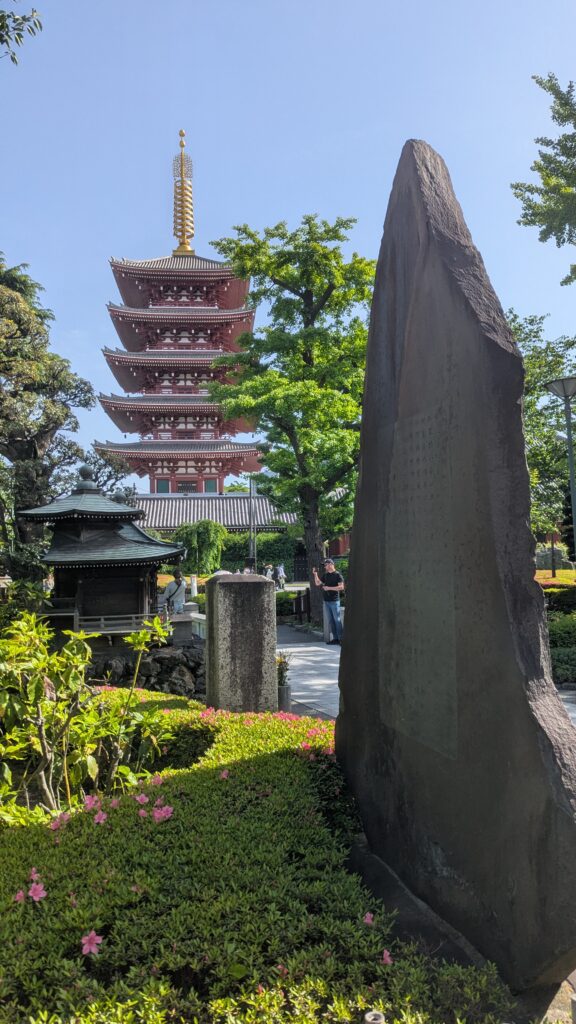
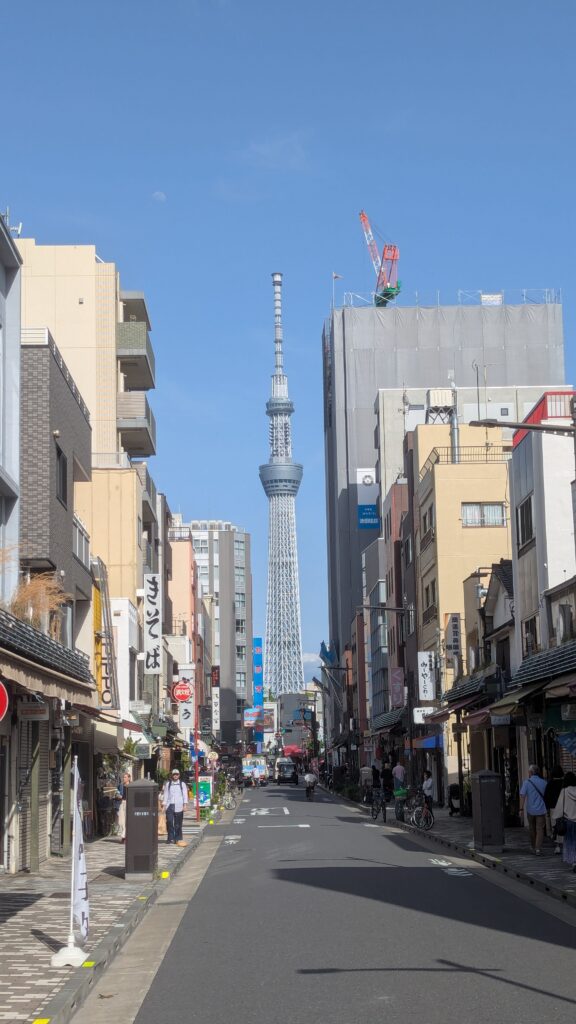
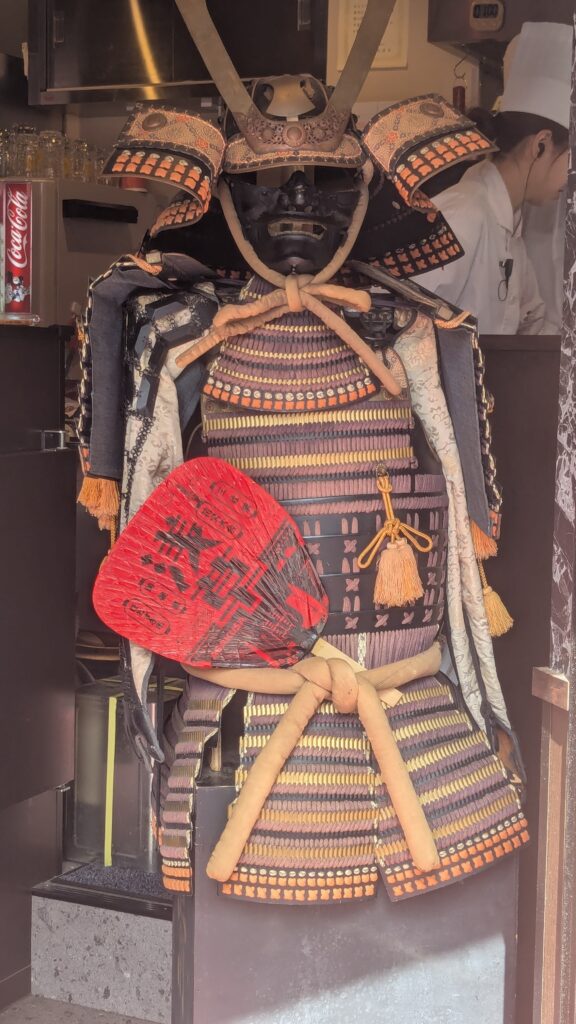
We didn’t stay long and waited outside for our walking tour to begin. Our guide turned out to be a man originally from Ecuador who had moved to Japan three years ago for his German wife’s job. He was a nice guy, but the tour itself didn’t tell us much more than we could’ve learned by walking around ourselves. Still, we got to see Sensō-ji Temple and the surrounding markets, as well as the kitchenware district where they sell beautiful bowls, utensils, and Japan’s famous knives. Many restaurants in Japan (and across Asia) display plastic models of their dishes, and we also visited a shop that makes these hyper realistic models, which was pretty cool.
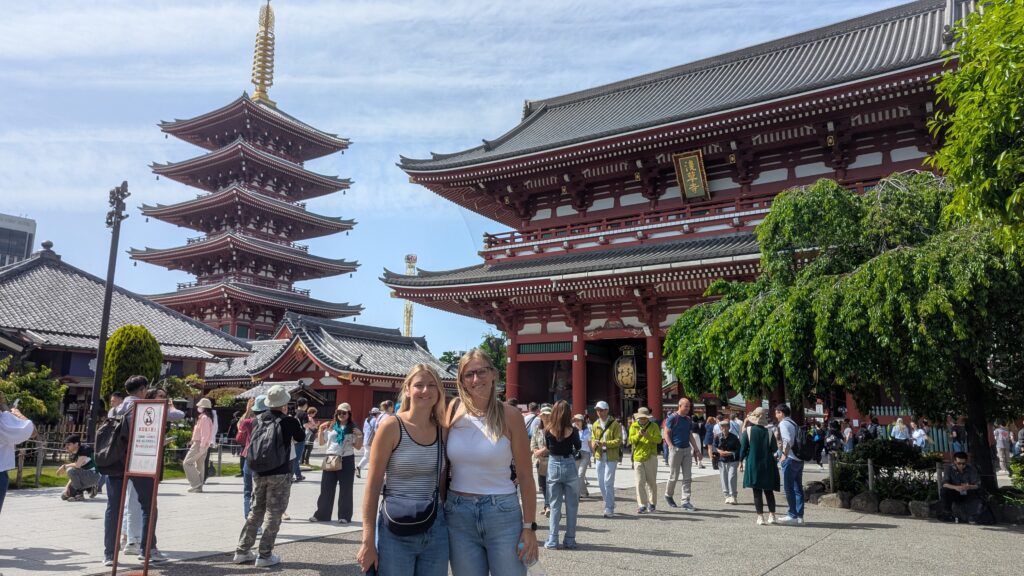
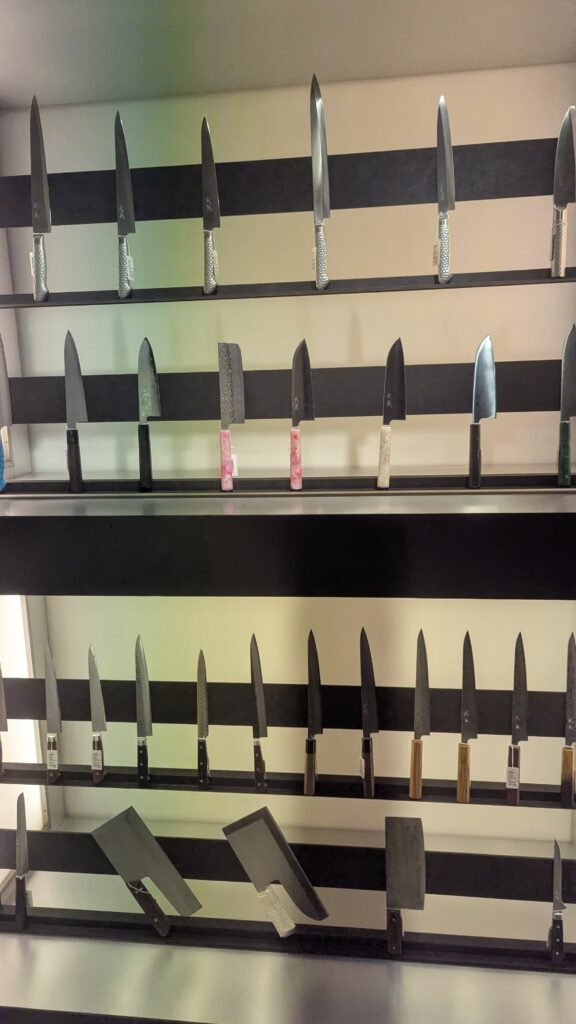
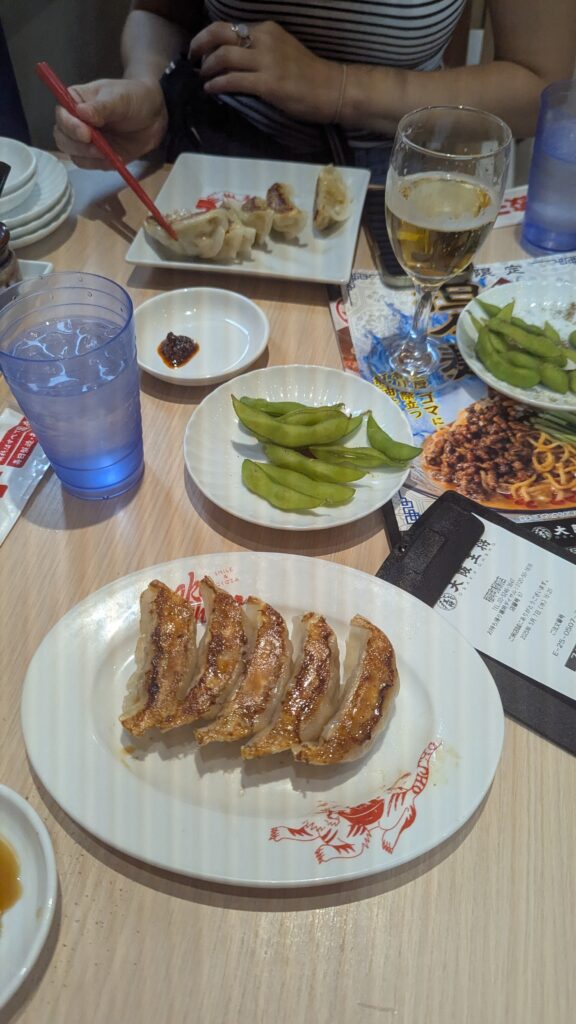
After the tour, we browsed some of the knife shops and debated whether the hassle of carrying one around for a month was worth it as a gift. Then we discovered we could buy them at our last stop in Japan too, so we decided to wait. We followed our noses to a nearby gyoza spot for a very late lunch/pre-dinner snack. The dumplings were delicious—I definitely could’ve eaten more, but we had dinner plans with Jess from the night before, so we kept it light.
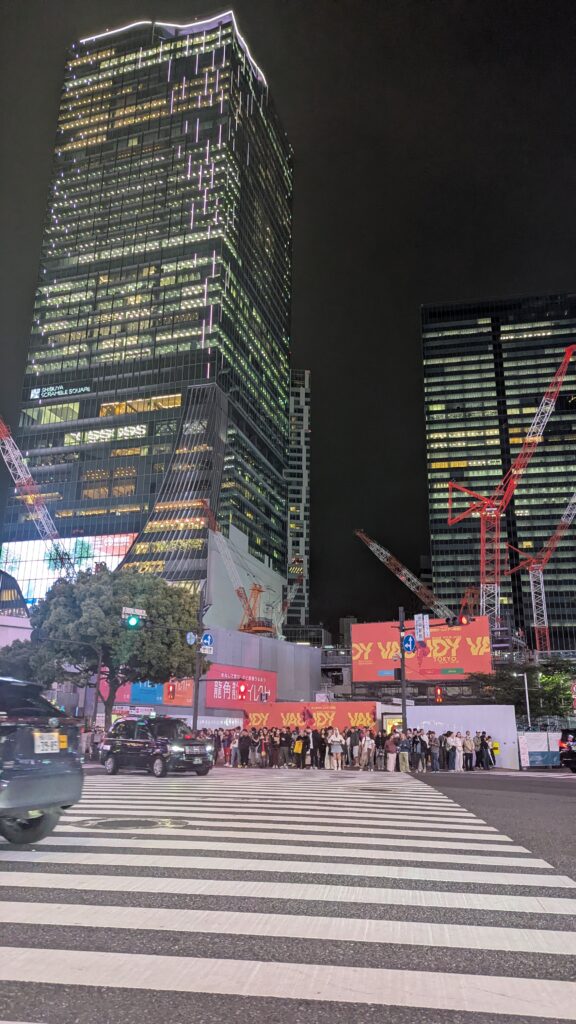
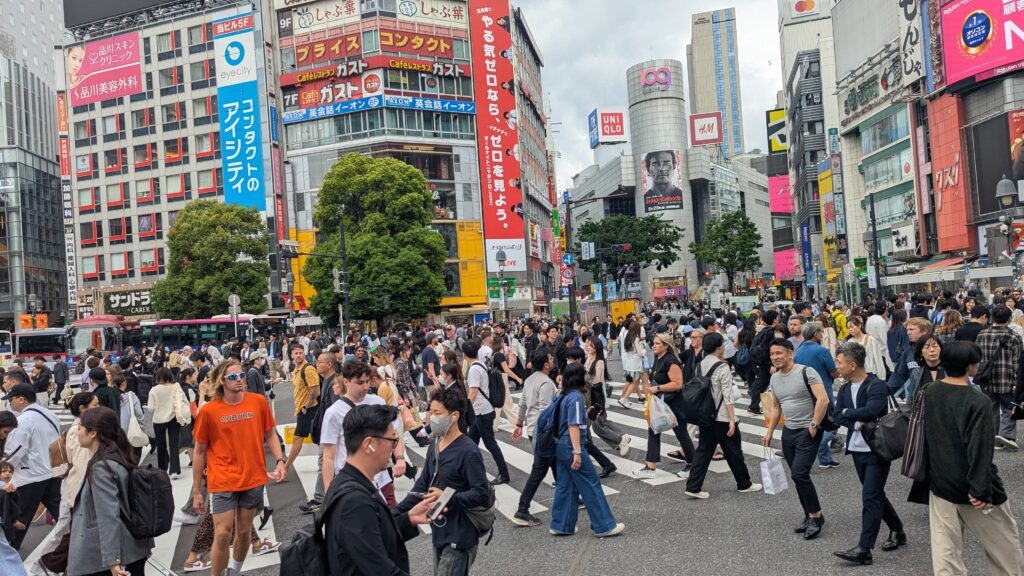
We went back to the hostel, showered, and headed out to meet Jess for dinner. The restaurant was right off of the famous Shibuya Crossing, the busiest pedestrian crossing in the world, at peak times there are over three thousand people crossing simultaneously from all directions at once. Luckily we made it through the crowds and to the restaurant unscathed.
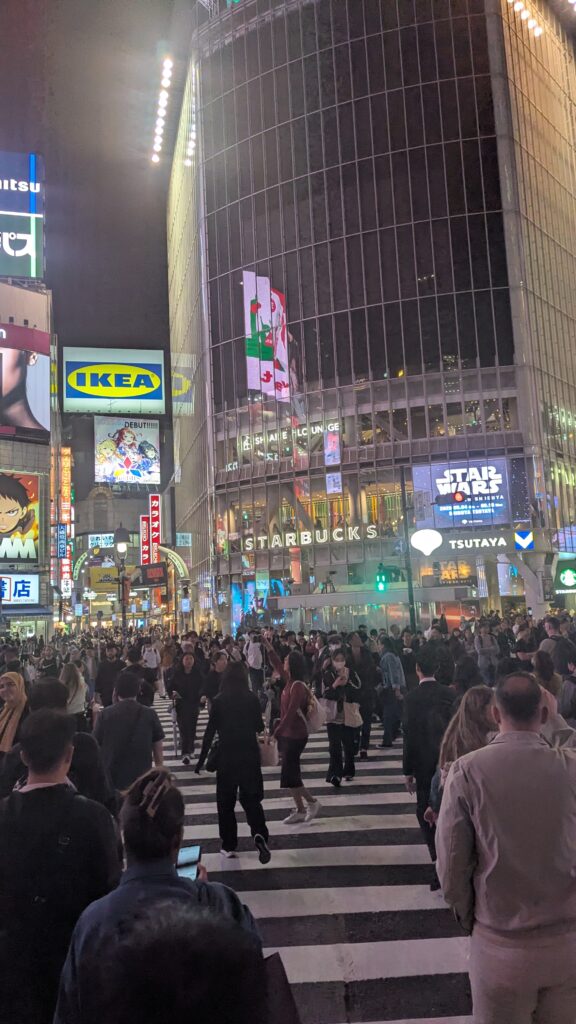
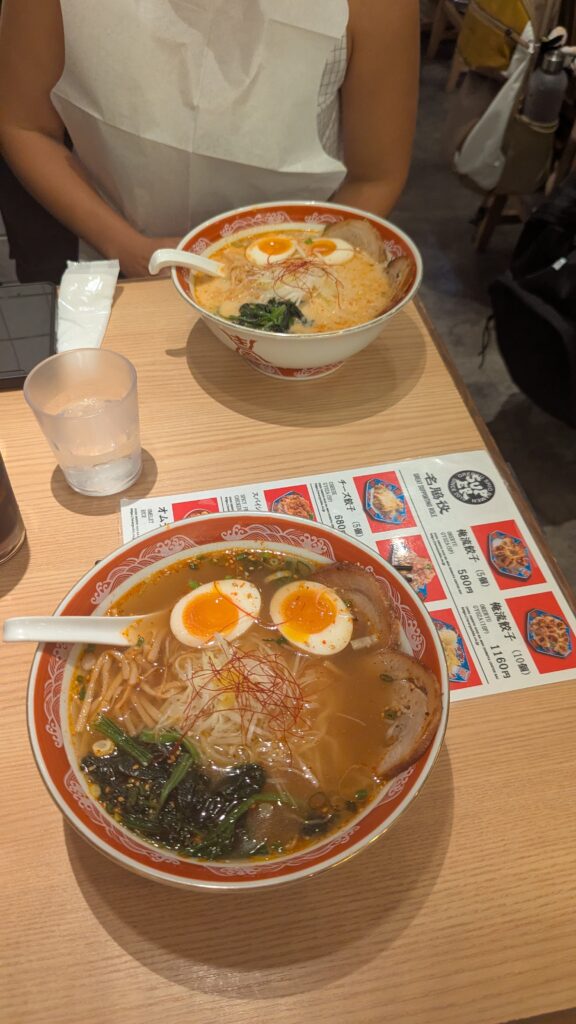
Tonight’s meal was ramen—a noodle soup. We all chose different options: I had roast beef in a clear broth, Grace had chicken in the same, and Jess had beef in a creamy broth. All were really tasty! We had planned to meet up with Elliot and Scott again after dinner for drinks, but we ended up having a bit of a family emergency and headed back to the hostel to stay in contact with family. Thankfully, everything got sorted and everyone was okay, but after all the stress, we decided to call it an early night.
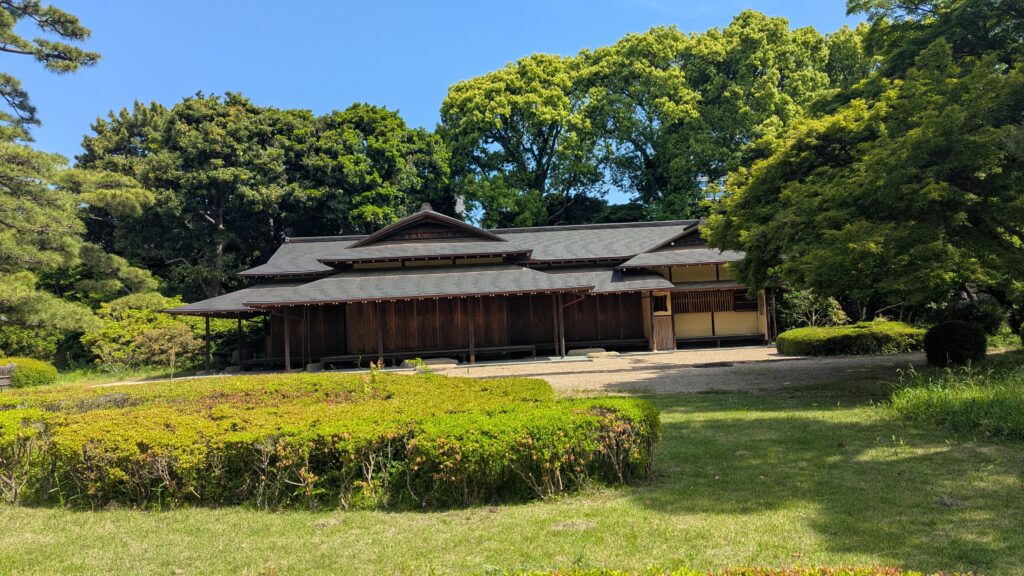
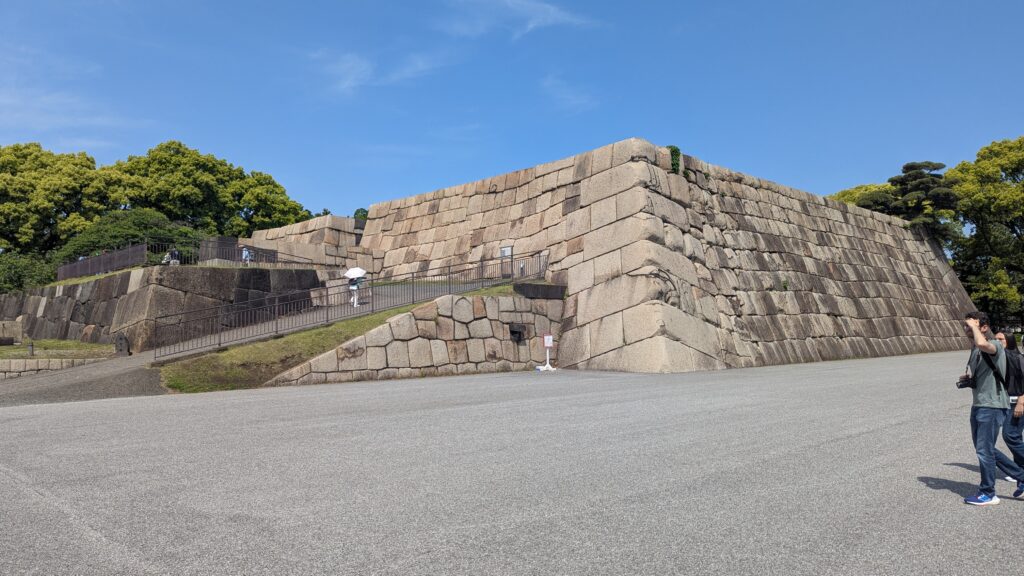
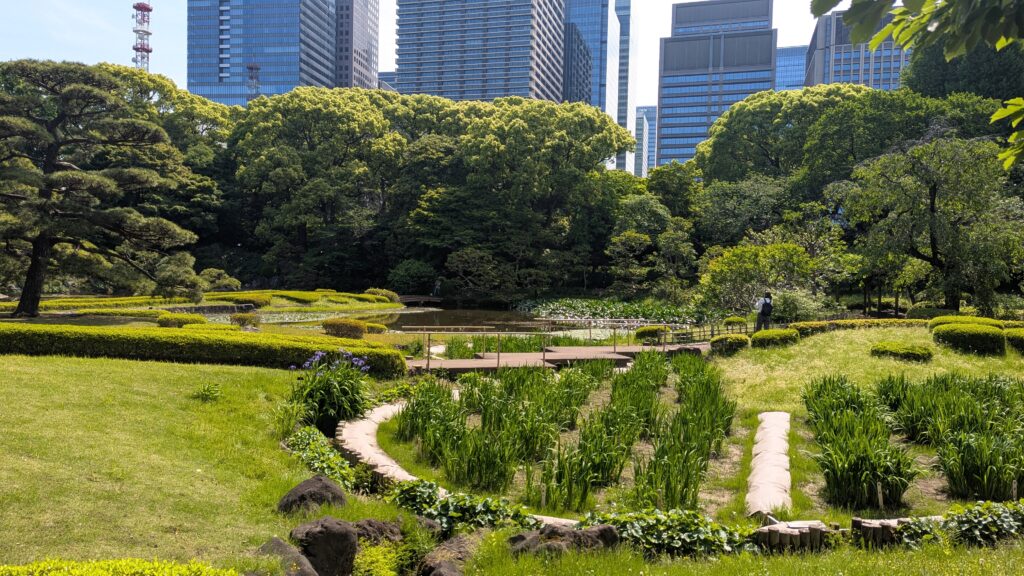
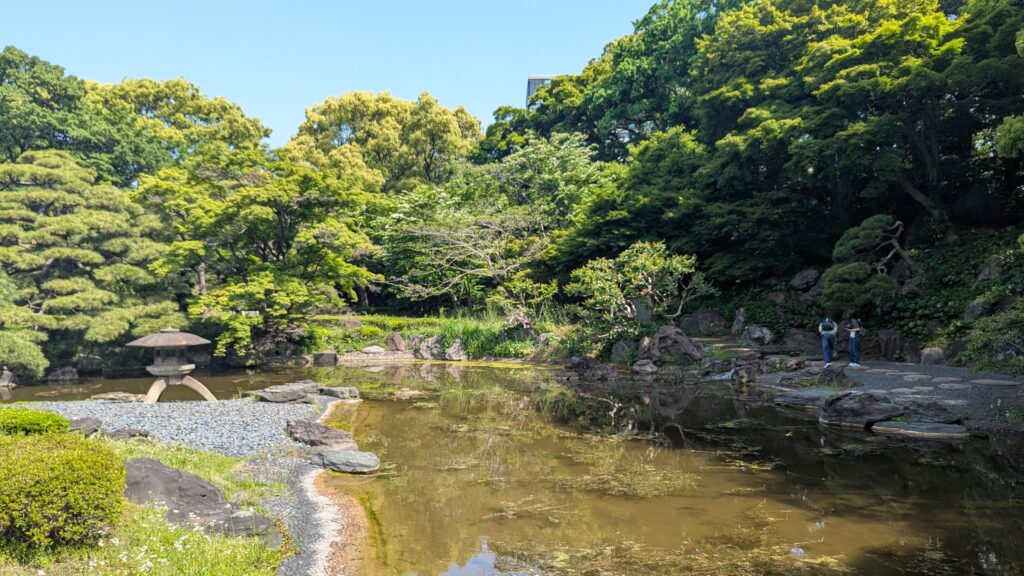
The next morning, we headed over to the Imperial Palace. Most of the original palace buildings were destroyed during WWII, but it’s still the main residence of Japan’s Emperor today, and the grounds are open to the public. We spent the morning wandering through the beautiful East Gardens, which are part of what used to be Edo Castle—home of the Tokugawa shogunate for over 260 years. Most of the buildings that weren’t destroyed in the war are more modern, but we got to see the enormous stone foundations where the guard towers once stood. Just the bases were huge—I can’t imagine how tall the towers must have been.
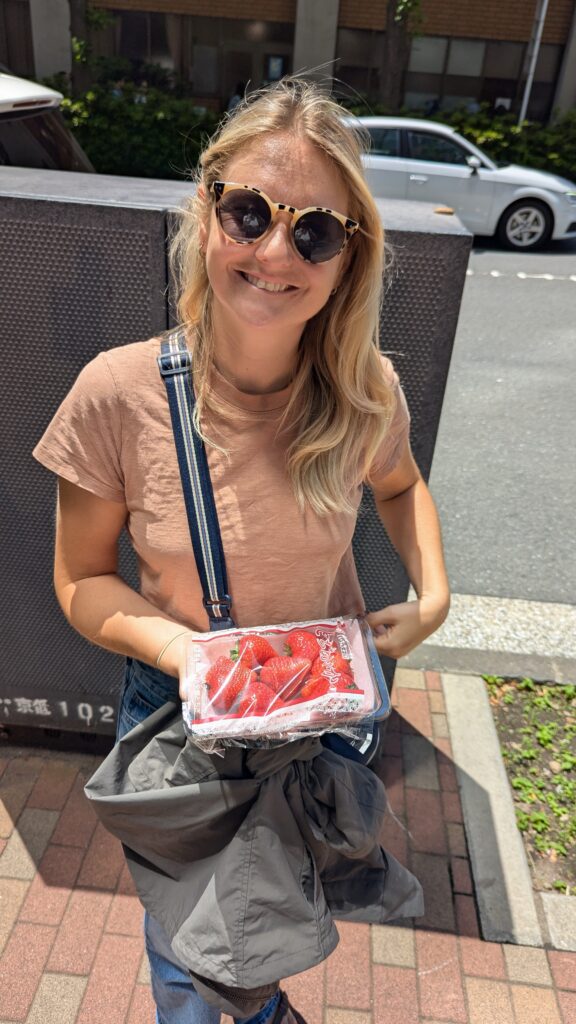
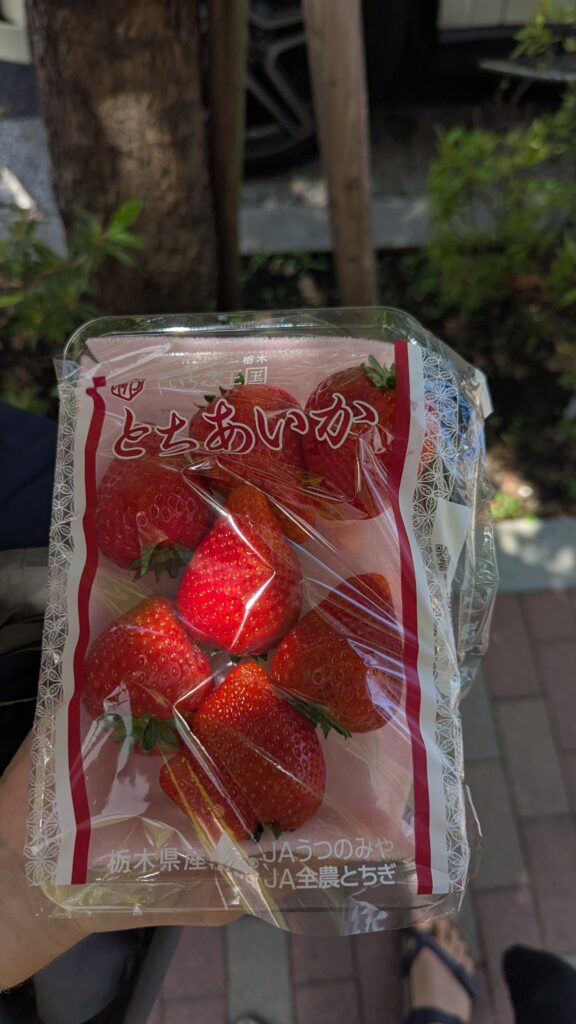
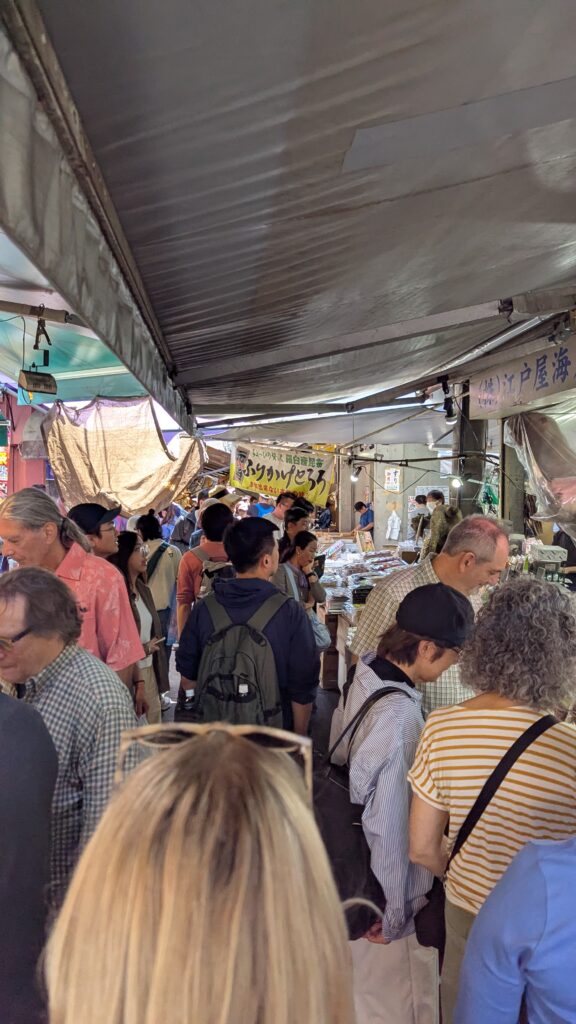
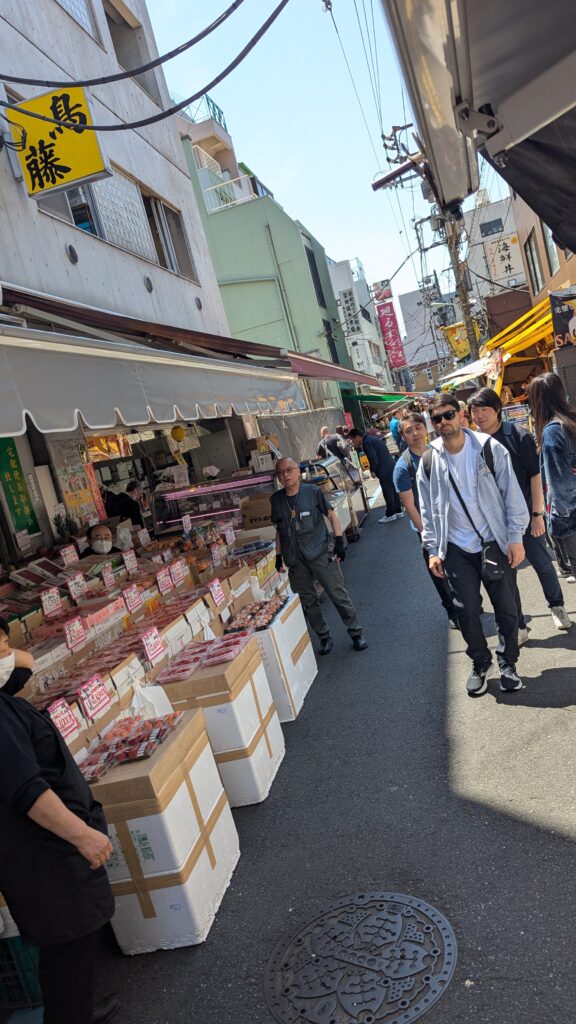
Afterwards, we made our way to the Tsukiji Outer Market, a lively food market that grew around the historic Tsukiji Fish Market. The original fish auctions, including the famous giant tuna ones, have since moved to Toyosu, but the outer market is still buzzing with street food stalls, shops and fresh produce. We were saving our sushi appetite for the evening—we had a booking at a tiny sushi bar with a legendary chef—so we managed to resist all the fresh seafood (which, frankly, felt like an Olympic-level achievement). But we *did* splash out £5 on some ridiculously posh strawberries. And oh wow—they were worth every penny. Juicy, sweet and perfectly ripe, it felt like biting into sunshine.
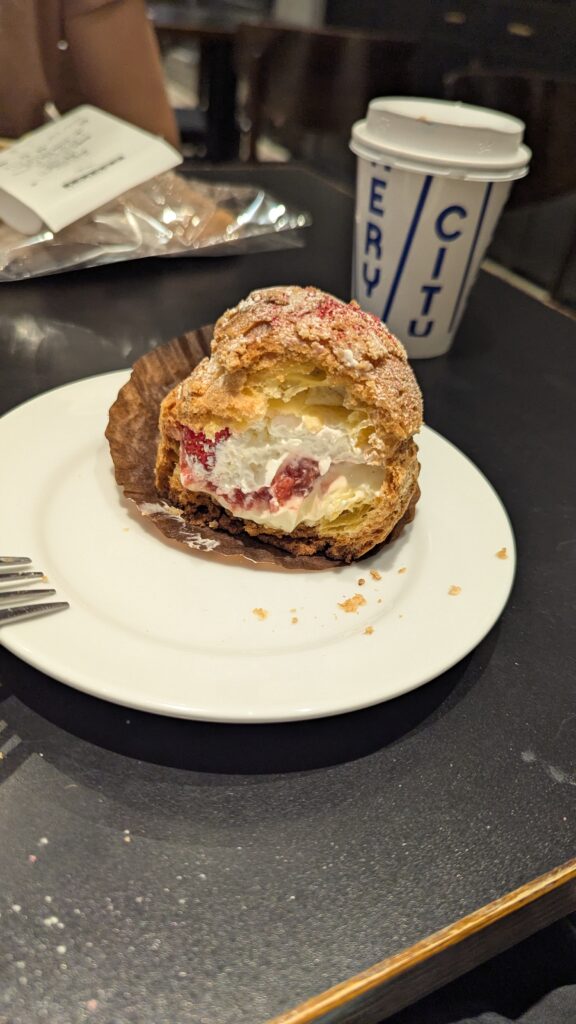
Still on a strawberry high, we decided to share a strawberry parfait. It was so good that we immediately regretted not getting one each. Lesson learned: never underestimate how much strawberry dessert is *enough* strawberry dessert.
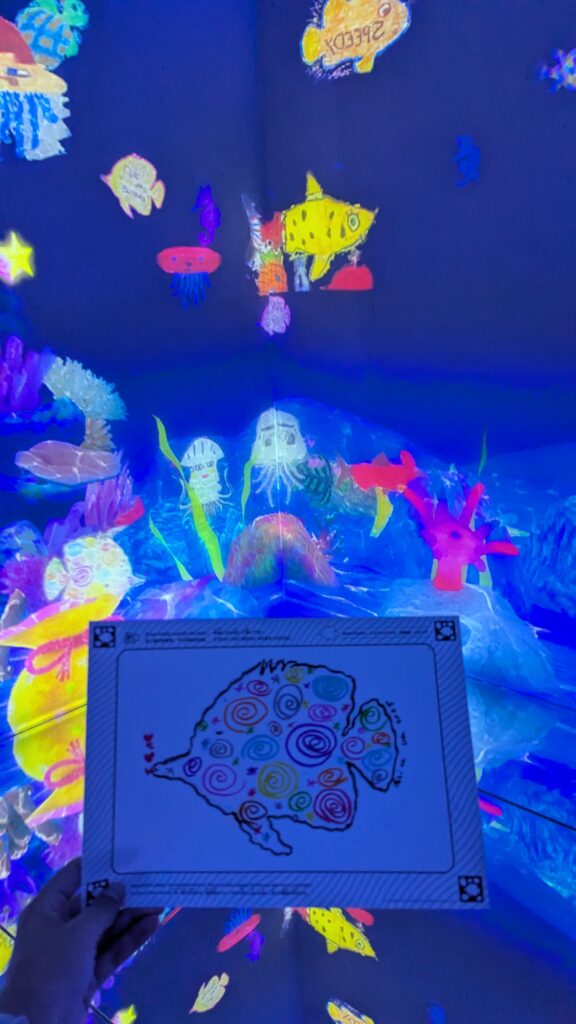
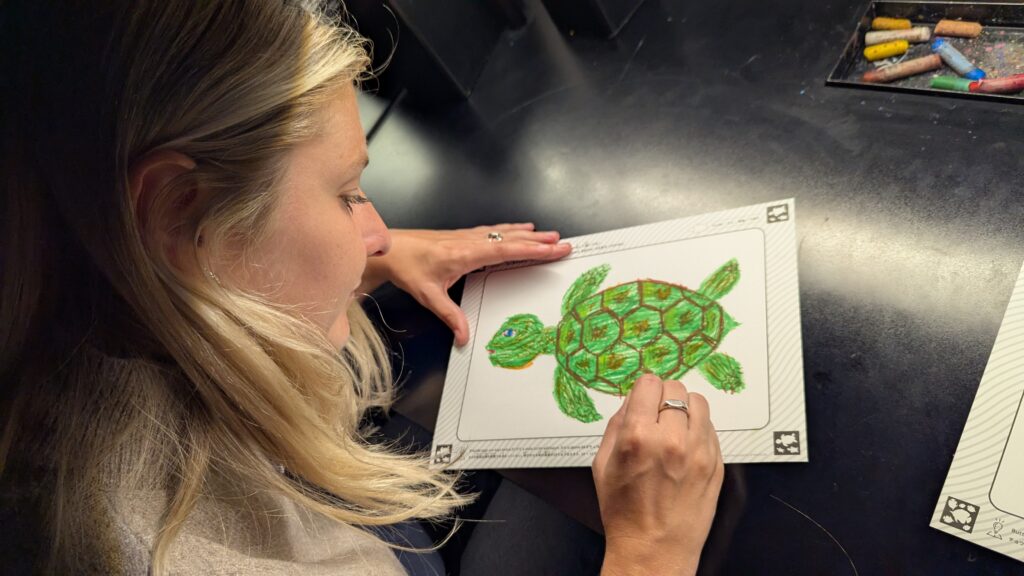
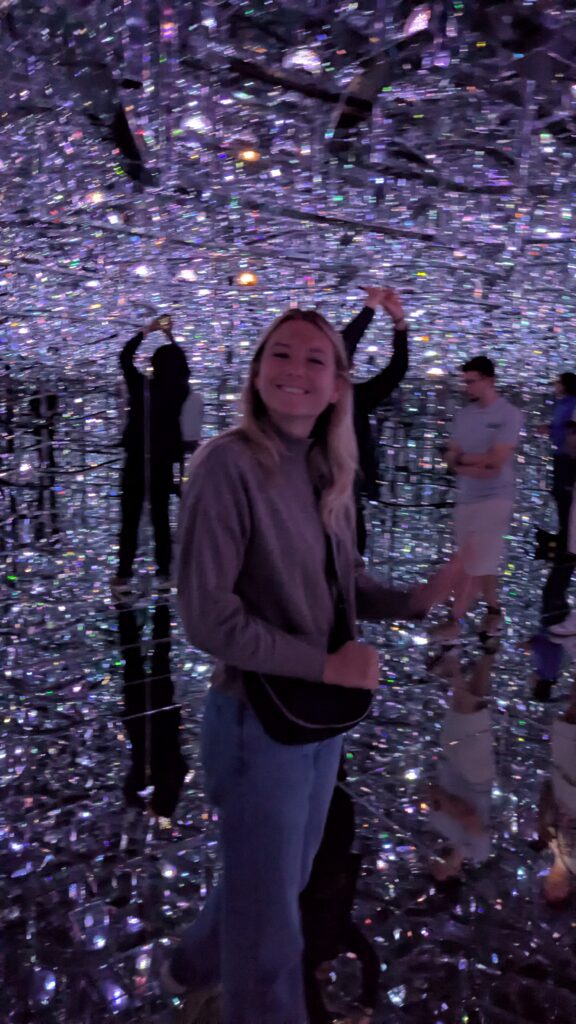
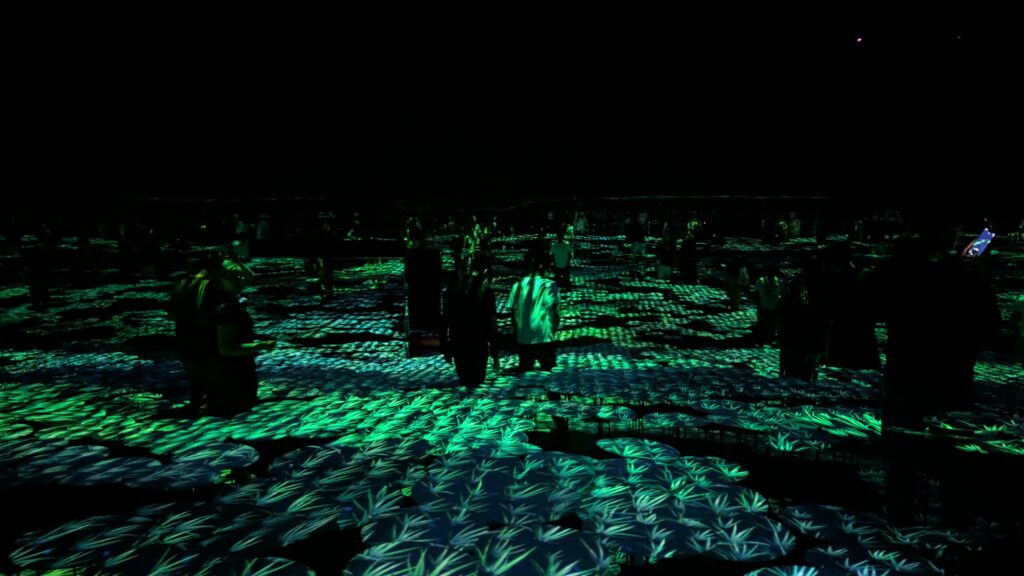
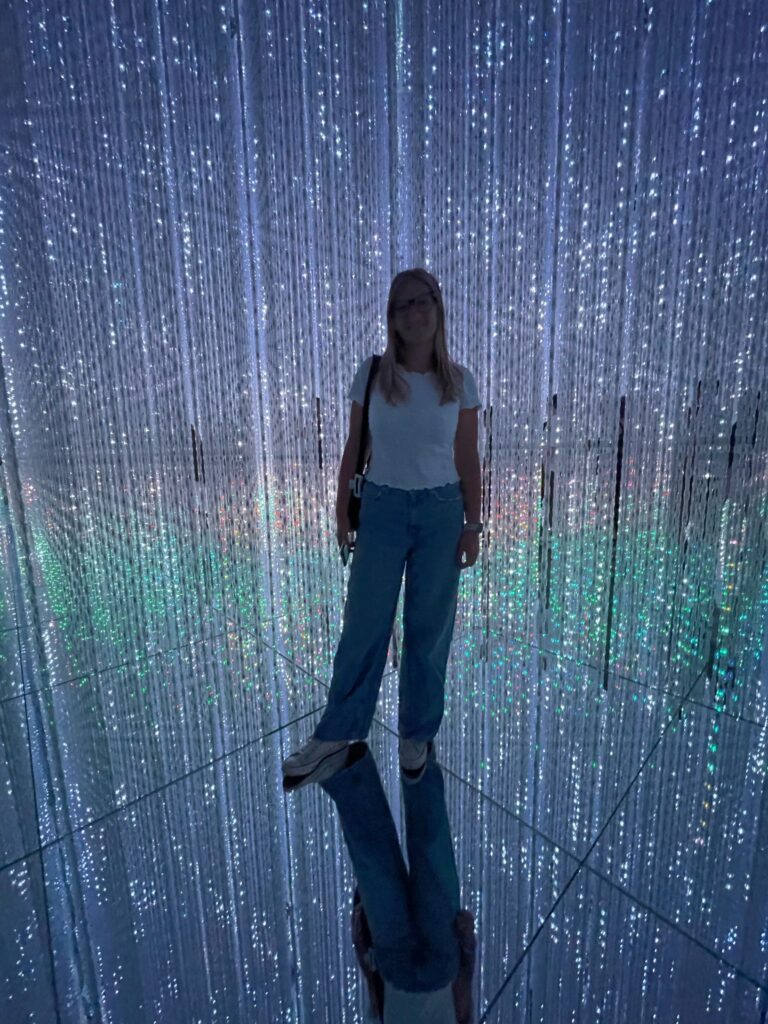
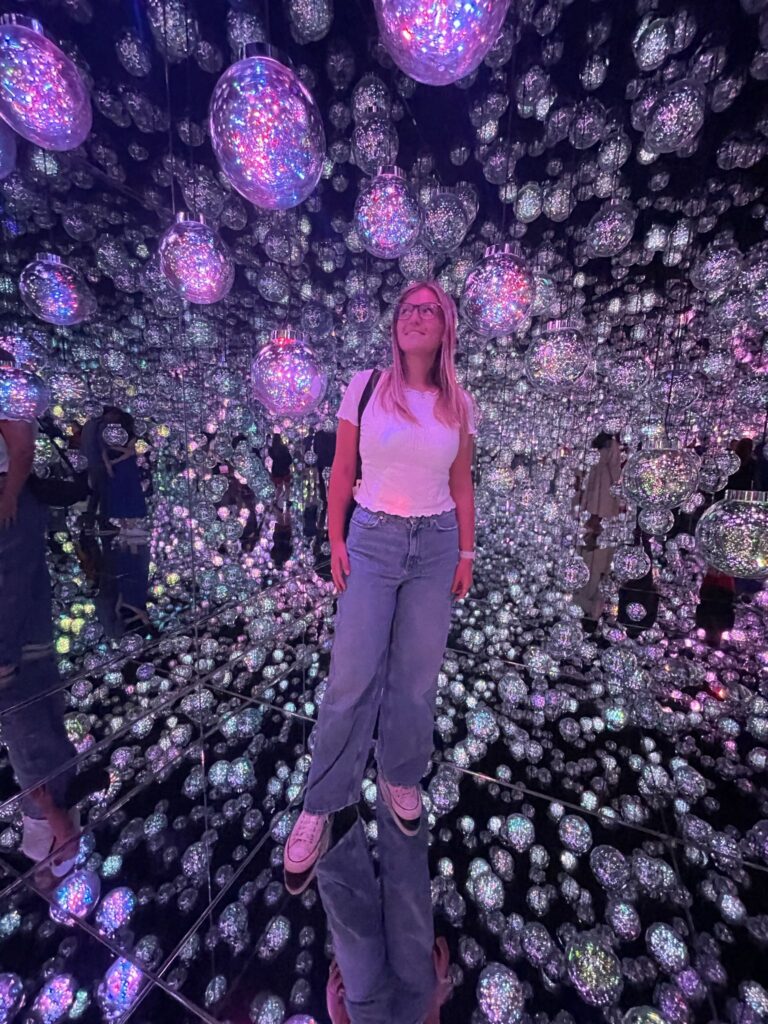
In the afternoon, we had tickets to TeamLab Borderless, an interactive digital art exhibit that’s super popular in Tokyo. We hadn’t managed to get into their main location, but the smaller exhibition was still amazing. The whole place is made up of different rooms filled with immersive projections, mirrors, smoke, lights and sound. One room was like walking through a glowing LED forest, another had giant floating spheres you could push around, and in one you could draw your own sea creature and watch it join a virtual aquarium on the wall. It was all very trippy and surprisingly fun, and the fact that the artwork moved and responded to you made it feel more like a playground than a gallery. We’d ummed and ahhed a bit over whether the tickets were worth it, but we were so glad we went—completely lived up to the hype.
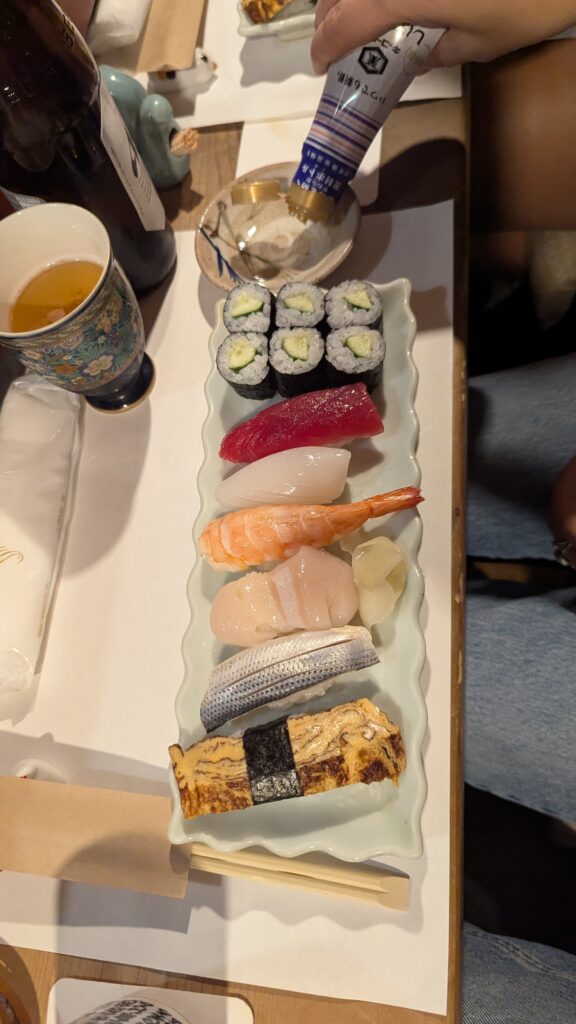
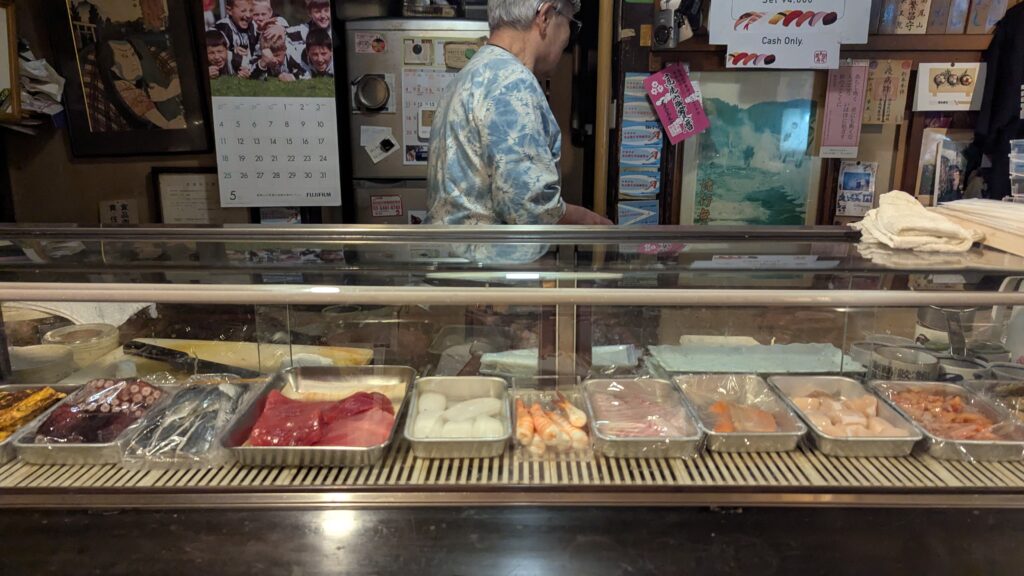
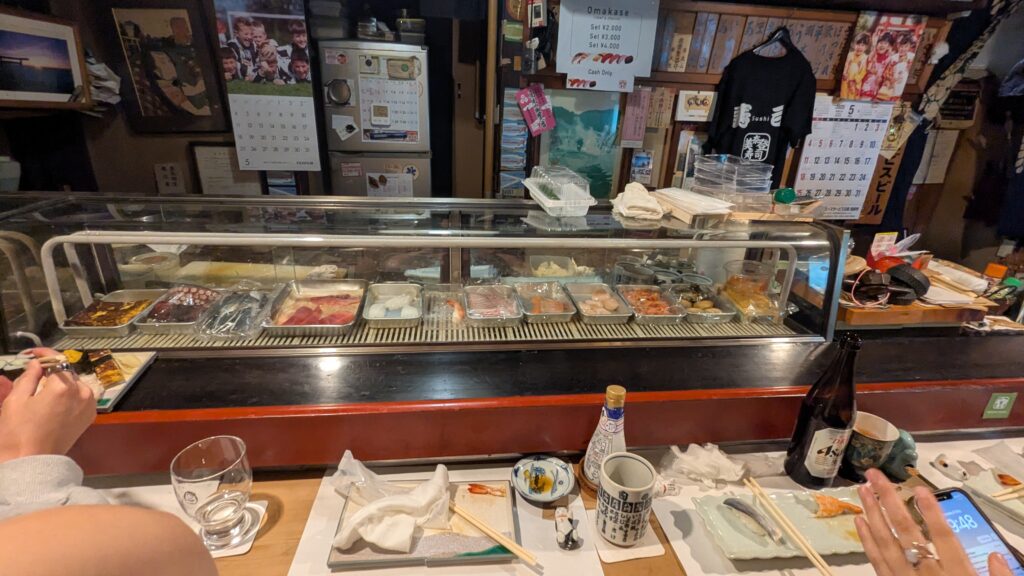
That evening we met up with Jess again for dinner. We’d been recommended this teeny sushi bar with just five seats and a chef who’s been doing sushi for decades. You pick your price tier—£10, £15 or £20—and he serves you whatever he’s in the mood to make within that range. The sushi was delicious, but wow—he was *not* shy with the wasabi. Some bites blew our heads off. Still, it was a great experience and felt like a very authentic little Tokyo gem.
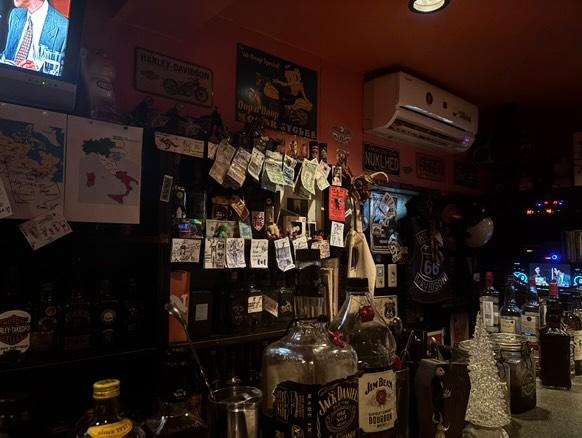
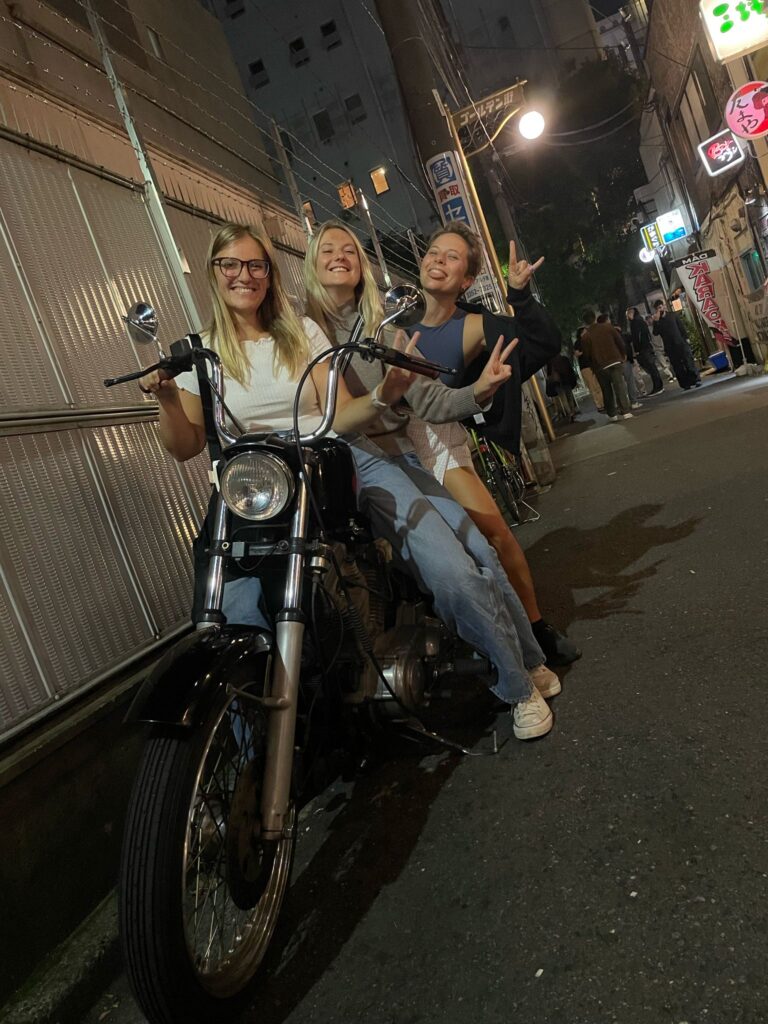
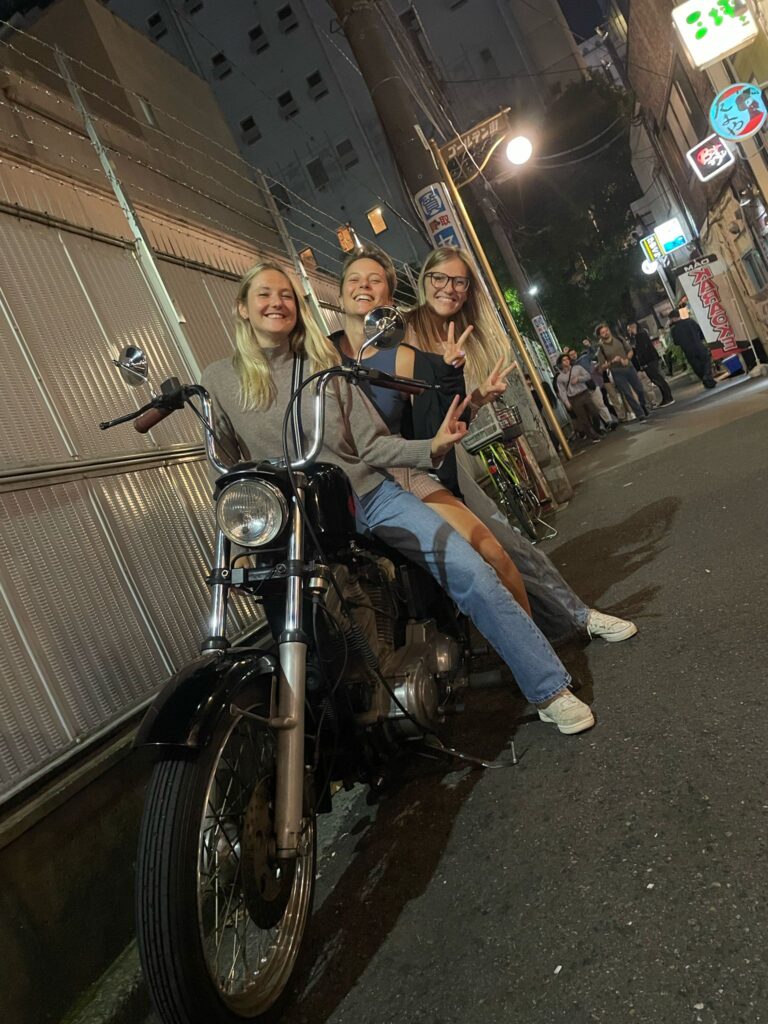
After dinner, we went back to the Golden Gai area—we just couldn’t resist. The bars there are all so tiny and quirky, each with its own theme and personality. This time, we ended up in a Harley-Davidson motorbike-themed bar, because of course we did. Sake was flowing, and before we knew it, we were doing karaoke with some new friends from Leeds and the US. The bar owner even insisted we do a mini photoshoot on her Harley after we paid—so we now have a collection of very dramatic motorbike photos we didn’t know we needed.

We ended the night sprinting through the streets trying not to miss the last train—thankfully we made it, slightly breathless and definitely still humming Arctic Monkeys.
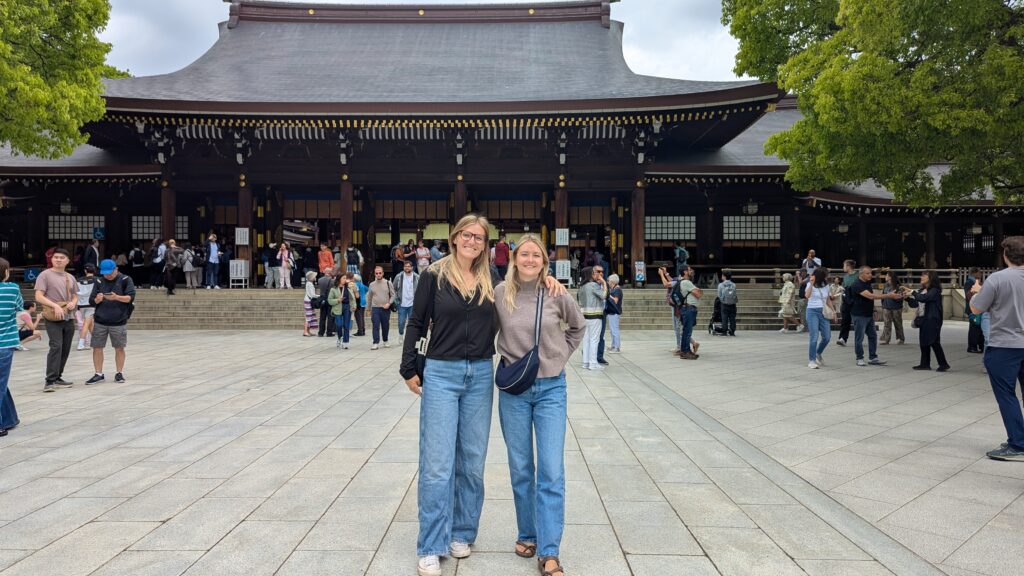
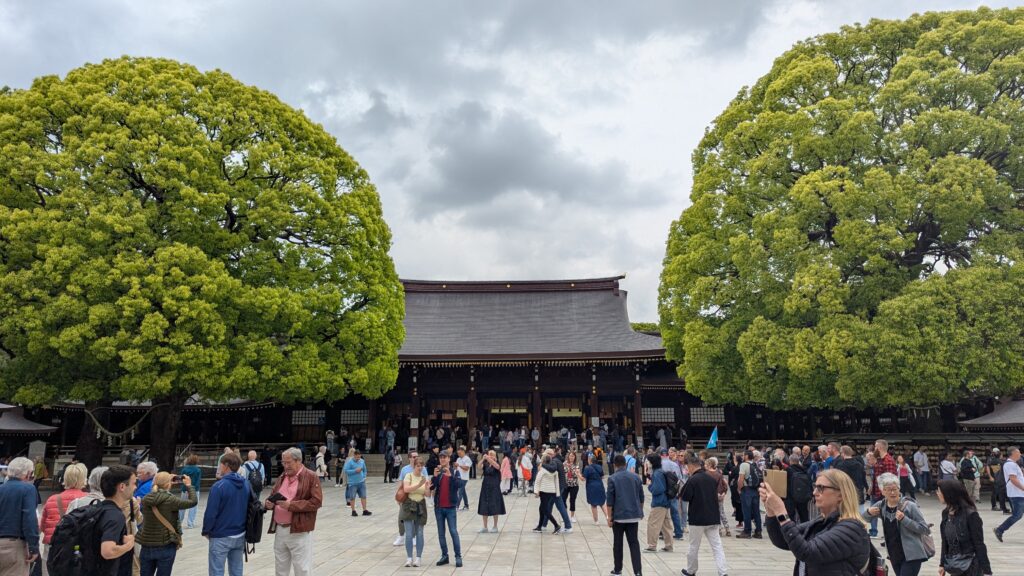
The next day, we were back on our walking tour grind—this time exploring Harajuku and the Meiji Shrine. Thankfully, this one was *way* more informative than the last and actually felt like a proper history lesson rather than just a scenic stroll. Our guide was a lovely Japanese woman who took us through the dramatic tale of Japan’s transition from samurai swords to skyscrapers. She explained how the country was ruled by shoguns and samurai during the Edo period, how it isolated itself from the world for over two centuries, and then, quite dramatically, flung its doors open to trade with the US, kicking off a whirlwind cultural revolution.

All of this happened under Emperor Meiji, the guy who essentially said, “Let’s learn everything from the West but still be *very* Japanese about it.” He’s also the one behind the famous phrase, “Knowledge of the West, spirit of Japan.” After his death, the nation built the Meiji Shrine in his honour—a grand Shinto temple surrounded by forest, because in Shintoism, gods are in nature. The forest itself was planted by thousands of people who donated trees from all across Japan, which is honestly kind of beautiful. There are also huge barrels of wine from Europe and Sake from Japan given every year still in his honour.
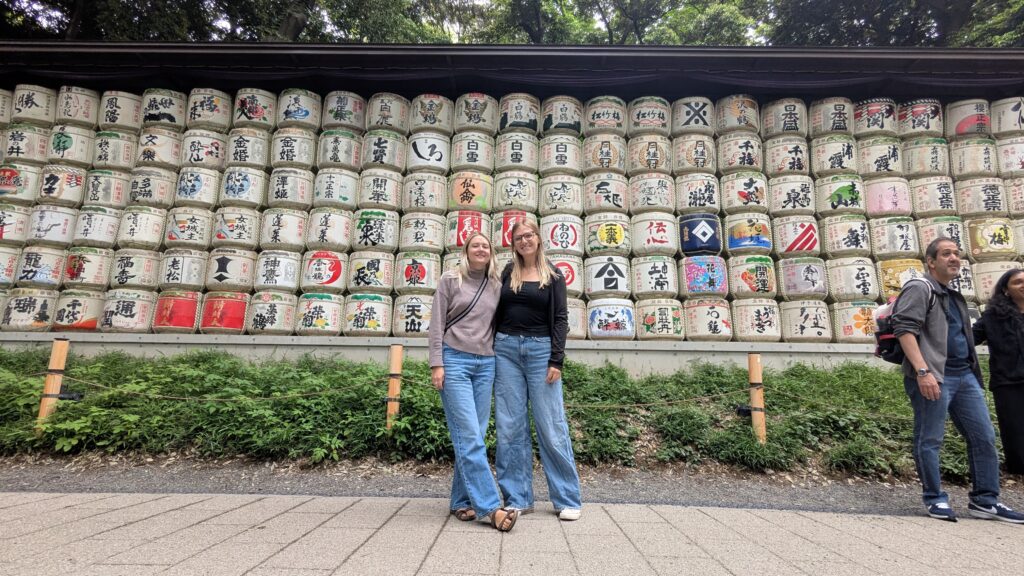
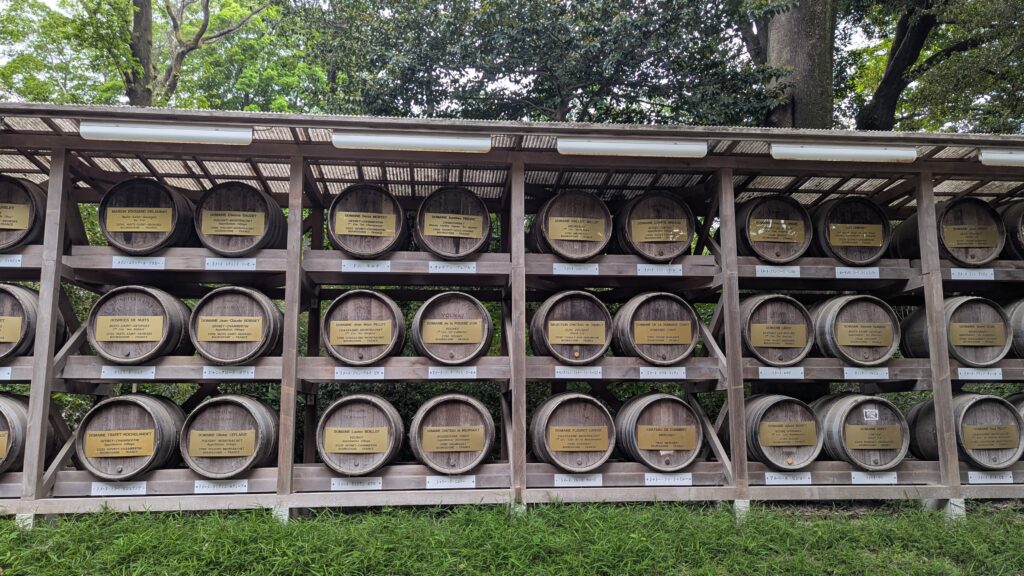
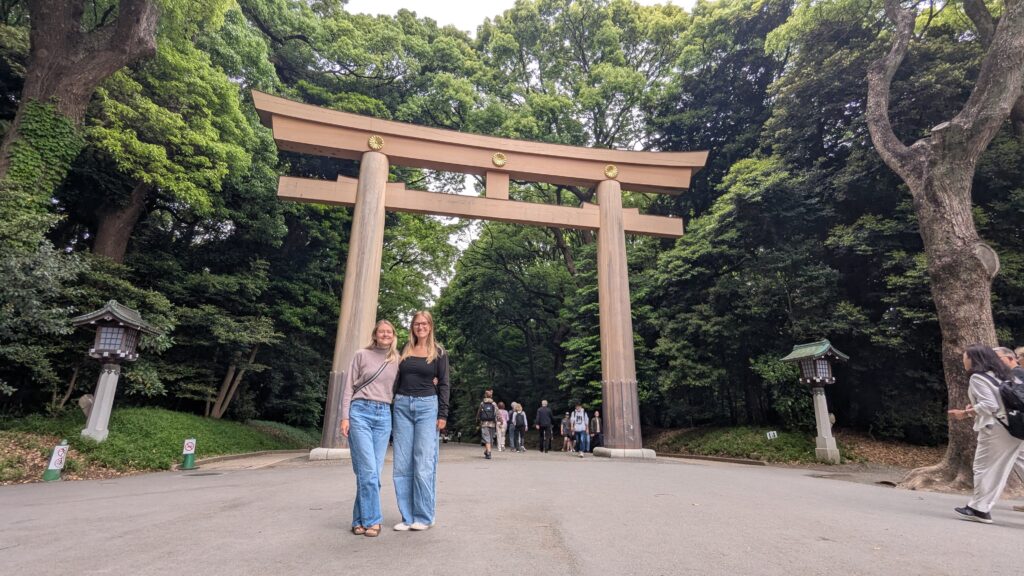
The guide also gave us tips on shrine etiquette—don’t walk through the centre of the torii gates (that’s god territory), and when praying: bow twice, clap twice to get the gods’ attention, make your wish, and toss in a coin. Like a very respectful cosmic vending machine.
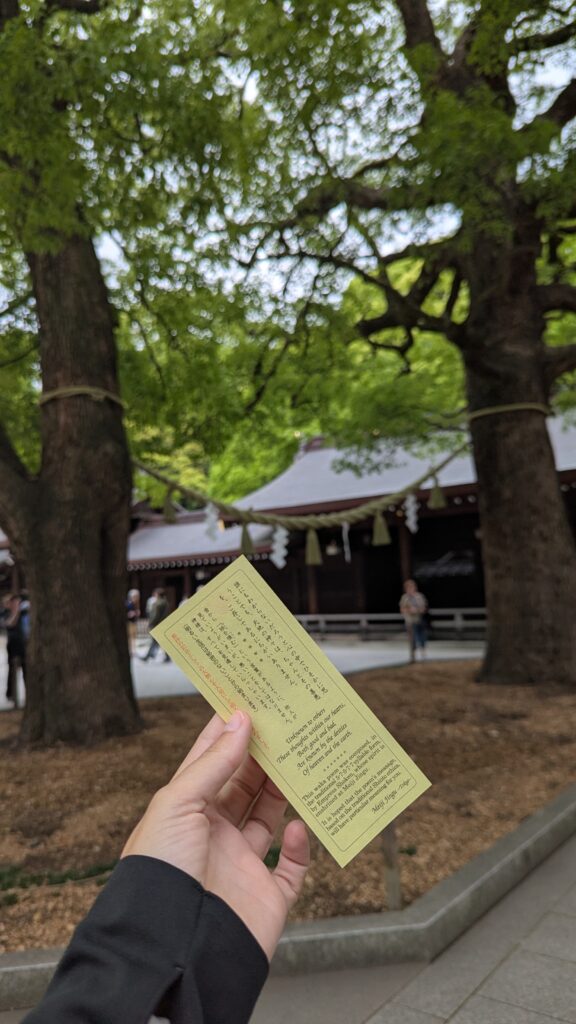
We also got to try the traditional fortune-telling sticks. You shake a big container, pull out a stick, match the number to a drawer, and take your fate from inside. Mine basically told me to behave because god is always watching (yikes), and Grace’s fortune warned her to stop gossiping—which raised some eyebrows, not gonna lie. What have we been doing lately?
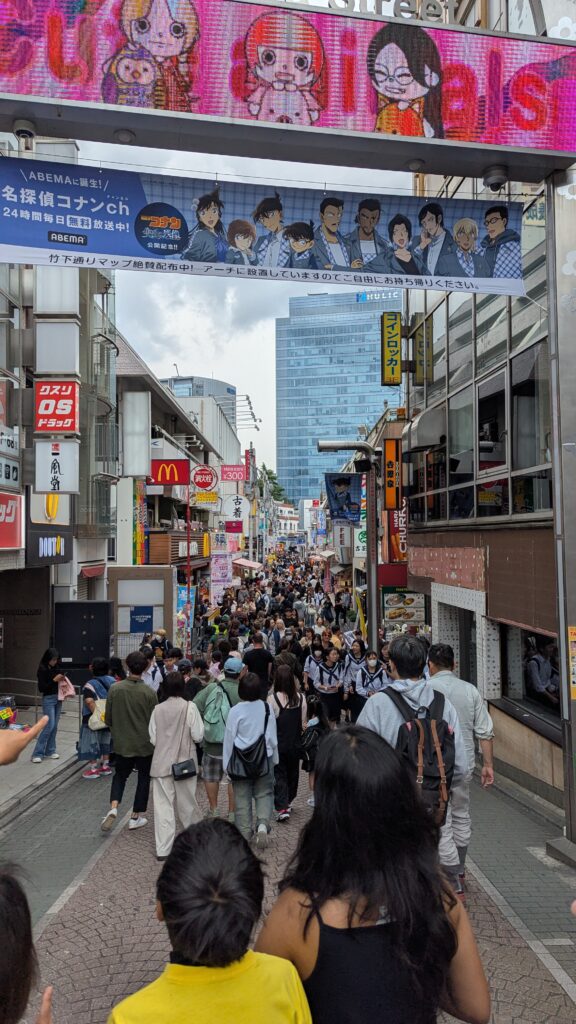
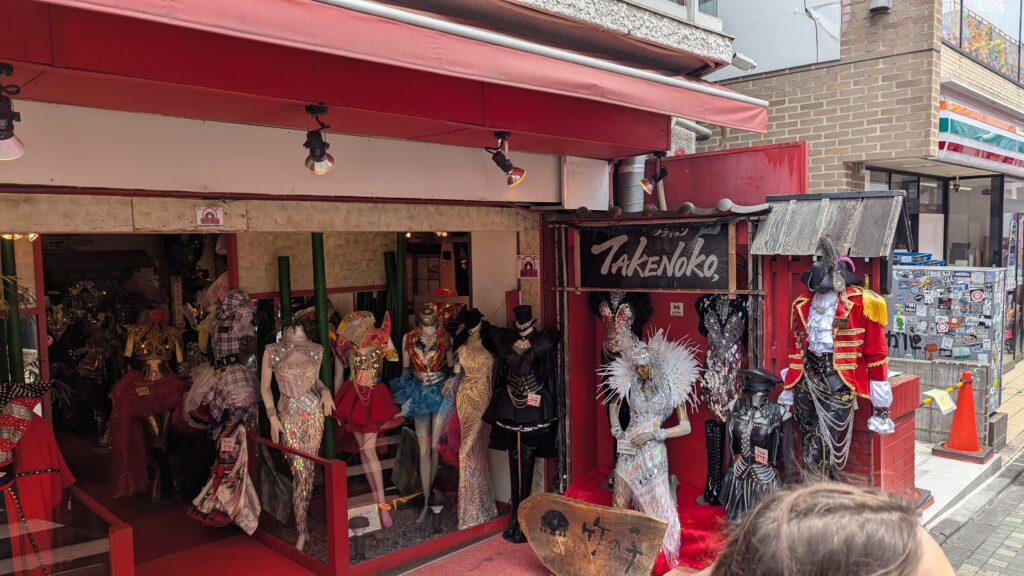
After the shrine, we passed through the Olympic Park and took a stroll down Harajuku’s famous fashion street, where the current trend seems to be dressing like Victorian porcelain dolls. Cute, slightly unsettling, but undeniably impressive levels of dedication.
Post-tour, we wandered around a bit more before heading to a katsu curry place that our guide had raved about. We were joined by an American woman from our group, and the food was *excellent*—crispy, golden, and comforting.
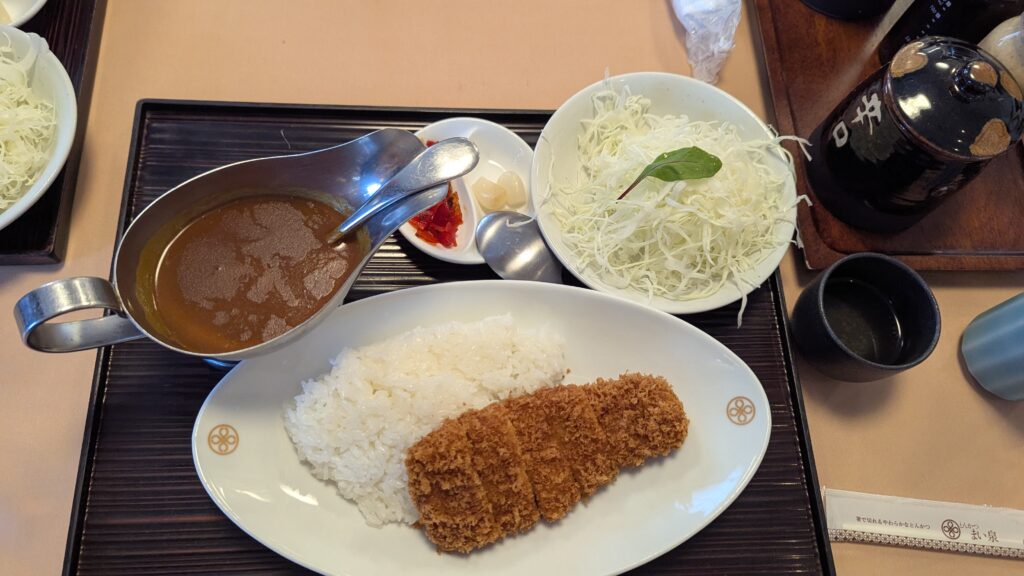
After lunch, we took a leisurely 30-minute stroll through the backstreets, soaking in the quieter side of Tokyo, making our way toward a robot café. Very futuristic. Very Tokyo….Except we never quite made it. Just as we arrived, Grace realised she’d left her purse at the restaurant. Cue the great purse retracing mission—30 minutes back, 30 minutes to the café again, and by the end of it we were sweaty, tired, and a little knackered. Ready to be waited in by some robots!

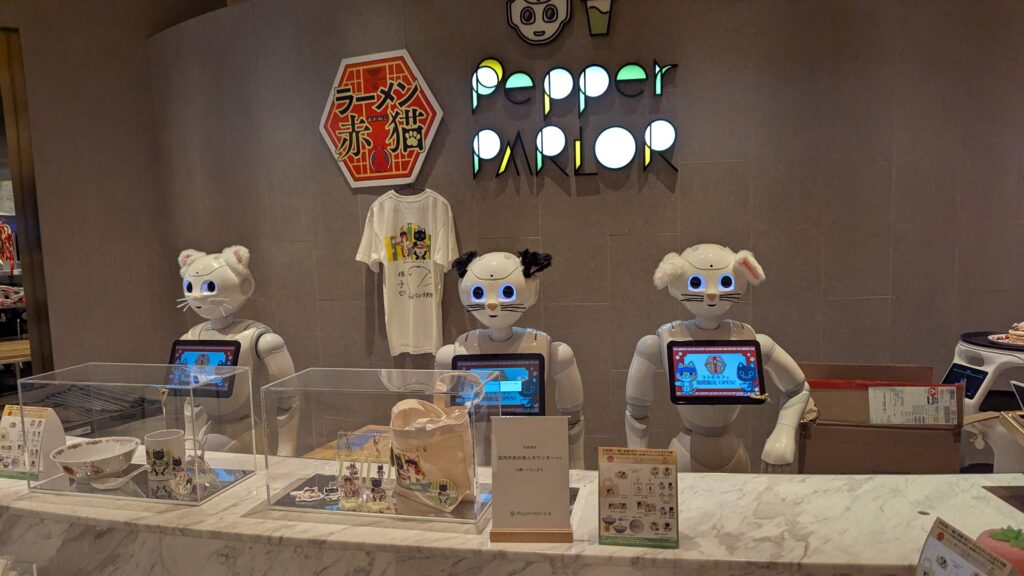
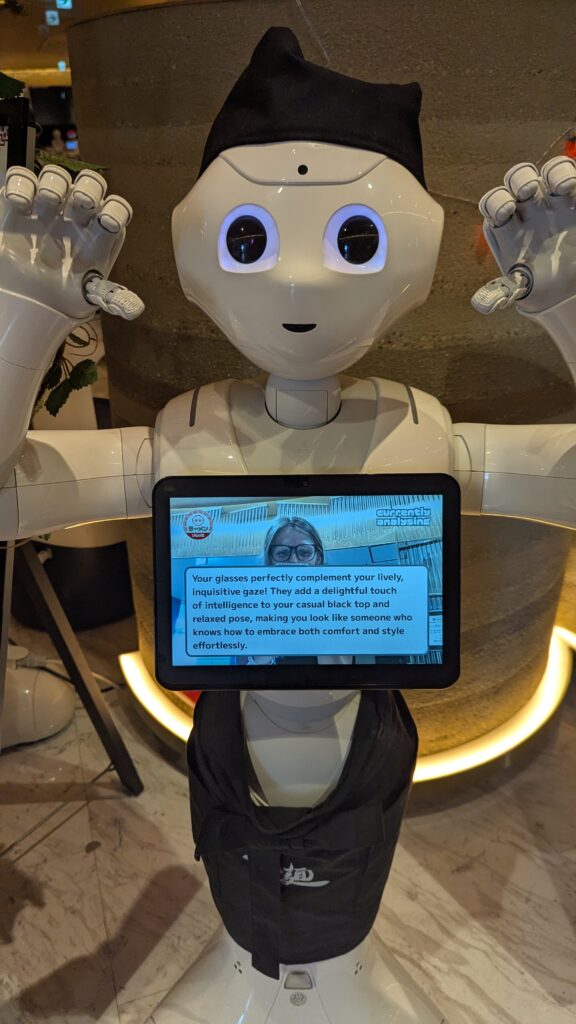
The robot café itself was cool, if slightly bizarre. The robots didn’t do much in the way of actual serving—they just hovered near your table and performed the odd dance or bit of small talk, like high-tech dinner party guests you hadn’t invited. Still, very fun to experience and peak “only in Japan” energy.
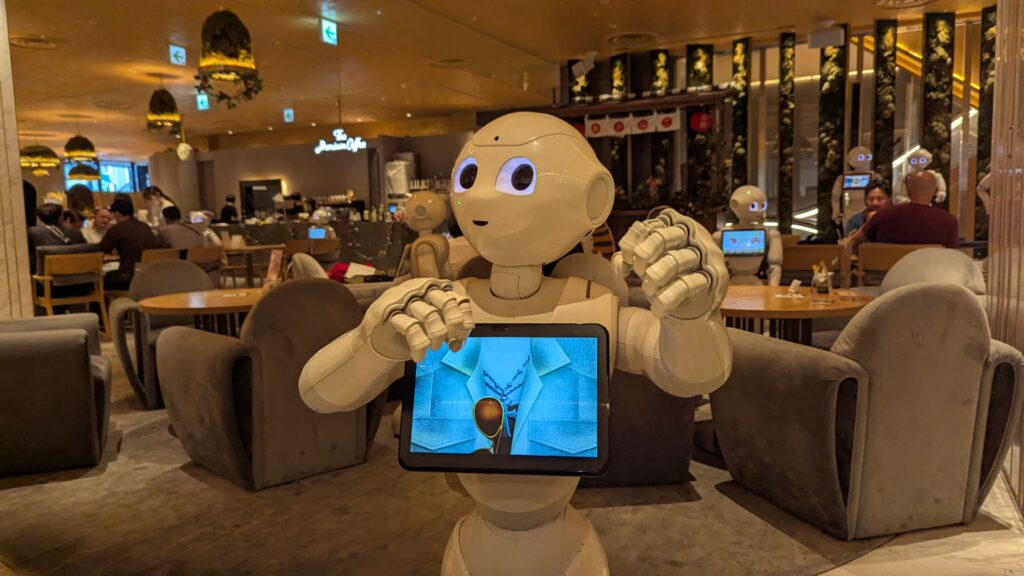
By that point, we were knackered. After several days of non-stop sightseeing, late nights, and early mornings, we headed back to the hostel for a much-needed rest. We’d booked an evening walking tour that promised a deep dive into Japan after dark—covering everything from maid cafés to the history of comfort women and the country’s work-hard, drink-harder culture. I was genuinely excited about it… but sadly, my body had other plans. All the rushing around finally caught up with me and I ended up having a Crohn’s flare-up—nausea, stomach pain, the works.

So we had to cancel the tour, which I was absolutely gutted about. But I suppose that just gives me an excuse to come back to Tokyo one day—unfinished business, and all that!

Our next stop is Hakone, tell you all about it soon, love Alice x

Alishan, Taiwan

Our next stop was Alishan National Park. It was a long travel day to get there, involving a bullet train and a local bus winding its way through the mountains. The scenery was beautiful, but the road hugged the edge of the cliffs at times, which made for a nerve-wracking ride.

We eventually arrived in one piece and made our way to our hotel. When we checked in, we were told there would be an evening firefly walk, so we put our names down for it. But first, we headed out to find some dinner. Unfortunately, it turned out to be pretty disappointing and not even what we had ordered. We’d picked three dishes—noodles, rice, and mixed vegetables (according to their English-translated menu)—but somehow only ended up with two: noodles and some beef with bamboo. Neither was particularly nice.

After dinner, we joined the firefly walk and were led along some disused railway tracks into a patch of forest that was absolutely glowing with fireflies. It was magical—they weren’t just in the trees, but floating all around us. I tried to get some photos and videos, but aside from the very brightest ones, they didn’t show up. Still, it was an incredible experience.

The next day, we got up early to catch a bus to the visitor centre so we could explore the national park. What we hadn’t realised was that it was a bank holiday weekend. The bus was an hour late and completely packed—we had to stand for the entire 40-minute journey. The driver was racing along the winding mountain roads, and the motion started to make us all feel sick. Grace had to sit down in the aisle because she felt like she might either throw up or faint. Thankfully, we arrived without either of those things happening and were very relieved to be on solid ground again.

The park was heaving with people, but we eventually managed to get away from the crowds and spent a few hours walking among the towering trees and visiting old temples. It was really peaceful once we got off the main paths.

Eventually, we headed back to town for dinner, but again, it was super disappointing—overcooked pork cutlet and some tasteless vegetables. We gave up halfway through and opted for instant noodles from 7/11 to eat in our room instead!

We were supposed to head to Sun Moon Lake the following morning, our final stop in Taiwan. But when we went to book our train tickets, we discovered everything was fully booked until Monday because of the holiday. To make matters worse, we couldn’t extend our stay at the hotel either, as they were also fully booked. After a stressful evening of planning, panicking, and rechecking our options, we had to accept that getting to Sun Moon Lake and back in time for our flight wasn’t going to happen. Instead, we booked a night in a town about two hours away called Chiayi, where we could get a train to Taipei on Monday morning. We made sure to book our tickets to Chiayi and from Chiayi to Taipei in advance this time.

Our train to Chiayi wasn’t until 1:30 p.m. the next day, so we used our free morning to go for another walk around town. It had been cold the whole time we were there, so we finally gave in and wore jeans. Naturally, that was the day the sun came out in full force. We spent most of the walk sweating and climbing hills in the heat. When we finally got back to the hotel, the lovely owner saw our red faces and immediately sat us down with a fan pointed right at us.

Once we’d cooled off, we grabbed another 7/11 meal—this time some sushi and a banana— as well as a coffee and a chocolate milk for me, which came in cool takeout pouches, before catching our train to Chiayi.

The train ride was lovely, winding through forested areas, and everyone we passed waved to us. And I mean everyone—kids, adults, men in business suits and staff on the platforms. It was like we were celebrities. It felt like seeing a train was a rare event, even though there are at least three a day on this route. I guess people were just love a good train here.

After checking in at our hotel in Chiayi, our first stop was to find some food that hadn’t come from 7/11. We ended up at an American BBQ place and had some delicious brisket buns and chips. Finally, an tasty qmeal! After that, we headed out to the launderette.

The next morning, we finally caught a train back to Taipei. The bullet trains were all booked out, so we had to take the slower option—a five-hour train ride! We arrived in the late afternoon and decided to try a noodle place that had been recommended to us on the walking tour during our last visit to Taipei. There was a queue outside, which is usually a good sign, and we ended up waiting for about an hour before finally being seated in little one-person cubbies.

The menu wasn’t in English, and our phone translation app wasn’t much help either, so it turned into another point-and-guess meal. We both ended up with beef noodles, but I had apparently ordered a set that came with side dishes of what I think were tofu, pig’s skin, and blood cubes. I tried all of them—they tasted fine—but they weren’t really to my liking. I think I’m just not used to slimy, chewy textures. A bit of an underwhelming last meal.

After dinner, we headed back to our hostel, and while we’d been out, there had apparently been an earthquake in Hualien—the place we visited a few stops ago. We hadn’t noticed a thing, but some people felt slight tremors. An eventful end to our time in Taiwan!

Tomorrow we fly to Japan. I’ll tell you all about it soon!

Love, Alice x

Taipei, Taiwan

We arrived in Taipei around lunchtime, dropped our bags at the hostel, and decided to grab a drink at the café next door while planning how to spend our afternoon. The café was a postcard café— even the menu was on postcards. You selected one to make your order and got to keep it for free. We also picked up a few others and spent time writing them while sipping our drinks.

We then found a lunch spot—a local cafeteria where you mark a cross next to what you want on a laminated menu. We chose some beef and chicken dishes with no real idea of what they were, but as always in Taiwan, they turned out to be super tasty. After lunch, we decided to kick off our sightseeing with Taipei’s, and possibly Taiwan’s, most famous building: the Taipei 101 skyscraper. It was the world’s tallest building in 2004 and, between 2004 and 2015, had the world’s fastest elevator, reaching a speed of 1010 m/s! Not sure if it was going that fast when we used it, but our ears popped and we felt weightless as it decelerated—very cool.

We paid to go up to the observation deck and got a real sense of just how large and sprawling Taipei is. It was fascinating to see. They also have the exposed movement-dampening weight that reduces the tower’s sway in high winds or earthquakes, and we watched videos of it moving during previous quakes—really interesting.

In the evening, we joined a food tour at one of the city’s night markets. Taiwan has loads of night markets, so we figured it would be a great way to learn about all the tasty things we could be eating.

We started with sweet, donut-like balls made from sweet potatoes—very nice. Then came my favourite: a pork belly bao bun, a soft, steamed bun filled with pork belly, cabbage, and crushed peanuts. It was incredibly tender and delicious—so good it’s even earned Michelin recognition!

We also learned that this market, like several others in Taiwan, originally started near brothels. When prostitution was outlawed, people used the loophole of “just buying food” and then “falling in love with the chef.” Eventually, the food became more popular than the other services. That’s also why there are still traditional shops selling snake-based products—rice wine mixed with snake blood, bile, venom, and even semen, to fuel the men up for round two! Our guide joked that Westerners had too weak a stomach to try them, and Grace dared me £10 to prove him wrong. That’s how I ended up drinking a shot of rice wine and snake semen. Thankfully, it just tasted like rice wine! Having single-handedly restored Western pride, we moved on.

Next were soup dumplings—always delicious, no matter how many times we’ve had them. At this point, I was very full, but we were only on stop 5 of 10. Next came oyster omelettes, made with egg, oysters, and a rice paste. They were okay, but not something I’d rush to eat again, especially when already stuffed. Grace didn’t touch hers, but our guide boxed it up with the rest of the extras he’d collected to give to homeless people later. That made us feel better about not finishing everything.

After that was a drink stop where we tried winter melon juice. The fruit is absolutely huge. It tasted fine, but I wouldn’t go out of my way to have it again.

Next came deep-fried fish paste, which sounded a bit grim—it had strips of boiled egg inside—but it was actually quite pleasant. Then we had scallion pancakes, a mix between an omelette and a pancake with spring onions. Grace loves them and had already had one for breakfast that morning, so I skipped this round.

Our final food stop was stinky tofu—fermented tofu with a very strong smell. We’d been smelling it at every market and genuinely thought it was sewage! We even had conversations about why no one sorted out the plumbing near the markets. Turns out it was just the tofu. It’s super popular here, so I figured it must taste better than it smells. I was mistaken. It tasted horrible—less strong than the smell, but still very unpleasant. I managed to swallow it with a poker face and convinced Grace to try it as payback for the snake semen dare. She immediately gagged and spat it into a tissue. Only I and a Korean woman in our group kept it down—she even liked it, but said she was used to strong fermented foods.

Our last stop was actually a 7-Eleven, which are everywhere in Taiwan and most of Asia. Despite being an American chain, they’re even more common than McDonald’s here. This was one of the most interesting stops for me. Our guide introduced us to popular Taiwanese snacks. First up were Guai Guai, which roughly translates to “obedient” or “well-behaved.” They’re coconut crisps that taste a bit like a fruit-flavoured version of Rainbow Drops from the 90s. But more importantly, they’re used symbolically—people write names on the packet and leave them unopened as a way to ensure that person or even a computer server behaves. They’re even placed next to machines in Taiwan’s semiconductor factories.

The other two sweets had less lore but were just tasty. One was chocolate-covered jelly bean-like sweets—unusual but nice. The other was a slightly harder, more rigid puff pastry filled with a sweet, custardy filling. Delicious, and dangerously cheap and accessible!

We also learned why Taiwan is so keen on receipts. All receipts here are entered into a lottery. The government announces winning numbers monthly—it’s a clever way to ensure all transactions go through the till so taxes are paid correctly, enforced entirely by people insisting on their receipts. Genius!

The tour was so good we signed up for another one the next morning—a historical walking tour of the city. It was brilliant. Despite being three hours long, we probably only walked for 20 minutes, as we stopped frequently while our guide, a history student, explained Taiwan’s fascinating past. He talked us through the island’s various occupations—Dutch, Japanese, and then the ROC after retreating from mainland China following the communist uprising by the People’s Republic of China. He explained how Taiwan still officially uses the name Republic of China (ROC) because of long-standing treaties and the sensitive politics involved in changing it.

We also learned about the decades of martial law under ROC rule and how badly the local population was treated, including the horrific 228 Massacre. On February 28th, 1947, army officers beat a widow selling cigarettes to feed her family. The sale of tobacco was restricted to government vendors. When a crowd gathered to defend her, soldiers fired into it, killing a man. Protests escalated, and the military continued for weeks following with more shooting into crowds, eventually leading to an estimated 18,000 to 28,000 deaths. It was a sobering but very informative tour. The guide’s passion really showed—we were only meant to go for two hours, but thanks to everyone’s questions, we went on for three.

The tour ended with a couple of food stops. We visited a traditional ice cream shop that’s been around for years, Ice King. I tried their pork flavour—odd but not entirely unpleasant, with bits of jerky in it! Grace went for jasmine tea flavour, which was also good.

Our guide invited us to join him afterwards for lunch, where we got another pork belly bao bun—this one had a fried bun instead of steamed, and it was amazing. Definitely Michelin-worthy too.

We met a really nice Aussie guy on the tour named Jacob. After chatting about our plans, he asked to join us for our evening hike up Elephant Mountain to catch the sunset, so we exchanged numbers and said goodbye for now—he went off to nap some jet lag away.

We then headed over to the Chiang Kai-shek Memorial Hall, a huge plaza surrounded by impressive buildings honouring the ROC leader who retreated to Taiwan. Feelings about him are very mixed depending on age, social class, and how people were treated under his regime. The memorial strikes an interesting balance—there are two museums inside: one that praises him, and another that criticises him. You can choose which one to walk through—they’re on opposite sides of the same building. We had a quick look at both, but since we don’t speak Mandarin, we didn’t take much in.

In the evening, we met up with Jacob again and hiked up Elephant Mountain. It was a lot of steps, but the view was worth it. It was too smoggy to catch much of a sunset, but the skyline lit up at night was really cool.

Afterward, we found a small restaurant with a huge menu. The owner spoke some English and offered to read the whole menu to us, but we asked her to just pick us a few of her favourites. She brought us deep-fried crispy noodles, two small prawn omelettes, spring rolls, two types of steamed dumplings, chicken in broth, and spicy chicken feet—which I had actually wanted to try at some point. Everything was tasty—even the chicken feet!

Afterwards, Jacob asked if we wanted to join him at an open mic night at a local comedy club. It turned out to be great fun, although one American guy seemed more mentally unstable than funny—he ranted about the US government racing sperm. Wild, but it made for great material for the comics that followed!

The next day was another jam-packed one. We took the train to Jiufen, a mountain town to the north east, joined again by Jacob. Jiufen is known for its tiny, winding market streets and traditional teahouses. When we arrived, it was absolutely rammed—turns out it was Labour Day and a public holiday! We shuffled through the market in a sardine-like conveyor belt of people, sampling teas and snacks. We grabbed a sausage on a stick along the way, and when we’d had enough of the crowds, we ducked into a traditional teahouse. We were shown how to properly steep the tea and spent a lovely hour chatting and sipping.

Afterwards, we had lunch at a restaurant with a stunning mountain view. As expected in a touristy spot, the food was overpriced and mediocre, but the view made up for it.

Next, we hopped one stop down the line to Houtong Cat Village. It was fun to see cats wandering everywhere, although most looked a bit fed up with being petted by strangers. We only stroked the ones that seemed keen and left the rest too it, much to Grace’s disappointment.

Our last stop of the day was Shifen, another old town built around railway tracks. The popular activity here is releasing paper lanterns on the tracks, which then float into the sky. We watched people do this for a bit before heading to the nearby waterfall. The walk was beautiful and peaceful, except for the old lanterns scattered everywhere. We also saw beautiful long-tailed blue birds—very picturesque.

We took a taxi back to Taipei and headed to another night market, again super busy. We tried deep-fried boneless ribs, more chicken feet (less tasty cold), deep-fried mushrooms (very tasty), pork blood sausage (mostly tasted of peanuts), and of course, our favourite, more soup dumplings. We spotted another Michelin-recognised stall and had to try it, but somehow ended up with a massive block of flavourless jelly. Still not sure what the deal was—maybe we ordered wrong? At least we tried!

Bellies full, we headed home for the night, said goodbye to Jacob, and got ready for our next stop—Alishan National Forest.

Can’t wait to tell you all about it soon! Love, Alice x

Hualien, Taiwan

Our trip to Hualien got off to a promising start. We successfully navigated Taiwan’s bullet train system (which is as smooth and shiny as you’d hope) and even managed to pick a hostel just a stone’s throw from the station. We then got some mystery lunch, with a pot luck point at the mandarin menu, I think it was braised beef with beef jelly and cinnamon, it was tasty so no complaints here. So far, so good.

Then things got… a little bumpier. We had come to Hualien mainly to visit Taroko National Park, famous for its jaw-dropping gorge and dramatic hiking trails. But thanks to our method of booking *an entire month of travel* in a single caffeine-fueled afternoon back in the Philippines, we hadn’t caught one small detail: Most of the park is still closed because of earthquake damage from last year.

This was, of course, not mentioned on the park’s website. Or by our hostel. Or by anyone until we were sat there pulling our hair out, wondering why there were no buses, no tours, and only confused shrugs from the locals.

We spent most of the afternoon desperately trying to figure out a Plan B. After a lot of Googling and spiraling into minor despair, we found a taxi tour suggested by another stranded tourist online. We were saved! (Sort of.)

With that sorted, we went out to the night market to drown our sorrows in street food, which frankly is always a solid strategy. It was brilliant—an absolute feast for the senses. At one point we even saw a whole crocodile displayed on ice, which neither of us was quite brave enough to order. (Maybe next time.)Instead, we started with soup dumplings, and *wow*. Life-changing. Steamed parcels of pork and veggies, each filled with a tiny explosion of savory broth. So good we even learned the Mandarin word for “delicious” just to thank the vendor properly—who was delighted by our mangled pronunciation.

Next stop: iced tea. I went for passion fruit flavor, and it was every bit as amazing as you’d expect something containing more sugar than a small country to be. Then we watched a fun local performance where guys with giant puppet costumes strapped to their backs chased squealing children around. Good wholesome fun.

Feeling brave, we moved on to mystery meat skewers. Despite the very helpful English menu, none of the actual skewers were labeled, so it was a bit of a lottery. I just picked two that looked safe and hoped for the best. I was tempted by “chicken butts” (apparently the tailbone meat), but Grace, who’s tried them before, warned me they’re usually quite tough and dry. So I stuck with my mystery picks. The stall owner, clearly used to nervous tourists, kindly double-checked with me: I’d chosen duck and belly pork—perfect! Both were delicious.

While eating, we ended up chatting with a couple of other westerners at the stall—two digital nomads in their late thirties. We haven’t seen many other western tourists around here, so when you do spot one, it’s pretty common to say hello. After a nice chat, we said our goodbyes and went off to look for more food… but unfortunately, the market closed at 9pm. Good thing we were already pretty full!

The next day was our big “tour” of Taroko National Park… and it was, well, not exactly what we’d hoped. What was supposed to be an eight-hour day ended up being four hours of being dropped at random locations and posing awkwardly for photos.

Our first two stops were “beautiful beaches”—which is a tough sell after the Philippines! Honestly, even compared to UK beaches, they weren’t anything special. That said, there were some amazing art sculptures made from driftwood washed ashore, which were very cool to see. Next, we visited a well-maintained garden, a scenic viewpoint (this one was actually quite pretty), and then… a tiny local library, where the staff looked very confused about why we were there. After that: an ice cream shop, then a photography shop—none of which seemed like actual tourist attractions.

Finally, some more genuine sightseeing: a small historic church and a fish factory, which at least had a little museum showing how they catch and dry the fish.

At last, we made it to Taroko National Park itself—only to find out officially that it was mostly closed due to earthquake damage. Still, we got to see the iconic entry gate and tunnel, and we explored the visitor center, where a documentary was playing about the earthquake and its impact. It was in Mandarin, but we could get the gist from the footage, and it was striking to see the extent of the destruction.

After that, we visited a small recreation of a Japanese village, where we learned a little about Taiwan’s history under Japanese occupation—thanks mostly to some quick Wikipedia reading on our phones. Then it was back to the hostel for a chilled-out afternoon.

In the evening, we went out for dinner—some delicious fried rice and salt-and-pepper chicken— and admired some truly questionable English on the restaurant’s wallpaper, before heading back to pack up for our early morning train to Taipei.

I’ll tell you all about it soon! Love, Alice x

Jiaoxi, Taiwan

We’ve made it to Taiwan! We landed in Taipei and, without stopping, hopped straight into a taxi to a small town about an hour away called Jiaoxi. We’ll be coming back to Taipei later on—originally, the plan was to meet my brother there about a week into our Taiwan trip and do all the sightseeing together. Sadly, he can no longer join us, but since all the accommodation had been booked months ago, we’ve ended up with a slightly jumbled itinerary.

In the end, it’s worked out surprisingly well. Normally when we’re backpacking, we only book things three days to a week ahead, but in South Korea and Japan, all the nicer accommodation gets snapped up months in advance. So, while we were still in the Philippines, we locked everything in. What we didn’t really plan for, though, was any downtime—every day had been crammed with activities. After nine weeks of nonstop travel, we were definitely feeling a bit worn out. Thankfully, Jiaoxi is famous for something we desperately needed: hot springs and relaxation.

We arrived at our hotel around 6pm, only to find the front door locked and no reception in sight. Luckily, our lovely taxi driver had waited to see that we got in safely. When he noticed the situation, he kindly called the hotel for us. A few minutes later, a man pulled up on a motorbike, took our payment, handed us a key—and then disappeared. We didn’t see a single staff member again for the rest of our stay! Still, the room was nice and cozy, which was all we really needed. After settling in, we wandered out into town and followed our noses to a little noodle restaurant. With the help of Google Translate, we managed to order. Grace had a braised beef noodle soup and I went for pork noodles. Both were absolutely delicious—possibly one of the best meals we’ve had so far. Feeling full and happy, we headed back to the hotel, found some YouTube travel documentaries about Taiwan to watch on the TV, and had an early night to recover from all the travel.

The next day, the weather wasn’t quite so welcoming. It was rainy, grey, and miserable. We’d originally planned a walk to a nearby waterfall, but decided instead to stay local and explore Jiaoxi’s famous free hot spring foot baths. The town is full of them! You’re not allowed to dip your feet near the source of the spring (the water is dangerously hot there), so we found the furthest pool and gave it a go. Even then, the water was scorching—around 45°C. Our feet turned bright red after just a few minutes! I couldn’t last more than five minutes before hopping out.

We had seen adverts for larger, private hot spring baths (onsens) at some of the local hotels, but they didn’t open until 3pm. With some time to kill, we naturally decided to return to our new favourite noodle spot for another incredible lunch. Afterward, we headed back to the hotel for a lazy afternoon of book reading and chilling, letting the rain do its thing outside.

At three o’clock, we made our way to one of the hotels offering public onsen baths. These are gender-separated, as the tradition is to bathe naked. We handed over our phones at reception, were given a towel, and instructed to thoroughly wash and shower before entering the pools—following proper onsen etiquette. The pool itself was beautiful, styled to look like a natural hot spring with rocks, a small waterfall, and lush greenery surrounding it. I’ve added some photos from the hotel’s website to show you. The water was lovely—still hot, but far more manageable at around 41°C compared to the earlier footbath. Even then, we couldn’t stay submerged for too long without needing to cool off. For the most part, we had the whole place to ourselves, floating peacefully in the warm water surrounded by mist and greenery. After about an hour, we were thoroughly relaxed—and thoroughly cooked! We grabbed an ice-cream to cook off and headed home.

In the evening, feeling like treating ourselves, we decided to splurge (£15 per person!) on a fancier restaurant and cocktail bar. It looked promising, with fancy presentation: our cocktails even arrived surrounded by decorative scenery. We ordered three dishes—lemon prawns, courgette and pork skewers, and dumplings. Sadly, it didn’t live up to expectations. Everything was a little greasy and not nearly as tasty as those humble noodles we’d been enjoying. We both agreed we should have just gone back to our favourite noodle shop instead!

The rest of the night was much less glamorous. We had a walk around town to see it all lit up in the dark and then we spent two hours sitting in a laundromat doing our washing, but at least it meant we had clean clothes ready for the next leg of our journey.

Tomorrow, we’re taking the bullet train to Hualien—I’ll tell you all about it soon!

Love, Alice x

Seoul, South Korea

Thanks to our pre-booked trains, the journey to Seoul was pretty straightforward, and we arrived just after 2pm. We dropped off our big bags at the hostel and decided to stretch our legs with a walk through the park up to Seoul Tower. We’d assumed it would be a gentle afternoon stroll, but the tower sits on top of a massive hill—and hiking up it in jeans and 24°C heat was definitely more of a workout than we’d bargained for. Still, the panoramic views from the top made it all worth it.

We didn’t splash out the extra £15 to go up to the very top of the tower itself. Instead, we treated ourselves to a cold soft drink at the base, sat on a bench in the breeze, and enjoyed the beautiful view over the sprawling city below.

The next morning started very early—up at 6am to make it to the pickup point for our DMZ tour by 7. Unfortunately, it rained all day, but luckily it was the kind of activity that could still be enjoyed in the drizzle.

The DMZ—the Demilitarised Zone separating North and South Korea—is one of the most heavily guarded borders in the world, and being there felt surreal. It was both fascinating and sobering to be standing so close to a place so charged with tension and history.

Our first stop was a striking red suspension bridge stretching across a quiet river, framed by forested hills. The peaceful scenery was deceptive—especially as we explored the nearby bunkers. These relics of past conflict sit eerily quiet now, but it was clear they once played a serious role, and being there gave the whole place a slightly haunted feeling.

Next, we visited the Freedom Bridge, once used by prisoners of war returning from the North. Now it stands as a powerful symbol of hope and reunification. Nearby, we saw statues dedicated to the “comfort women,” a deeply moving tribute to the women forced into sexual slavery during wartime. It was a sobering moment and added a deeper emotional layer to the day.

We then went underground to explore the third infiltration tunnel. This tunnel was discovered after a defector tipped off the South Korean government, who drilled holes until they found the hidden passageway. It’s one of several tunnels dug secretly by the North, designed for potential invasion. Hard hats on (and very much needed, given the low ceilings), we ventured into the narrow, dimly lit passage. It was cold, damp, and slightly claustrophobic—but amazing to be standing just 170 metres from the North Korean border, the closest civilians can get.

Our final stop was the Dora Observatory. There, through binoculars, we got our first proper look into North Korea. We could see what’s referred to as the “propaganda village,” Built to flaunt North Koreas wealth when the South was much poorer, with tower blocks and buildings that are painted to appear occupied but are likely empty shells. We also spotted guard posts, statues of the North Korean leaders, and old factories standing eerily still. Although not as quiet and somber as you may be imagining as South Korea blasts K-Pop (Korean pop music) to the North as a form of propaganda. In return the North sends over ‘trash balloons’ and drops waste over the South.

We arrived back in Seoul around 4pm, feeling reflective and grateful for the experience. After such a heavy morning, we decided to spend the rest of the afternoon on a lighter note. We headed over to the jewellery district and had some fun trying on engagement rings—very exciting, as Adam had asked for some hints about my preferences and ring size! A little sparkle to end an emotional day.

Our second day in Seoul started with something a bit different—trying out a popular activity with Koreans: cosmetic procedures. The beauty industry here is huge, particularly when it comes to cosmetic surgery. In fact, it’s estimated that over 30% of Korean women have had some form of cosmetic surgery, and it’s not uncommon for parents to gift procedures to their children as graduation presents!

We weren’t going quite that far, but we were curious to try some non-invasive treatments. After losing over 7 stone over the last six years, I’ve been left with a bit of loose skin, so I opted for an ultrasound procedure that targets the collagen layer in the skin and encourages new collagen production to help tighten things up. Grace, on the other hand, has a few patches of sun damage she’s wanted to improve, so she had a laser treatment. It was a fascinating look into a part of Korean culture we’ve heard so much about, and the staff were kind and professional, making it a smooth and comfortable experience, not to mention much much cheaper than the same procedures in the UK!

With our faces and bodies freshly zapped, we spent the afternoon doing more classic tourist activities. We wandered through a preserved area of old-style Korean houses, soaking up the charm of traditional architecture, and passing through a park filled with elderly people sat playing games and chatting, then headed to a local food market.

One stall caught our eye with a sign proudly claiming it had been featured on a Netflix show about street food, so of course we had to give it a try. We sampled their dumplings and some spicy kimchi—though honestly, the dumplings were a bit underwhelming. What we *did* love were the soft dough balls we later tried, filled with different fillings—we tried cream cheese, custard, and red bean paste (which oddly tasted a bit like chocolate). Originally, we ordered just one of each, but after we thanked the stall owner in Korean, he smiled, took our bag back, and added extras of each flavour for us—such a kind gesture. In fact, everyone in Korea has been incredibly warm and welcoming; we’re often greeted with waves or a cheerful “Welcome to Korea!” as we walk around.

In the evening we met up with the two Indian guys we had met in Gyeongju. We went to a rooftop restaurant and had some pork belly stew and some breaded chicken in a tast soy sauce and spent the evening chatting, before heading home very full and sleepy.

Our final full day in Seoul—and our last in Korea—was a busy one. We had arranged to meet up with Mark, a university friend of Grace’s best friend, Lilly. Grace had met him a few times over the years, and since he’s been living in Seoul for nearly ten years teaching English, he kindly offered to show us around for the day.We met him around 11am after he finished his class. His students had even prepared a document with fun facts about Korea and its history, which was incredibly sweet. Mark used it to give us little bits of information as we explored the city, pointing out statues and sites along the way.

We started off walking through one of Seoul’s trendy shopping districts before stopping for lunch at a spot Mark recommended. We told him we wanted to try something we hadn’t seen before, and he didn’t disappoint—we had tofu pouches stuffed with flavoured rice and topped with eel, octopus, prawn, and salmon. I was a bit nervous about the eel, but it turned out to be surprisingly tasty! We also shared a spicy soup that was packed with flavour.

After lunch, we wandered toward the main palace, passing through a lively square with water features, live music, and the presidential residence in the distance. Along the way, Mark pointed out a large statue of King Sejong the Great—a deeply respected figure in Korean history. King Sejong ruled during the Joseon Dynasty and is most famous for creating Hangul, the Korean alphabet. Before Hangul, Korean was written in Classical Chinese, which was difficult for commoners to learn. By developing a simple and logical phonetic script, King Sejong made literacy more accessible to ordinary people, forever changing Korean society. He’s also credited with championing scientific and technological advancements, promoting innovation in agriculture, astronomy, and printing. Seeing his statue and learning more about him gave us a real sense of how impactful his reign was.

We arrived at Gyeongbokgung Palace just in time to watch the changing of the guard ceremony, complete with bright traditional uniforms and rhythmic drumming. Afterward, we explored the palace grounds, which were beautifully laid out with peaceful gardens, elegant pavilions, and an artificial lake reflecting the surrounding buildings. Despite being in the heart of a busy city, the palace felt calm and expansive. Towards the exit, we popped into the National Folk Museum, where we learned about daily life in Korea throughout the centuries—from traditional clothing and religious practices to family rituals and agricultural tools. It was a really enriching way to get a sense of how everyday people lived, far removed from the grandeur of the palace halls.

After soaking in some history, we stopped for a drink and considered where to go next. Mark suggested the National Museum of Modern and Contemporary Art. Grace and I aren’t usually big fans of art museums—they can be pricey and a bit hit or miss for us—but since Mark had been so generous with his time, we happily went along.

And we’re so glad we did. The museum was featuring an exhibition by Ron Mueck, an Australian artist based in the UK. Entry was only about £4, and the work was super cool. Mueck creates incredibly lifelike sculptures of people—some miniature, others massive. Each one captured raw emotion so vividly it felt like the figures might blink or breathe at any moment. One of the most impressive was a huge sculpture of a woman in bed that looked like she could sit up at any moment. We also watched a short film about how the pieces were made, which gave us even more appreciation for the artistry behind them. It ended up being one of the most memorable museum visits of our trip.

We finished our day with a walk through the city, passing a beautiful Buddhist temple on the way to one of Seoul’s famous food streets. There, we had our final Korean BBQ—and finally learned we’d been doing it slightly wrong all along! Mark showed us that some of the sides, like the kimchi and bean sprouts, were actually meant to be grilled, not eaten cold like we had been doing. Better late than never!We treated Mark to dinner as a thank-you for being our tour guide, but he insisted on buying us dessert. We ended up at a soufflé pancake café, sharing a chocolate and a strawberry pancake between us. They were absolutely enormous, jiggly, and delicious—a sweet way to end our time in Korea.

Our last day wasn’t particularly exciting as we packed our bags and headed to the airport, most of the morning was spent queuing for tax refunds for all of our purchases here, we may have gone a little overboard on skincare products…

We also had a seemingly famous K-pop group on our plane people were sat with banners waiting for them to pass through security and taking photos of them as say waiting for the plane. We however didn’t have a clue who they were!

Sadly we didn’t have their first class tickets but were still on our way to our next stop: Taiwan—country number five!

I’ll tell you all about it soon. Love, Alice x

Jeonju, South Korea

We kind of messed up our journey to Jeonju. We knew it was a fair distance—around three hours by train—but what we *didn’t* factor in was that it was a Saturday, and unsurprisingly, a lot of the trains were fully booked. We ended up spending most of the day hopping on slower buses or sitting around in train stations waiting for a later train with seats available. Not our finest travel moment!

On the plus side, we got to try a “meat donut” while waiting. It was exactly what it sounds like—a sweet, fried dough filled with a spicy pork and onion mixture. A very strange combo of flavours and textures, and I’m still not entirely sure if I liked it or not… but I finished it, so I guess that says something.

We arrived at our hotel quite late and tried to order takeaway, but had no luck without a Korean phone number. We even tried asking at reception, but after a lot of back-and-forth using Google Translate, we gave up and walked to the McDonald’s around the corner instead. Sometimes, you just need the easy option. Then it was back to our room for a bit of Netflix in bed—a rare and welcome hotel luxury!

The next morning, we were determined to make the most of our only full day in Jeonju. We started off at the Hanok Village, a traditional area filled with beautiful old-style Korean houses and narrow streets lined with little craft shops, cafés, and photography studios where you can have photos taken around town in traditional clothing. It’s a big tourist spot for locals, and it was buzzing with people. We kept being offered cake and eggs by friendly strangers—possibly because it was Easter, or maybe they’re just really enthusiastic about eggs here?

Grace got her fortune from one of those popular coin machines—they’re everywhere here—and apparently she will “find adventure in the east and be betrayed by a friend.” The first part definitely checks out, and as for the second… we’ll see if she manages to annoy me enough to fulfill the prophecy!

We tried to visit the calligraphy and paper museum, but it turned out to be closed on Sundays. So, in what’s becoming a bit of a trend, we decided to get another portrait drawn instead. This one actually resembled us a bit more than the last one, so we’re improving! After that, we wandered around the shops and ended up buying personalised stone stamps with our names written in Korean—such a cute little keepsake and a new way to sign off our postcards.

Next, we made our way to the mural village—an area filled with colourful street art, with everything from nature scenes to famous faces and cartoon characters. We had a relaxed wander, taking photos and just enjoying the creativity on show.

From there, we headed to an old stretch of disused train track where you can ride along in modified pedal carts. It was a fun, 30-minute cycle in the sunshine—nothing too scenic, but it was a quirky experience and a good way to enjoy the nice weather.

Our final stop for the day was the launderette. Sadly, the days of cheap laundry services are behind us, and in Korea, it’s all self-service. It took a little time (and some creative app translations), but we managed to figure it all out and got our wash and dry done—emerging victorious and with clean clothes in hand.Next up: our final stop in South Korea—the capital, Seoul! Don’t worry, this time we’ve *pre-booked* our trains.

I’ll write again soon, Love, Alice x

Gyeongju, South Korea

Getting around South Korea has been super easy so far—everything in tourist areas is really well signposted, and most signs include English translations. One thing that surprised us is that Google Maps doesn’t really work here, as the Korean government doesn’t provide mapping data to foreign companies. Instead, we’ve been using a local app called Naver, which has been brilliant. It’s mostly in Korean but has decent English translations and works really well for directions and transport.

That said, our journey to Gyeongju was a little more adventurous than usual. We needed to take a series of intercity buses, which aren’t commonly used by tourists, so everything was entirely in Korean. It felt a bit like a puzzle—matching up the characters on the buses with those on the app and just hoping for the best! At one point, we were walking along the edge of a motorway trying to find a bus stop, wondering how on earth we’d manage to match the right symbols in time to flag down the correct bus. But Korea, being as efficient and well thought out as ever, came through—there was a small kiosk by the roadside with an attendant and a self-service machine. The attendant kindly switched it to English for us, helped us buy our tickets, and even stopped us from getting on the wrong bus by making a cross with her arms every time we got too excited and tried to board the wrong one. Very helpful!

After about six hours of buses, we finally arrived in Gyeongju around 4pm and after checking in and unpacking headed straight out for dinner. We found a place serving delicious ramen—Japanese food here is surprisingly good too.

Gyeongju is a city steeped in history. It was founded in 57 BC and was once the fourth largest city in the world. It served as the capital of the ancient Silla kingdom, which ruled over two-thirds of Korea from the 7th to the 9th century. History is everywhere here, so after dinner we went for an evening walk to see some of the historical sites beautifully lit up at night.

We visited Donggung Palace and Wolji Pond, a restored palace complex from the Silla period. It was absolutely stunning—reflections of the lantern-lit pavilions dancing on the water. On the walk back into town, we passed the oldest surviving observatory in Asia, which was just casually standing there along the path! Back at the hostel, we spent the evening in the bar chatting with other travellers, including two Indian guys on their first trip abroad. They’d come to Korea for a Coldplay concert and decided to turn it into a holiday. They were so excited about their travels and full of questions about where else to go in Asia and Europe—it was lovely to chat and see how much they were enjoying their first adventure and how quickly they had caught the travel bug!

The next morning, we continued our history deep-dive at the National Museum. It was fascinating—free to enter and full of artefacts from Korea’s ancient past, especially the Silla period. We learnt about the royal tomb mounds scattered across the city and the treasures found inside them. You’re not allowed food or drinks in the museum, and while there are lockers, most people just leave their bags and belongings on benches outside. It felt strange to see at first, but it says a lot about how safe people feel here.

After the museum, we walked to a reconstructed bridge built using traditional techniques where an ancient bridge once stood. From there, we wandered through a traditional village filled with historic homes still in use today. One had even been turned into a little bagel shop, where we stopped for lunch and shared a very sweet garlic and cream cheese bagel. It was a bit of an odd combo, but not unpleasant!

Next, we explored the royal tomb mounds—huge grassy hills where Silla kings and nobles were buried. The burial process was fascinating: a wooden chamber was built in a dug-out hole, filled with treasures, and sometimes even a sacrificed servant, then buried under stones and earth. One of the tombs has been excavated and turned into a small museum, so we went inside to see how it had been constructed.

We spent the afternoon wandering through the mounds and the surrounding woodland, admiring the cherry blossoms. We saw lots of Koreans dressed in traditional hanbok taking photos.

While we were watching one family’s photoshoot, some older women helping with the outfits started chatting to us, and the husband of the family translated—they wanted *us* to dress up too. Apparently, it was a free service, so we gave it a go. They dressed us in beautiful gowns, and then one of the women took charge of our photoshoot—marching us around, posing us, and making sure we smiled *a lot*. If we didn’t show enough teeth, she shouted at us in Korean, so we quickly got the hang of it! It was such a funny and wholesome experience, and they were so pleased when we thanked them in Korean afterwards.

That evening we went out for sushi—my favourite! I even convinced Grace to try my favourite spicy tuna rolls. She said they weren’t too bad, which is very high praise considering she usually avoids anything fishy or seaweed-y. I loved them so much I ordered a second round and ended up waddling home, completely stuffed.

On the way back, Grace stopped for an ice cream at a convenience store and I tried one of the fun lemonade drinks you can get here—you buy a cup of ice and then choose a flavour pouch to mix into it. I went for a peach lemonade and it was really good.

Back at the hostel, we met a Korean man in his early 40s who’d just checked into our room. We ended up chatting for a while using Google Translate. He told us he lived in Busan but had come to Gyeongju to visit the graves of his father and grandfather. He was so sweet and curious about what we thought of Korea, asking all about our trip so far. We reassured him that we were absolutely loving it.

Next stop: Jeonju! I’ll write again soon.

Love, Alice x

Jeju Island, South Korea

Our next stop was Jeju Island, just off the southern coast of Korea and famous for its natural beauty. The island is crisscrossed by a series of scenic walking routes known as the Olle Trails, which together form a circular path around the entire island. The hostel owner recommended sections 6 and 7 as her favourites, so we decided to tackle those first.

She was absolutely right—they were stunning. The trails took us along dramatic coastlines, through peaceful forests, past pretty houses and hidden waterfalls. At one point we stopped for a homemade lemonade and sat down to enjoy the view… only to realise we’d chosen metal chairs that had just been painted. So we spent the second half of the hike with fresh chair imprints on our bums. Not the most fashionable look, but it made us laugh, and it didn’t spoil the walk at all. The weather was lovely—bright and a little warmer than Busan, though still breezy.

As usual, we shared the trail with lots of elderly Korean hikers, who all greeted us cheerfully as they passed. At one point, two older ladies stopped us and, to our confusion, began showing us some drawings they had done. We told them the pictures were lovely and tried to hand them back, but they insisted we keep them as a gift. We’re still not entirely sure what it was all about, but it was a very sweet interaction and definitely a highlight of the day.

That evening we treated ourselves to another Korean BBQ, this time trying Jeju’s famous black pork. We weren’t quite sure what made it special, but apparently it comes from a breed of black-haired pigs unique to the island. Taste-wise it was pretty similar to other BBQ pork we’d had, but still absolutely delicious.

On our second day in Jeju, we visited a “wellness forest,” a kind of peaceful woodland area designed to promote mental and physical wellbeing. There were scenic walking paths, quiet spots for meditation, and even beds for “forest bathing” (which basically just means lying on sun loungers and soaking up the sounds of nature). It was incredibly relaxing—until we realised the trail gradually led us uphill to the top of a surprisingly steep mound. After the long hike the day before, we were definitely feeling it in our legs! But the forest was beautiful, and we enjoyed following the trail, which was marked by colourful ribbons tied to trees. It turned into a bit of a game, spotting the next ribbon and making sure we hadn’t lost the path—especially since there were warning signs everywhere about the dangers of wandering off-trail due to wild animals. Thankfully the only wildlife we saw were a few deer.

In the afternoon, I attempted a mission to the local post office to send home some clothes I wouldn’t need for the rest of the trip—shorts, dresses and swimwear mostly. It ended up being a much more stressful experience than expected. Between the language barrier and some very confusing paperwork, it took over two hours of miming, pointing, and hopeful smiling before I finally handed over the box. I *think* it’s now on its way home, though there’s a slight chance I just paid £35 to lose a random box of clothes somewhere in Korea.

The rest of the evening we spent relaxing—chatting with other travellers at the hostel and turning in early ahead of our flight to Gyeongju the next morning.

More soon! Love, Alice x

Busan, South Korea

After a long day of travel, several delays and not much more than three hours’ sleep, we finally landed in South Korea at around 8am. First challenge was figuring out public transport while half-asleep, but thankfully a kind newsagent took pity on us and helped us top up a Korean T-card and pointed us in the direction of the metro. Once we were on the trains, it was all surprisingly easy—everything is clearly signed in both Korean and English, and there are handy indicators showing where the train is, which carriages are full, and even what side the doors will open. We had to take three trains to get to our hostel, but it all went very smoothly considering how tired we were.

Our day got even better when we arrived at the hostel and found we’d been upgraded to a private room and could check in straight away. We gratefully went back to sleep for a few hours before heading out to explore.

First stop was a nearby shopping mall—perhaps not the most cultural choice, but necessary! We’d gone from 32°C in the Philippines to just 11°C in Busan, so we spent a few hours buying jeans, jumpers and coats. Not sure how we’re going to fit it all in our bags, but we’ll deal with that later. Obviously we also stopped to admire the sweet treats and treated ourselves to a very pretty strawberry and cream croissant.

Once we were sufficiently layered up, we went in search of a proper meal and found a restaurant serving kimchi and beef hotpot. It came with loads of side dishes and was very tasty—meant to be for two people, but we still couldn’t finish it all. We also realised metal chopsticks are so much harder to use than wooden ones, so we’re basically back to square one on that front. It was an interesting eating experience we had no idea what pairs with what, or how to eat certain things, and I even managed to nearly blow my head off by not recognising wasabi and adding a big blob to a mouthful of food.

After lunch we headed to a park that was supposed to have lots of cherry blossom trees. We’d just missed the main season of them but there were still a few blossoms hanging on. We also found a cool samurai statue and plenty of stray cats for Grace to befriend. Later we found out why all their ear tips are clipped, it’s to show they’ve been neutered/spayed, which was interesting to learn.

On the way back to the hostel we popped into one of the many claw machine arcades (they’re everywhere here) before calling it a day. We’d planned to go to a drone show on the beach that evening, but it was cancelled due to extreme wind and rain, we even got warnings about it on our lhones, so instead we went back to the warm hostel, had gloriously long hot showers and brushed our teeth with tap water! Such a novelty after so long without it. Then it was straight to bed.

For our second day we took the train up to the town of Beomeosa, in the far north of Busan. After a bit of miming with a helpful shopkeeper we discovered there was a nice woodland walk to the temple, so we decided to follow it. It was a peaceful hour-long stroll and we passed lots of older locals out for walks or stretching—it seems the older generation here are very active.

Beomeosa Temple is still an active Buddhist temple, and since it was the weekend, there were no guided tours running and about 100 people were there to worship. We were still allowed to explore and wander through the beautiful old wooden buildings, all strung with colourful paper lanterns. It would have been nice to know more of the history, but it was still a lovely visit.

We stopped by a street market on the way back and picked up a pot of sticky spicy chicken to share —absolutely delicious, we regretted not getting one each.

In the afternoon we visited Gamcheon Culture Village, a colourful, coastal neighbourhood filled with art shops and cafés. We wandered the winding streets taking photos and enjoying a hot chocolate before deciding to get a little portrait done by a street artist. We’d seen someone else get theirs and it looked amazing, so we paid ₩35,000 (£20) and sat for ours. The artist spent ages measuring our faces and even stared deep into our eyes to get the colour right. Unfortunately, despite all of the inspections, the final result didn’t look much like either of us—maybe she wasn’t used to painting Western faces—but we still liked it and it makes for a fun keepsake.

That evening we joined a little hostel group for a Korean BBQ—one German woman and two Swiss guys. It was great fun, grilling meat at the table and trying different side dishes. I also decided to try the rice wine, expecting something light, but it turned out to be more like a small bottle of vodka. Apparently it’s common to mix it with beer here, but I went for coke instead, but the others said it was nice in beer too. After dinner we ended up across the road in a cocktail bar and had a really fine evening staying out until 1am! One round we all ordered drinks for the person to our left with the rule that it had to be something they hadn’t tried yet. I got a super sweet candy one, while Grace got a cocktail that was proudly described as tasting like “soil.” We assumed it was a mistranslation. It wasn’t.

Understandably, day three started a bit slower. We spent the morning writing postcards before heading to a traditional market for lunch. We shared another sticky chicken dish, a tempura squid stick, and some pork and kimchi dumplings. All delicious.

After lunch we headed to the beach, though it was too chilly for sunbathing. We strolled along the promenade in our coats and watched people building sand sculptures for an upcoming competition. It was a strange but cool contrast to see skyscrapers right next to the sea.

We tried to ride one of the cute two-person train pods we’d seen on overhead tracks earlier, but being the weekend they were all booked up. Instead, we grabbed seats on the slower coastal tourist train which left in about an hour and a half. We filled the time with hot drinks and I tried mochi in the form of — a chocolate mochi -covered strawberry it was a bit chewy and didn’t taste of much. Probably won’t get it again, but not bad as a one-off try.

The train ride was just a slow plod along the coast and there wasn’t loads to see, which was probably good as we both fell asleep for the first half of the train ride, which the Korean ladies next to us found hilarious. At least we saw the view on the return journey!

For dinner, we stopped at a little restaurant on the walk back to the hostel. It wasn’t in a touristy area so there was no English menu and the staff didn’t speak any either. We attempted to mime “whatever you think for two people” to the very patient waiter, and ended up with another BBQ and a selection of sides. There was also a jug of mystery liquid we assumed was water, but it tasted very sesame-y—possibly oil? Not entirely sure if we were supposed to be drinking it or not, we played it safe and ordered cokes.

On our final morning in Busan we got up early to squeeze in a few last sights before our afternoon flight. First was another seaside culture village, which looked very cute in the early morning light even though all the shops were still closed. The chilly weather and quiet streets made it feel a bit like an English seaside town out of season.

Next we took the cable car ride along the coast, which was fun and gave us a great view of the city—though the glass-bottom floor over the ocean was a bit unnerving! At the top we had a quick walk around the sea walkway before catching the cable car back.

Our last stop was the fish market, which I was dreading slightly (based on past experience of smelly fish markets). But it was actually fine—cool weather plus live seafood meant no terrible smell! We had a fun wander nosing around the tanks of fish and octopus before heading back to the hostel to grab our bags and head to the airport for our flight to Jeju.

More on that soon! Love, Alice x